


A sweeping genetic survey of hepatitis C virus (HCV) in Viet Nam has uncovered an epidemic far more diverse—and potentially more complicated to treat—than standard global classifications suggest. By sequencing 1,649 viral genomes collected from patients across the country between 2013 and 2023, researchers found that resistance-associated substitutions were distributed unevenly among viral genotypes and subtypes. Some lineages carried mutations linked to reduced susceptibility to direct-acting antivirals (DAAs) in nearly every sample, while closely related subtypes showed almost no such changes. The findings, published in The Lancet Regional Health – Western Pacific, provide one of the largest whole-genome portraits of HCV from Southeast Asia and expose genetic patterns that could influence how the country pursues hepatitis C elimination.
HCV is a blood-borne virus that can persist for decades, gradually damaging the liver and increasing the risk of cirrhosis and hepatocellular carcinoma. Its approximately 9.6-kilobase, positive-sense RNA genome encodes a single polyprotein that is cut into structural proteins, which form the viral particle, and non-structural proteins, which drive replication and assembly. The virus is divided into eight genotypes and more than 100 subtypes, and these lineages can differ in their biology, geographic distribution and responses to treatment. Globally, genotypes 1 and 3 dominate, but Viet Nam has a strikingly different viral landscape: genotype 6 accounts for more than half of infections in many surveys, particularly in the southern and central parts of the country. Genotype 6 is also unusually diverse, containing more than 30 recognised subtypes and remaining under-represented in clinical trials that established modern treatment guidelines.
The new study combined samples from six clinical research programmes conducted in northern, central and southern Viet Nam. All participants were HCV-positive and had not received DAAs when their blood was collected, allowing the researchers to examine naturally occurring viral variation before treatment-related selection could reshape the viral population. Of the 1,651 samples collected, usable whole-genome sequences were recovered from 1,649. Next-generation sequencing generated 1,285 genomes, while targeted Sanger sequencing supplied the remainder when viral material was insufficient for complete recovery by the newer method. The team extracted viral RNA from plasma, converted it into complementary DNA and enriched HCV fragments with custom probes before sequencing them on an Illumina MiSeq platform. Computational pipelines removed low-quality and human-derived reads, assembled viral genomes and called consensus amino acids only when at least half of the aligned reads supported a particular variant.
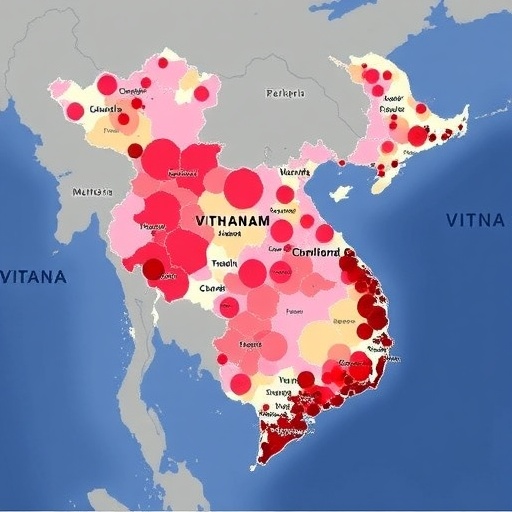
The sequence data confirmed the distinctive structure of Viet Nam’s epidemic. Genotype 6 was identified in 829 samples, or 50.3 percent of the cohort. Subtype 6a alone accounted for 468 infections, 28.4 percent of all sequences, while subtype 6e represented another 243, or 14.7 percent. Less common genotype 6 lineages included 6h, 6l and 6o, alongside sporadic detections of several additional subtypes. Genotype 1 was the second most common, appearing in 649 sequences, or 39.4 percent, with subtypes 1a and 1b present in nearly equal proportions. Genotype 2 accounted for 8.5 percent of infections, while genotype 3 was found in only 1.9 percent. The distribution was strongly regional: genotype 2 was concentrated almost entirely in the south and made up about 16.3 percent of infections sampled in the Mekong River Delta, whereas genotype 3—especially subtype 3b—was clustered in northern Viet Nam.
The viral geography also aligned with demographic differences that may reflect distinct historical transmission networks. People infected with genotype 2 were older, with a median age of 56, and women formed a majority of this group. Genotype 3 patients were younger, with a median age of 36, and were predominantly male. Genotype 1 showed a moderate male predominance, while genotype 6 infections were more evenly distributed between men and women. HIV co-infection was most frequent among people carrying genotype 1 and least common among those with genotype 6, although hepatitis B co-infection did not differ significantly between genotypes. The researchers caution that these patterns do not prove specific routes of transmission, but they are consistent with the possibility that different viral lineages have expanded within different social, medical or behavioural networks. Historical transfusions, dialysis, unsafe medical equipment and injection drug use have all contributed to HCV transmission in the region.
The most consequential discovery involved resistance-associated substitutions, or RASs: changes in the viral amino-acid sequence that can reduce the effectiveness of antiviral drugs. DAAs work by blocking proteins essential for HCV replication. NS3 protease inhibitors interrupt processing of the viral polyprotein, NS5A inhibitors interfere with replication-complex formation, and NS5B polymerase inhibitors disrupt the copying of viral RNA. A substitution can alter the shape or chemistry of a drug-binding site, raising the concentration of medicine needed to suppress the virus. The study found that 37.9 percent of analysed sequences carried at least one previously recognised clinical RAS. NS5A was the main reservoir, with such substitutions in 26.6 percent of sequences, followed by NS3 at 14.1 percent. NS5B-associated changes were uncommon, occurring in only 1.3 percent. Overall resistance-associated variation was highest in genotype 2, at 83.6 percent, followed by genotype 3 at 67.7 percent, genotype 1 at 43.0 percent and genotype 6 at 25.1 percent.
Those broad genotype-level figures concealed even sharper contrasts between subtypes. In genotype 2a, the NS5A substitutions L31M and Y93N occurred in 90.8 percent and 42.4 percent of sequences, respectively. The resulting sequence-based predictions indicated resistance-associated profiles for daclatasvir in 93.8 percent of samples, elbasvir in 90.8 percent and velpatasvir in 95.4 percent. Genotype 2m showed an even more striking pattern: L31M was present in 98.1 percent of sequences, corresponding to the same predicted prevalence for daclatasvir-associated resistance. Subtype 3b was similarly unusual. The substitutions A30K and L31M each appeared in 95 percent of samples, and the two occurred together in 90 percent. Every subtype 3b sequence carried a substitution associated with reduced velpatasvir susceptibility. Yet these near-universal variants were probably not mutations acquired during treatment, because the participants were treatment-naïve. Instead, they appear to be defining features of the viral lineages themselves—naturally occurring polymorphisms located at positions already known to matter for drug activity.
Genotype 6 demonstrated why broad labels can be misleading. Subtype 6a, the dominant lineage in the cohort, frequently carried NS5A L28F, detected in 43.3 percent of sequences. This translated into a predicted daclatasvir-associated resistance prevalence of 44.5 percent, although predicted resistance was much lower for velpatasvir and elbasvir. Subtype 6e showed the opposite pattern: only one of 220 sequences carried a previously reported clinical NS5A resistance substitution, and the predicted prevalence of daclatasvir-associated resistance was just 0.5 percent. Other genotype 6 subtypes contained high-frequency substitutions at positions implicated in resistance in different viral backgrounds, including NS3 80K in subtype 6a and several NS5A and NS5B variants in subtype 6e, 6h, 6l and 6o. Because these changes were often fixed or nearly fixed within a subtype, they are likely natural lineage traits rather than evidence of widespread treatment failure. Their functional importance remains uncertain.
The results do not mean that patients carrying these substitutions will necessarily fail treatment. Resistance predictions were based primarily on published associations and computational interpretation of sequences, not on laboratory experiments measuring drug susceptibility or prospective clinical outcomes. Previous studies in Viet Nam have reported high cure rates with sofosbuvir-based regimens even when baseline RASs were present, and sofosbuvir showed a high genetic barrier to resistance in this analysis: associated substitutions appeared in just 1.3 percent of sequences overall and were not detected in the genotype 2, 3 or 6 groups studied. Glecaprevir/pibrentasvir also generally showed low levels of resistance-associated variation across several major subtypes. The researchers therefore support continued use of effective pan-genotypic treatments, while arguing that subtype-level genomic surveillance could identify situations in which additional evidence is needed. Targeted resistance testing may be most useful for people who have previously experienced DAA failure, patients with cirrhosis requiring retreatment and those infected with lineages such as genotype 2 or subtype 3b that carry unusually common NS5A polymorphisms.
Viet Nam adopted DAAs as first-line therapy in 2016, but progress toward elimination has lagged because diagnosis, access and follow-up care remain uneven. The study’s geographic patterns could help public-health programmes focus surveillance and screening while avoiding the assumption that one national viral profile applies everywhere. The Mekong Delta, where genotype 2 was concentrated, and northern provinces, where subtype 3b was more common, may be particularly valuable sites for further resistance and treatment-outcome studies. The authors stress that their cohort was not population-based and was weighted toward southern recruitment sites, so the reported frequencies should not be interpreted as a definitive national census. The next step is to test the most common subtype-specific substitutions directly in phenotypic assays and connect them to real-world treatment outcomes. That work could determine whether HCV’s hidden genetic map is merely an evolutionary curiosity—or a critical guide to delivering the right cure to the right patient.
Cite Scienmag News
Kristina Jarvis. (August 28, 2026). Study Maps Hepatitis C Diversity and Drug Resistance Across Viet Nam. Scienmag. https://scienmag.com/study-maps-hepatitis-c-diversity-and-drug-resistance-across-viet-nam/
Kristina Jarvis. "Study Maps Hepatitis C Diversity and Drug Resistance Across Viet Nam." Scienmag, 28 August 2026, https://scienmag.com/study-maps-hepatitis-c-diversity-and-drug-resistance-across-viet-nam/. Accessed 3 September 2026.
Kristina Jarvis. "Study Maps Hepatitis C Diversity and Drug Resistance Across Viet Nam." Scienmag. August 28, 2026. https://scienmag.com/study-maps-hepatitis-c-diversity-and-drug-resistance-across-viet-nam/


