


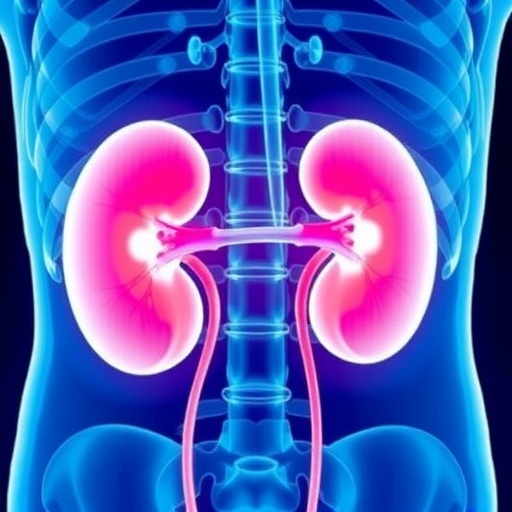
Cisplatin remains one of the most potent chemotherapeutic agents available, widely employed in treating an array of malignancies, including lung, ovarian, bladder, and head and neck cancers. Despite its efficacy, the clinical use of cisplatin is severely limited by its notorious nephrotoxicity profile. Acute kidney injury (AKI) induced by cisplatin complicates cancer treatment, often demanding dose reductions or even discontinuation, which compromises therapeutic outcomes. Until now, preventive strategies for cisplatin-associated kidney damage have remained largely empirical, with limited clinical data to support standardized prophylactic interventions.
In an ambitious effort to tackle this clinical conundrum, investigators led by Dr. Shruti Gupta, MD, MPH, and Dr. David Leaf, MD, MMSc, of Brigham and Women’s Hospital have conducted a comprehensive multicenter cohort study that illuminates a potentially transformative approach to cisplatin nephrotoxicity prevention. Published recently in JAMA Oncology, the research outlines how intravenous magnesium administration on the same day as cisplatin chemotherapy can significantly diminish the risk of AKI, thus offering a pragmatic, cost-effective adjuvant therapy.
The nephrotoxic effects of cisplatin originate primarily from its accumulation in renal proximal tubular cells, where it induces oxidative stress, inflammation, and apoptosis. This cascade leads to impaired kidney function, often manifesting as an acute rise in serum creatinine and subsequent renal impairment. While hydration and dose adjustment remain cornerstones of clinical management, the precise molecular mechanisms of cisplatin-induced kidney injury have spurred exploration into targeted insights. Among these, magnesium’s role in renal physiology and detoxification pathways has garnered increasing attention.
Animal models have long suggested magnesium’s intervention potential, hypothesizing that magnesium supplementation promotes renal excretion of cisplatin and its metabolites, thereby attenuating tubular uptake and cytotoxicity. Despite this biological plausibility, robust evidence from large human populations has been lacking. Drs. Gupta and Leaf’s investigative team therefore designed a rigorous observational study leveraging data from five prominent U.S. cancer centers, encompassing nearly 14,000 patients receiving their first dose of intravenous cisplatin between 2006 and 2022.
This unprecedented cohort study stratified patients based on whether they received intravenous magnesium concurrently with the initial cisplatin administration. Approximately 30% of the cohort received IV magnesium. Employing meticulous statistical adjustments to control for confounding variables—including demographic factors, baseline kidney function, hydration protocols, and comorbidities—the researchers sought to isolate the independent association between magnesium receipt and the incidence of cisplatin-associated AKI.
The results were striking. After adjustment, patients receiving IV magnesium demonstrated a 20% reduction in the odds of developing acute kidney injury compared to those without magnesium supplementation. Importantly, this protective effect was consistent across multiple subgroups stratified by age, cancer type, cisplatin dose, and baseline renal risk. Sensitivity analyses further reinforced the robustness of these findings, underscoring magnesium’s potential as a nephroprotective agent in clinical oncology practice.
Mechanistically, magnesium’s protective role may be multifaceted. Given its critical involvement in cellular enzymatic reactions and membrane stabilization, magnesium infusion may mitigate oxidative damage induced by cisplatin metabolites. Additionally, magnesium appears to modulate renal tubular transporter activity, facilitating cisplatin clearance and reducing localized drug accumulation. This aligns with preclinical evidence that magnesium deficiency exacerbates cisplatin toxicity, while supplementation restores renal resilience.
The clinical implications of this study resonate strongly within oncology and nephrology communities. Magnesium is inexpensive, globally accessible, and carries a well-established safety profile. Integrating IV magnesium infusion into standard supportive care for patients scheduled to undergo cisplatin treatment could represent a straightforward yet impactful strategy to minimize nephrotoxicity. This approach promises to enhance patient quality of life, maintain chemotherapy dose intensity, and ultimately improve cancer treatment outcomes.
However, the authors are cautious to emphasize that despite compelling observational data, definitive confirmation requires randomized controlled trials (RCTs). Recognizing this gap, a pivotal RCT (NCT05730816) is underway at Brigham and Women’s Hospital, designed to prospectively evaluate the efficacy of IV magnesium in preventing cisplatin-associated AKI. Outcomes from this trial are eagerly anticipated and could catalyze paradigm shifts in chemoprotective protocols.
Beyond nephroprotection, magnesium’s role in oncology warrants continued exploration. Emerging evidence suggests systemic magnesium homeostasis influences tumor biology and patient tolerance to other cytotoxic agents. Future research may unravel additional benefits and mechanistic insights, potentially expanding magnesium’s therapeutic relevance beyond renal protection.
This groundbreaking study represents a remarkable example of translational research bridging bench and bedside. By harnessing real-world patient data from multiple institutions and incorporating mechanistic understanding from prior experimental studies, the investigators have delineated a promising pathway to ameliorate a long-standing clinical challenge.
As cisplatin remains a mainstay chemotherapy agent for numerous aggressive malignancies, reducing its adverse impact on patients’ kidneys is paramount. The findings reported by Gupta, Leaf, and colleagues ignite hope for clinicians and patients alike, signaling that a simple intervention such as intravenous magnesium administration could preserve kidney function without compromising anticancer efficacy.
Continued international collaboration and investment in nephro-oncology research will be critical to validate these findings and optimize protocols. Meanwhile, oncologists may consider the emerging evidence when developing individualized treatment plans, particularly for patients at heightened risk for renal complications.
In conclusion, the study titled “Intravenous Magnesium and Cisplatin-Associated Acute Kidney Injury: A Multicenter Cohort Study” published in JAMA Oncology marks a significant advance in supportive cancer care. It underscores the power of leveraging existing pharmacological agents to mitigate chemotherapy toxicity, offering a beacon of hope for safer, more tolerable cancer therapies worldwide.
Cite Scienmag News
Nathaniel Bowman. (April 24, 2025). Study Highlights: IV Magnesium Mitigates Kidney Damage Caused by Cisplatin Chemotherapy. Scienmag. https://scienmag.com/study-highlights-iv-magnesium-mitigates-kidney-damage-caused-by-cisplatin-chemotherapy/
Nathaniel Bowman. "Study Highlights: IV Magnesium Mitigates Kidney Damage Caused by Cisplatin Chemotherapy." Scienmag, 24 April 2025, https://scienmag.com/study-highlights-iv-magnesium-mitigates-kidney-damage-caused-by-cisplatin-chemotherapy/. Accessed 3 September 2026.
Nathaniel Bowman. "Study Highlights: IV Magnesium Mitigates Kidney Damage Caused by Cisplatin Chemotherapy." Scienmag. April 24, 2025. https://scienmag.com/study-highlights-iv-magnesium-mitigates-kidney-damage-caused-by-cisplatin-chemotherapy/


