


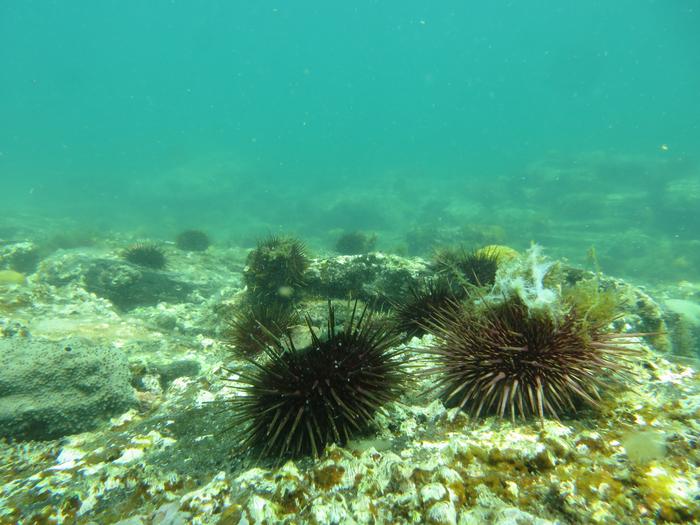
Restoring the delicate balance of underwater ecosystems has taken on new economic and environmental urgency with recent findings that managing the overpopulation of sea urchins in southern Australia’s coastal waters can lead to significant ecological recovery and financial gains. The degradation of kelp forests, vital marine habitats, poses a serious threat to biodiversity, water quality, and the economic vitality of coastal regions. Emerging research from RMIT University reveals that strategic culling of overabundant purple sea urchins and restoration of kelp forests in Port Phillip Bay is not only ecologically sound but also economically viable, potentially transforming restoration efforts into smart investments.
Kelp forests serve as underwater bastions of marine life, providing essential habitat and food for myriad species. Beyond their role in supporting biodiversity, kelp forests perform critical ecological services, including the filtration of pollutants such as nitrogen and phosphorus from seawater. This natural remediation contributes to healthier coastal ecosystems and mitigates the harmful effects of nutrient run-off that can lead to algal blooms and hypoxia. Yet, in recent decades, these underwater forests have experienced dramatic declines, particularly in Australia’s Port Phillip Bay, where kelp cover has plummeted between 59 and 98 percent over the past 40 years.
Central to this ecological crisis is the native purple sea urchin, whose populations have exploded to 2.5 to 4.2 times their historical levels. These echinoderms graze voraciously on kelp holdfasts and blades, creating expansive "urchin barrens" where kelp forests once flourished. The unchecked proliferation of sea urchins disrupts the structural complexity of reefs, diminishes biodiversity, and degrades the ecosystem services that kelp forests provide. This ecological imbalance is exacerbated by factors including climate change and anthropogenic pressures, yet targeted management of sea urchin densities emerges as one of the most direct and effective intervention strategies.
The interdisciplinary study led by Dr. Paul Carnell at RMIT University employed sophisticated spatially explicit benefit-cost analytical models to evaluate the feasibility and economic returns of sea urchin culling interventions combined with active kelp restoration. These models incorporated critical variables such as urchin population density, depth of dive sites, logistics of diver travel time, and the potential for kelp to sequester nitrogen. By integrating ecological data with economic valuation methods, the research provided a comprehensive outlook on investment priorities and restoration payoffs.
Findings indicate that an investment of approximately AU$50 million in targeted sea urchin culling, coupled with kelp cultivation and deployment, could generate a return on investment reaching AU$92 million in ecological and economic benefits. This figure captures monetizable environmental services including enhanced nitrogen removal, carbon sequestration potential, and the revitalization of fisheries and recreational fishing sectors, all of which underpin local economies and community livelihoods. The study underscores the multi-dimensional value of kelp restoration beyond mere biodiversity conservation.
Commercial diving teams would be pivotal in executing the culling operations, removing excessive sea urchins from critical reef areas. Concurrently, kelp cultivation would be intensified to replenish depleted forests, with ongoing monitoring to optimize restoration success. The implementation of such coordinated restoration strategies not only safeguards marine habitats but also stimulates economic activity and job creation in coastal regions, offering a compelling example of nature-based solutions fostering sustainable development.
Dr. Carnell notes that despite the challenges posed by warming ocean temperatures and other human-induced stressors, managing biological contributors to ecosystem degradation remains a controllable and practical approach. Restoring kelp forests is an investment in ecological resilience, water quality enhancement, and climate mitigation through carbon sequestration. This research provides tangible economic evidence supporting policy measures and funding commitments towards marine ecosystem restoration initiatives.
The study’s methodology emphasizes the significance of spatially explicit analyses, which capture the heterogeneity of ecological conditions across site locations, enabling more precise targeting of restoration efforts. Such approaches ensure that resources are allocated where they will yield the greatest ecological and economic returns, maximizing the efficiency and impact of restoration programs.
Moreover, this work builds on a growing body of marine ecological research demonstrating the cascading benefits of restoring foundation species such as kelp. Healthy kelp ecosystems support a complex web of marine organisms, from invertebrates to fish, thereby bolstering fishery stocks and enhancing biodiversity. These systems also contribute to cultural and recreational values important to coastal communities, reinforcing the socio-economic justification for restoration investments.
Collaborative efforts driving this study included contributions from Deakin University, The University of Melbourne, University of Western Australia, and Canopy Economics and Policy, underscoring the interdisciplinary and cooperative nature of addressing marine environmental challenges. Funding support from the Victorian Government Department of Environment, Land, Water and Planning enabled rigorous research critical to informing management strategies and government policy.
The implications of this research resonate beyond southern Australia, serving as a model for other regions grappling with similar ecological imbalances caused by overgrazing herbivores in marine habitats. By presenting a framework combining ecological data, economic valuation, and practical management interventions, this study advances the frontier of ecosystem service restoration science, aligning environmental stewardship with economic incentives.
As coastal ecosystems worldwide face unprecedented pressures from climate change and human activities, restoring kelp forests offers a beacon of hope. This study represents a vital step towards translating ecological understanding into actionable investments, revealing that nature-based solutions can deliver measurable environmental recovery alongside sustainable economic prosperity.
News Publication Date: 30-May-2025
Web References:
https://www.sciencedirect.com/science/article/pii/S2212041625000439
http://dx.doi.org/10.1016/j.ecoser.2025.101739
References:
Carnell, P. et al. (2025). Prioritising investment in kelp forest restoration: A spatially explicit benefit-cost analysis in southern Australia. Ecosystem Services. DOI: 10.1016/j.ecoser.2025.101739.
Cite Scienmag News
Gavin Prescott. (July 1, 2025). Study Finds That Removing Sea Urchins to Restore Kelp Forests Benefits Both Economy and Ecosystem. Scienmag. https://scienmag.com/study-finds-that-removing-sea-urchins-to-restore-kelp-forests-benefits-both-economy-and-ecosystem/
Gavin Prescott. "Study Finds That Removing Sea Urchins to Restore Kelp Forests Benefits Both Economy and Ecosystem." Scienmag, 1 July 2025, https://scienmag.com/study-finds-that-removing-sea-urchins-to-restore-kelp-forests-benefits-both-economy-and-ecosystem/. Accessed 6 September 2026.
Gavin Prescott. "Study Finds That Removing Sea Urchins to Restore Kelp Forests Benefits Both Economy and Ecosystem." Scienmag. July 1, 2025. https://scienmag.com/study-finds-that-removing-sea-urchins-to-restore-kelp-forests-benefits-both-economy-and-ecosystem/


