


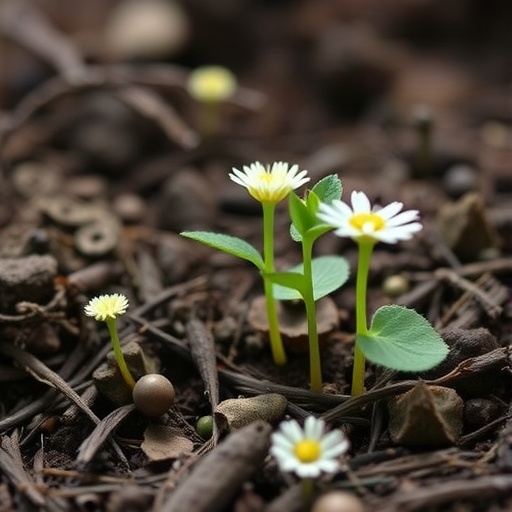
A groundbreaking new study spearheaded by Conservation International in partnership with the International Union for Conservation of Nature (IUCN) has illuminated a global conservation crisis lurking beneath our feet—literally. Published in the scientific journal Oryx on April 15, 2026, this research rigorously assesses the extinction risk facing soil-dependent species, revealing that at least one in five such species is currently threatened according to the IUCN Red List of Threatened Species™. This alarming figure unveils a dimension of biodiversity loss that has long escaped broad environmental discourse, emphasizing the critical yet underappreciated role of soil biota in sustaining terrestrial ecosystems and human well-being.
Soil, often regarded as inert dirt, emerges in this study as a dynamic and complex ecological nexus, harboring approximately 59% of Earth’s species diversity. This subterranean biome performs indispensable ecosystem services, including nutrient cycling, organic matter decomposition, and carbon sequestration. Significantly, healthy soils underpin 95% of the global food supply, illustrating a direct link between soil biodiversity conservation and human food security. The research highlights that these vital subterranean organisms are not only foundational for ecosystem resilience but are also increasingly imperiled by anthropogenic pressures such as habitat degradation, pollution, and climate change.
What makes this revelation particularly troubling is the substantial knowledge gap regarding the conservation status of many soil-dependent species. The report underscores that another 20% of assessed species are categorized as Data Deficient by the IUCN. This classification signals a profound scarcity of information necessary to accurately evaluate their extinction risk. Hence, while we can affirm the vulnerability of a significant fraction of soil biota, an equally large contingent remains an enigma, posing challenges to conservation prioritization and resource allocation.
The study employs an extensive global dataset drawn from over 8,500 soil-dependent species, encompassing fungi, invertebrates, and microorganisms integral to soil health. Methodologically, this involves applying the IUCN’s rigorous Red List criteria, which assess species based on population trends, geographic distribution, and ecological threats. The comprehensive nature of this assessment marks a pioneering step in soil biodiversity research, bridging a critical gap by integrating belowground species into mainstream conservation assessments traditionally dominated by charismatic megafauna and terrestrial flora.
Moreover, the findings call into question current global biodiversity monitoring frameworks that have systematically underrepresented soil organisms. The existing underestimation results not only from limited sampling but also from taxonomic and technical hurdles inherent in studying microscopic and cryptic species. Consequently, many of these organisms have been excluded from policy frameworks and conservation strategies. The report explicitly advocates for the expansion of soil taxa assessments within the IUCN Red List framework, to better reflect their ecological significance and vulnerability.
The ecological ramifications of losing soil-dependent species are profound. Fungi, for example, perform essential symbiotic functions with plant roots, facilitating nutrient uptake and enhancing plant resilience to environmental stresses. Similarly, soil invertebrates contribute critically to nutrient cycling and soil structure formation, processes foundational to soil fertility and carbon storage. The degradation of soil biota thus threatens to destabilize global agricultural systems and exacerbate climate change through diminished carbon sequestration capacities.
Addressing these challenges, the study recommends concrete institutional and collaborative measures. Foremost among these is the establishment of an IUCN Species Survival Commission (SSC) Soil Biota Working Group. This dedicated body would promote interdisciplinary research, coordinate assessment efforts, and enhance global attention toward soil biodiversity conservation. Additionally, the report calls for strengthened partnerships bridging regional organizations, governments, land managers, and scientific bodies to enhance data sharing, policy integration, and public awareness concerning soil ecosystems.
The report further underscores the necessity of advanced technological and methodological tools such as environmental DNA (eDNA) metabarcoding, remote sensing, and soil metagenomics, which can revolutionize the detection and monitoring of cryptic soil species. Incorporating these cutting-edge approaches could exponentially increase the pace and accuracy of soil biodiversity assessments, facilitating timely conservation interventions.
Notably, high-profile figures associated with the IUCN echo the urgency of these findings. Dr. Gregory Mueller, Chair of the IUCN SSC Fungal Conservation Committee and co-author of the paper, emphasizes that soil fungi are critical in nutrient absorption and decomposition processes, underscoring their essential ecosystem functions. Dr. Axel Hochkirch, Co-Chair of the IUCN SSC Invertebrate Conservation Committee, draws attention to the crucial contributions of soil invertebrates to nutrient cycling and agricultural productivity, highlighting their importance for global food security.
As the global community grapples with climate change and biodiversity loss, this study serves as an urgent call to acknowledge and protect the complex web of life embedded within the Earth’s soils. Without concerted research and conservation efforts targeting soil-dependent species, ecosystems risk entering a feedback loop of degradation that imperils both natural and human systems. The urgent integration of soil biodiversity into conservation planning is no longer optional but imperative for sustaining planetary health.
The implications of these findings extend beyond ecology into socioeconomic realms, as soil degradation jeopardizes agricultural productivity, rural livelihoods, and ecosystem services vital for clean water and air. Consequently, soil biodiversity conservation must be elevated as an integral element of international environmental agreements, food security policies, and climate action strategies. The study’s insights offer a transformative perspective on biodiversity conservation by highlighting that the battle to save species and ecosystems must begin at the microscopic scale beneath our feet.
In conclusion, this comprehensive assessment redefines the conservation landscape by bringing soil-dependent species to the forefront of global biodiversity priorities. It challenges prevailing paradigms that focus predominantly on aboveground biota and calls for an inclusive approach that recognizes soil as a cradle of life, critical to ecosystem stability and human survival. The time for action is now, as safeguarding soil biodiversity becomes a cornerstone in the quest to maintain the planet’s resilience in an era of unprecedented ecological challenge.
News Publication Date: April 15, 2026.
Web References:
- Conservation International: https://www.conservation.org/
- IUCN Red List: https://www.iucnredlist.org/
- Original Article DOI: http://dx.doi.org/10.1017/S003060532510272X
Cite Scienmag News
Margaret Porter. (April 15, 2026). Study Finds One in Five Assessed Soil Species Threatened with Extinction; Calls for Data on Thousands More. Scienmag. https://scienmag.com/study-finds-one-in-five-assessed-soil-species-threatened-with-extinction-calls-for-data-on-thousands-more/
Margaret Porter. "Study Finds One in Five Assessed Soil Species Threatened with Extinction; Calls for Data on Thousands More." Scienmag, 15 April 2026, https://scienmag.com/study-finds-one-in-five-assessed-soil-species-threatened-with-extinction-calls-for-data-on-thousands-more/. Accessed 4 September 2026.
Margaret Porter. "Study Finds One in Five Assessed Soil Species Threatened with Extinction; Calls for Data on Thousands More." Scienmag. April 15, 2026. https://scienmag.com/study-finds-one-in-five-assessed-soil-species-threatened-with-extinction-calls-for-data-on-thousands-more/


