

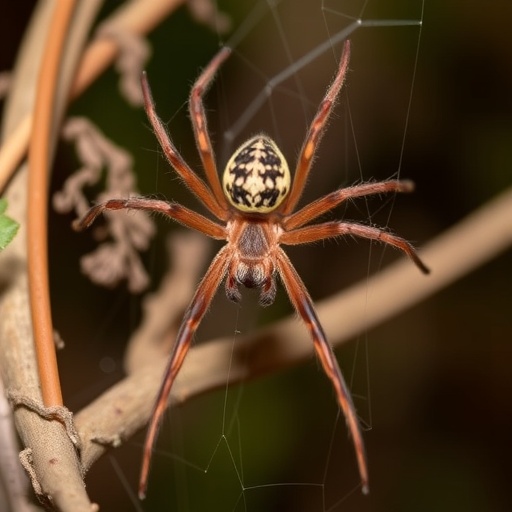
In a groundbreaking study published in the Journal of Medical Entomology, researchers from the University of South Florida have upended long-held beliefs regarding the brown recluse spider’s distribution, behavior, and medical impact within Florida. Traditionally notorious for its feared presence and aggressive biting nature, the brown recluse has been portrayed in both public and medical spheres as a substantial threat with widespread infestation and dangerous bite consequences. However, the latest findings reveal a far more nuanced reality, demonstrating that in Florida, these spiders are neither abundant nor particularly aggressive, thus challenging the pervasive myths surrounding them.
The investigation meticulously assessed 220 sites across Florida where brown recluse infestations had been reported or suspected by residents and pest control operators. Contrary to the prevailing assumption of pervasive statewide infestations, only 19 properties displayed verifiable breeding populations. These were predominantly localized in central to northern Florida, with population densities ranging from a solitary individual to a notable concentration of over one hundred spiders. This restricted distribution suggests that the brown recluse is not as widely established in Florida as feared and that many infestation claims are unsubstantiated, indicating a significant overestimation of their presence.
To better understand the defensive behavior of the brown recluse, the research employed rigorous laboratory protocols involving the application of standardized incremental pressure to the spiders using gel-tipped instruments under controlled conditions. This experimental design allowed for precise measurement of biting frequency in response to provocation. The brown recluse exhibited a striking reluctance to bite, responding primarily to extreme physical stress scenarios such as being squeezed or inverted. Comparatively, wolf spiders subjected to the same trials displayed a substantially higher propensity to bite, approximately 80% of the time, underscoring the relatively docile nature of the brown recluse even when disturbed.
A critical aspect addressed by the study was the severity and clinical consequences of brown recluse bites, particularly focusing on necrosis—the localized death of tissue frequently attributed to these spiders. Analysis of verified bite cases revealed that most wounds were shallow, typically measuring around half a centimeter in depth, and largely confined to superficial skin layers. Severe necrotic lesions extending into deeper tissue strata such as muscle or bone were rare and often misdiagnosed. The study suggests that many purportedly severe recluse bites are more accurately attributed to secondary bacterial infections, notably those caused by Staphylococcus species, rather than venom-induced cytotoxicity alone.
The research spearheaded by Louis Coticchio, a University of South Florida alumnus and integrative biologist Deby Cassill, offers valuable clarification that the brown recluse should not be stigmatized as a public menace in Florida. Instead, their role as reclusive arachnids that prefer avoidance over confrontation is highlighted. The team’s comprehensive approach, spanning extensive field sampling and controlled behavioral assays, advances the scientific understanding of the species’ ecology and defensive interactions with humans, debunking exaggerated representations prevalent in popular media and some medical literature.
This refined perspective on the brown recluse’s footprint and behavior carries significant implications for public health policy and clinical diagnostics. By pinpointing the actual risk of encountering these spiders and understanding their bite patterns, medical professionals can better discern spiderbite diagnoses from other dermal infections, reducing misdiagnosis and unnecessary alarm. Moreover, educating the public on the spiders’ limited aggression and distribution can alleviate undue fear, promoting informed coexistence and targeted pest management strategies.
In addition to revising misconceptions, the study opens avenues for future inquiries. The discovery of a Mediterranean recluse population cluster in St. Augustine has piqued scientific curiosity regarding its introduction pathways and potential for expansion. Investigations into whether this population stems from a singular introduction event or multiple incursions could illuminate mechanisms of invasive species spread, thereby informing biosecurity and containment efforts.
Louis Coticchio’s early fascination with the natural world, nurtured through hands-on experiences with diverse fauna, laid the groundwork for his focused research trajectory. Joining Dr. Cassill’s lab as a freshman marked the genesis of the Florida Brown Recluse Spider Project, which aims to bridge gaps in knowledge and recalibrate public perceptions through rigorous science communication. His mentor, Dr. Cassill, praises his dedication and impact, recognizing him as a transformative figure in arachnology research.
This study exemplifies how meticulous empirical evidence can overturn entrenched myths and shape more accurate narratives about species that often face unwarranted vilification. By elucidating the brown recluse’s ecological realities and limited medical risks, the research underscores the importance of evidence-based approaches in both science and public discourse.
Ultimately, the findings reinforce that human interactions with brown recluse spiders, especially in Florida, rarely pose substantial danger. Their reticent nature, combined with localized populations, minimizes the likelihood of harmful encounters. This evolved understanding encourages balanced perspectives, fostering coexistence grounded in scientific fact rather than fear-driven speculation.
As the dialogue around brown recluse spiders evolves, ongoing research endeavors promise to refine our understanding further, potentially influencing pest control practices, healthcare protocols, and ecological education. The USF team’s work stands as a compelling case study in responsibly contextualizing organismal biology within a broader societal framework, highlighting how curiosity-driven investigations can yield benefits for both science and the public.
Subject of Research: Animals
Article Title: Recluse spiders (Araneae: Sicariidae): contesting myths on distribution, bite behavior, and medical risk in Florida
News Publication Date: 26-Feb-2026
Web References:
- Journal Article: https://academic.oup.com/jme/article/63/1/tjag004/8466230
- University of South Florida: https://www.usf.edu/index.aspx
References:
Coticchio, L., & Cassill, D. (2026). Recluse spiders (Araneae: Sicariidae): contesting myths on distribution, bite behavior, and medical risk in Florida. Journal of Medical Entomology, 63(1). https://doi.org/10.1093/jme/tjag004
Image Credits: Credit: USF
Keywords: Arachnids, Arthropods, Animals, Invertebrates


