

Embargoed until 8:00 AM PST, February 11, 2026
Revolutionizing Postpartum Care: Baby2Home Smartphone App Demonstrates Significant Mental Health Benefits for First-Time Mothers
The postpartum period, a critical phase following childbirth, presents a myriad of challenges for new mothers, encompassing physical recovery, infant care, and significant psychological adjustments. Recent groundbreaking research unveiled at the Society for Maternal-Fetal Medicine’s 2026 Pregnancy Meeting™ signals a promising leap forward in supporting maternal mental health through digital innovation. A multi-site randomized controlled trial established that the Baby2Home smartphone application significantly mitigates symptoms of stress, depression, and anxiety among first-time mothers in their first year postpartum, marking a transformative moment in maternal healthcare.
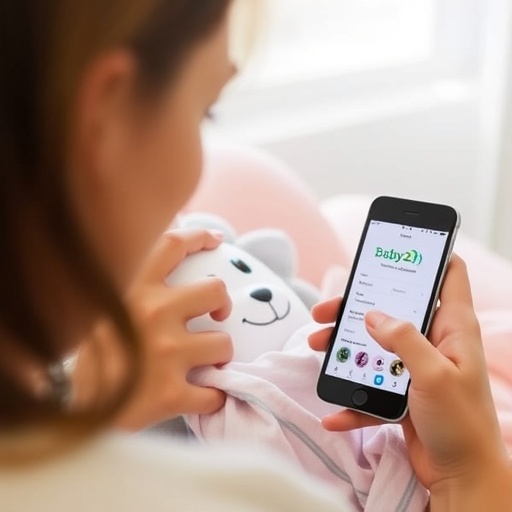
Baby2Home emerges as a meticulously designed digital health tool dedicated to empowering new parents with tailored educational resources, infant care monitoring features, and robust mental health self-management capabilities. Recognizing that the traditional postpartum care framework often falls short of meeting continuous psychological support needs, Baby2Home integrates technology and human interaction by offering instant access to care managers for mental health assistance and practical problem-solving. This synthesis of digital and personalized care extends healthcare engagement from the confines of clinical environments directly into the daily lives of new families.
The study, orchestrated by eminent researchers from Women & Infants Hospital of Rhode Island, Warren Alpert Medical School of Brown University, Northwestern University’s Feinberg School of Medicine, and Lurie Children’s Hospital of Chicago, was conducted between November 2022 and July 2025. It enrolled 642 first-time postpartum patients across diverse clinical settings to rigorously compare outcomes between those utilizing the Baby2Home app alongside usual care, and those receiving only standard postpartum support.
Participants were methodically assessed at five distinct intervals throughout the first twelve months postpartum using validated quantitative measures targeting psychological distress and overall health. Findings revealed compelling evidence that the intervention group—those with access to Baby2Home—exhibited substantial reductions in stress, depression, and anxiety markers compared to controls. Beyond psychological parameters, these mothers reported enhanced overall physical well-being, elevated confidence in parenting competencies, and improved relational satisfaction with partners and family.
Emily S. Miller, MD, MPH, principal investigator and Division Director of Maternal-Fetal Medicine at Women & Infants Hospital of Rhode Island, emphasized the paradigm shift facilitated by digital tools like Baby2Home. According to Dr. Miller, the app’s seamless integration of evidence-based interventions with real-time support mechanisms underscores the potential to redefine postpartum care, ushering in an era where healthcare transcends traditional settings to become ubiquitously accessible and deeply personalized.
The clinical implications of this research are profound. Postpartum mental health disorders, including perinatal depression and anxiety, remain underdiagnosed and undertreated despite their prevalence and impact on maternal and infant outcomes. Baby2Home’s success heralds a scalable, cost-effective intervention capable of circumventing barriers to care such as stigma, geographic limitations, and resource scarcity, particularly benefiting populations underserved by conventional healthcare infrastructures.
Mechanistically, Baby2Home’s design is rooted in behavioral health theories and evidence-based psychotherapeutic strategies adapted for digital delivery. The app facilitates psychoeducation about infant care and self-care practices, symptom monitoring through dynamic tracking tools, and cognitive-behavioral techniques to empower users in managing emotional distress. Crucially, the embedded care manager access enables escalation pathways for personalized support, bridging the gap between self-help and professional intervention.
In addition to psychological benefits, the research documented that Baby2Home users experienced substantive improvements in social dynamics and self-efficacy—parameters tightly linked with maternal resilience and long-term wellbeing. Elevated relationship satisfaction with partners and family members may derive from enhanced communication and stress management skills fostered by app guidance, underscoring the multifaceted impact of comprehensive postpartum support.
The randomized controlled trial methodology, regarded as the gold standard in clinical research, reinforces the validity of the results, circumventing bias and confounding variables. By recruiting a large, multisite cohort and ensuring rigorous follow-up intervals, the investigators achieved robust data quality and external validity, paving the way for broad generalizability of outcomes across different demographic and healthcare contexts.
This research endeavor not only achieved significant scientific milestones but also garnered prestigious recognition with the Norman F. Gant Award for Best Research in Maternal Medicine. Publication of the detailed findings in the February 2026 issue of Pregnancy, the official peer-reviewed journal of the Society for Maternal-Fetal Medicine, will disseminate critical insights to clinicians, researchers, and policymakers committed to optimizing maternal and infant health trajectories.
Looking forward, the integration of Baby2Home into standard postpartum protocols could dramatically recalibrate follow-up care strategies worldwide. By embedding such digital mental health interventions into routine practice, healthcare systems can harness technology to deliver equitable, scalable, and continuous support, substantially mitigating the global burden of postpartum mood disorders and enhancing the foundational years of parenthood.
As digital health continues to evolve rapidly, Baby2Home exemplifies how technology-driven personalized care models can address complex psychosocial challenges in maternal health. The findings prompt a call to action for broader investment in digital therapeutics research, multidisciplinary collaboration, and innovative dissemination strategies to extend the benefits of these interventions to the millions of new parents globally.
Subject of Research: People
Article Title: A randomized controlled trial of Baby2Home: A postpartum digital mental health intervention
News Publication Date: February 11, 2026
Web References: https://baby2home.com/; https://smfm2026.eventscribe.net/
References: Published in Pregnancy, February 2026 issue
Keywords: postpartum mental health, digital health, randomized controlled trial, maternal wellbeing, stress reduction, depression, anxiety, newborn care, telehealth, behavioral intervention, maternal-fetal medicine


