

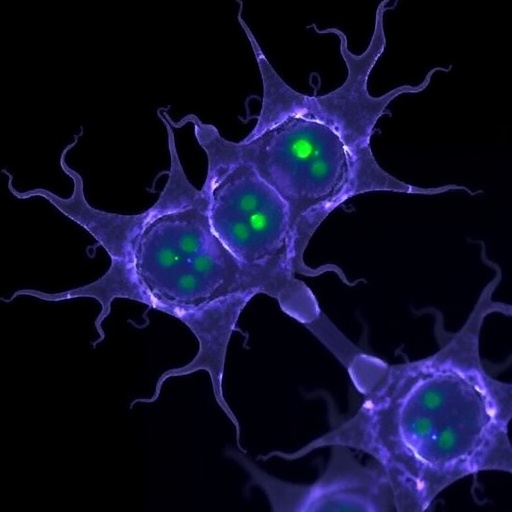
In the relentless battle between humans and bacterial pathogens, understanding the microscopic mechanisms that govern bacterial survival and proliferation is paramount. One such pathogen, Streptococcus pneumoniae, notorious for causing pneumonia, meningitis, and sepsis, has once again been thrust into the spotlight. Recent groundbreaking research has unveiled how a specific bacterial protein intricately controls the fundamental process of peptidoglycan remodelling and cell division, shedding light on potential new avenues for antimicrobial development.
The bacterial cell wall is essential for maintaining shape, integrity, and protection against environmental stresses. Central to this structure is peptidoglycan (PG), a polymer that forms a mesh-like layer enveloping the cytoplasmic membrane. Biosynthesis and remodelling of peptidoglycan are critical for bacterial growth and division. This process relies heavily on a class of enzymes known as penicillin-binding proteins (PBPs), especially the class A PBPs (aPBPs). The pneumococcus, as S. pneumoniae is commonly called, expresses three aPBPs that play a coordinated role in maintaining its characteristic ovoid shape. However, the exact regulatory mechanisms and functions of these PBPs have remained elusive until now.
A new study led by Millat and colleagues has brought to light the pivotal role of a heretofore poorly understood protein dubbed the “S protein” in S. pneumoniae. This protein contains two notable domains: a LysM domain known for binding PG and a GpsB-interacting domain. GpsB itself is a scaffolding protein that has emerged as a key coordinator within the PG biosynthesis machinery.
Through a sophisticated combination of molecular biology techniques—including the use of fusion constructs, targeted bacterial mutants, and co-immunoprecipitation assays—this research elucidates how the S protein localizes specifically to the division ring, a site fundamental for bacterial cytokinesis. The localization itself is not mere coincidence; the S protein is essential for regulating division site placement. Strains lacking S protein exhibit premature cell lysis and frequent formation of minicells, indicative of aberrant or misregulated septation.
One of the most groundbreaking insights from the study is the interaction between S protein and PBP1a, a key aPBP enzyme involved in PG synthesis. Biochemical assays demonstrated that the S protein actively stimulates PBP1a’s enzymatic activity. This activation suggests that S protein functions as a direct regulator, ensuring PBP1a operates at the right place and time to maintain cell wall integrity during division.
Complementing these biochemical experiments, the team employed structural prediction analyses revealing how S protein fits into a larger multiprotein complex. This complex comprises aPBPs, PG-modifying enzymes, and is scaffolded by GpsB, which coordinates their spatial organization. Image-based fluorescence microscopy provided visual confirmation, illustrating the precise colocalization of these components at the division site singularly orchestrated by the S protein.
The significance of these findings extends beyond the fundamental microbiology of S. pneumoniae. Peptidoglycan-targeting antibiotics, such as β-lactams, predominantly target PBPs. However, bacterial resistance to these drugs has become a global health concern. Discovering new regulatory factors like S protein that influence PBP activity opens promising pathways for drug development aimed at disrupting this finely tuned coordination. Targeting the accessory regulators may yield therapeutics capable of circumventing classical resistance mechanisms.
The biological implications of tightly regulated peptidoglycan remodelling cannot be overstated. This process is critical not only for maintaining cell shape but also for viability following division. Premature lysis or minicell formation—as observed in the absence of S protein—can be catastrophic for bacterial populations, suggesting S protein is essential for bacterial fitness and pathogenicity.
By deciphering the architecture of the GpsB-associated complex and the pneumatic interplay among its constituents, this study effectively places S protein as a central conductor in the bacterial cell division symphony. This complex acts as a molecular hub, dynamically modulating cell wall synthesis and remodelling in response to cell cycle cues and environmental stressors.
Furthermore, the discoveries pose intriguing questions about evolutionary conservation and divergence. How widespread is the mechanism involving an S-like protein across other bacterial species? Could similar regulatory frameworks exist in divergent pathogens, thereby representing a universal vulnerability to exploit in antibiotic design?
Pneumococci are notorious for their ability to adapt and evolve under selective pressure, including exposure to antimicrobials. Understanding these adaptive mechanisms at a molecular level is critical for anticipating resistance patterns. The identification of accessory proteins influencing PBPs adds a new dimension to bacterial cell biology and its manipulation.
Moreover, the research underscores the importance of methodological synergy—integrating genetic, biochemical, structural, and advanced microscopy techniques—to unravel complex cellular phenomena. This multidisciplinary approach not only provides robust evidence but also offers a blueprint for future studies targeting multi-protein complexes involved in bacterial physiology.
The characterization of the S protein’s regulatory role ultimately illuminates a delicate balance between synthesis, remodelling, and spatial-temporal coordination of peptidoglycan remodeling enzymes—a balance crucial for maintaining pneumococcal shape and viability.
In essence, this work recalibrates our understanding of bacterial cell division by highlighting the fine-tuned choreography underpinning peptidoglycan synthesis. With the S protein identified as an activator of PBP1a and a lynchpin in the GpsB-dependent complex, the findings invite renewed research efforts focused on bacterial cell wall biosynthesis regulators as potential antibiotic targets.
As antibiotic resistance accelerates, illuminating these molecular mechanisms is timely and vital. The insights gleaned from Millat et al.’s study have the potential to catalyze a new wave of anti-pneumococcal strategies that disarm the pathogen’s ability to maintain its cell wall integrity, essentially turning its own biology against it.
This research exemplifies the power of molecular microbiology to uncover the unseen intricacies of pathogenic bacteria, and it resonates loudly with the global imperative to develop next-generation antimicrobials.
—
Subject of Research: Regulation of peptidoglycan biosynthesis and cell division in Streptococcus pneumoniae by the S protein and penicillin-binding proteins.
Article Title: Streptococcus pneumoniae S protein activates PBP1a to regulate peptidoglycan remodelling and cell division.
Article References:
Millat, H., Falcou, C., Lenoir, C. et al. Streptococcus pneumoniae S protein activates PBP1a to regulate peptidoglycan remodelling and cell division. Nat Microbiol (2025). https://doi.org/10.1038/s41564-025-02210-5
Image Credits: AI Generated


