


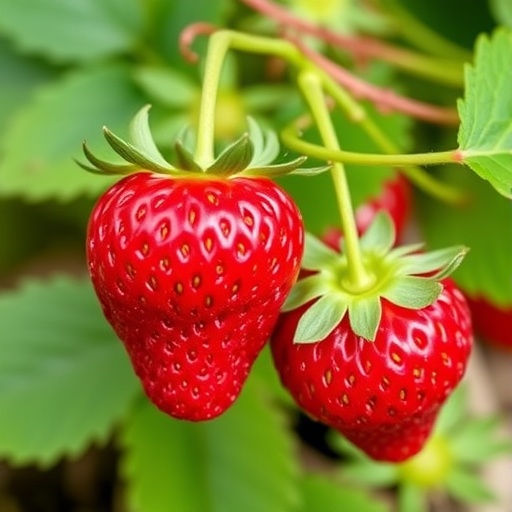
In a groundbreaking study published in Food Science and Biotechnology, researchers Lee H.S. and Auh J.H. offer unprecedented insights into the biochemical diversity and health-promoting properties of strawberry cultivars, specifically Fragaria x ananassa Duch. This detailed exploration not only maps the anthocyanin profiles across various strawberry varieties but also probes their potential anti-inflammatory effects, adding a new dimension to the understanding of how these widely consumed fruits may contribute to human health beyond basic nutrition.
Anthocyanins, the pigments responsible for the vibrant reds, purples, and blues in many fruits, including strawberries, have gained significant attention due to their antioxidant properties and their role in modulating inflammation. The study meticulously compares anthocyanin compounds in different strawberry cultivars, revealing substantial variation in both concentration and composition. These findings underscore that not all strawberries are created equal when it comes to their phytochemical makeup, and this heterogeneity could influence their nutraceutical potential.
What sets this study apart is the integration of comprehensive chemical profiling with bioactivity assays. By isolating and quantifying the specific anthocyanins present in each cultivar, the researchers identify key compounds such as pelargonidin-3-glucoside, a dominant pigment in strawberries that exhibits potent anti-inflammatory characteristics. Furthermore, the comparative approach adopted in this work illustrates how certain cultivars outperform others in their bioactive compound content, potentially guiding agricultural practices and consumer choices toward varieties with enhanced health benefits.
The investigation delves deeply into the mechanistic pathways through which strawberry anthocyanins exert their anti-inflammatory activity. Utilizing in vitro models, the researchers demonstrate that these compounds inhibit the production of pro-inflammatory cytokines, notably tumor necrosis factor-alpha (TNF-α) and interleukin-6 (IL-6). The suppression of these molecules is significant, given their central role in chronic inflammatory diseases such as arthritis, cardiovascular disorders, and neurodegenerative conditions.
Moreover, this work contextualizes their findings within the broader research landscape emphasizing diet-derived polyphenols as modulators of inflammation and oxidative stress. The demonstrated variability in anthocyanin profiles among strawberry cultivars suggests a critical reevaluation of how cultivar selection can influence functional food development and the strategic breeding of strawberries for enhanced bioactivity.
In addition to profiling and bioactivity assays, the study offers insights into the biosynthetic pathways responsible for anthocyanin accumulation in strawberry fruits. Through genetic and enzymatic analysis, there emerges a clearer picture of how anthocyanin biosynthesis differs among cultivars, with implications for both plant physiology and nutritional enhancement strategies. Understanding these biochemical pathways advances the potential to genetically engineer or selectively breed strawberries that maximize health-promoting compounds.
The translational relevance of this research lies in its potential contribution to nutraceutical developments and dietary guidance aimed at combating inflammation-related disorders. Given the global prevalence of inflammatory diseases and the growing consumer demand for natural health products, strawberries with optimized anthocyanin content could become pivotal components in functional foods, supplements, or therapeutic diets.
Impressively, this research also addresses the stability and bioavailability of anthocyanins from strawberries, an essential consideration for their efficacy in human health applications. The authors investigate how processing and storage impact anthocyanin integrity, underscoring challenges and opportunities in delivering these bioactives through consumer products that retain biological potency.
Another striking aspect of the research is its relevance to precision nutrition, where individual foods are selected based on their molecular composition and specific health benefits. The stratification of strawberry cultivars by their anthocyanin profiles supports a move toward personalized dietary recommendations, enhancing the preventive and therapeutic value of fruit consumption.
The authors do not shy away from discussing limitations and directions for future inquiry. For instance, while in vitro anti-inflammatory effects are clearly demonstrated, in vivo studies and clinical trials are necessary to confirm therapeutic potentials in humans. They also suggest expansions into the interactions between strawberry anthocyanins and the gut microbiome, a rapidly evolving area linking diet, inflammation, and systemic health outcomes.
This research marries the agricultural and biomedical fields, advocating for multidisciplinary collaboration that can harness plant genetics, phytochemistry, and nutrition science. Its implications ripple through food science innovation, natural product chemistry, and public health nutrition, potentially influencing policies and industry standards concerning food quality and health claims.
In summary, Lee and Auh’s 2026 study is a testament to the intricate relationship between plant secondary metabolites and human health. It provides a robust foundation for further exploitation of strawberry cultivars not only as culinary delights but as tailored bioactive sources capable of mitigating inflammatory processes. Such insights reinforce the significance of dietary phytochemicals and herald a new era in which commonplace fruits could become frontline allies in health maintenance and disease prevention.
As consumer awareness of the health implications of diet continues to rise, the detailed anthocyanin profiling and anti-inflammatory evaluation presented in this study are poised to redefine the role of strawberries in both nutrition science and everyday life. Farmers, breeders, and product developers alike might now prioritize cultivar selection with an eye toward optimized health benefits, aligning agricultural outputs with the demands of a health-conscious public.
This publication invites the scientific community to reconsider the complexities within widely consumed fruits and emphasizes the need to move beyond generic nutritional claims toward precise, evidence-backed, and culturally relevant food recommendations. The ongoing quest to decode the complex phytochemical landscapes of fruits such as strawberries is a promising frontier in the broader effort to leverage food as medicine.
Cite Scienmag News
Daisy Hatcher. (January 29, 2026). Strawberry Cultivars’ Anthocyanins and Anti-Inflammatory Effects. Scienmag. https://scienmag.com/strawberry-cultivars-anthocyanins-and-anti-inflammatory-effects/
Daisy Hatcher. "Strawberry Cultivars’ Anthocyanins and Anti-Inflammatory Effects." Scienmag, 29 January 2026, https://scienmag.com/strawberry-cultivars-anthocyanins-and-anti-inflammatory-effects/. Accessed 4 September 2026.
Daisy Hatcher. "Strawberry Cultivars’ Anthocyanins and Anti-Inflammatory Effects." Scienmag. January 29, 2026. https://scienmag.com/strawberry-cultivars-anthocyanins-and-anti-inflammatory-effects/


