


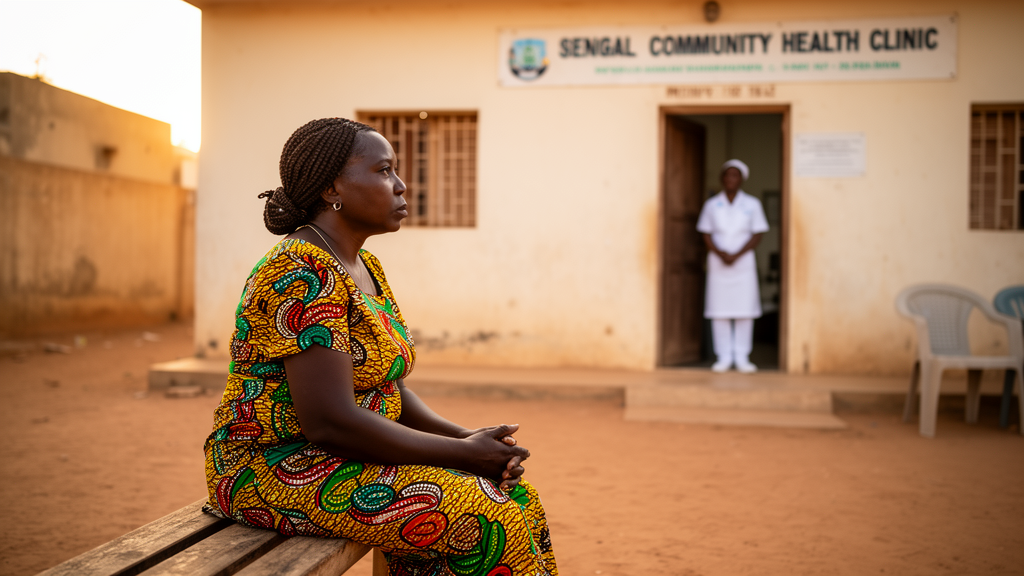
Cervical cancer remains one of the most preventable malignancies in medicine, yet in many parts of the world it continues to claim lives at rates that should alarm public health officials. A new study from Senegal, published in PLOS Global Public Health, offers a quantitative explanation for one of the most stubborn barriers: stigma. Researchers led by Fatou Bintou Seck and colleagues found that women who reported higher levels of cervical cancer–related stigma were significantly less likely to have ever been screened for the disease, a finding that could reshape how screening programs are designed in West Africa and beyond.
The research team conducted a quantitative descriptive and analytical cross-sectional study in two of Senegal’s regions, Dakar and Kédougou, a pairing that is geographically and socially striking. Dakar is the country’s densely populated coastal capital, home to major hospitals and clinics, while Kédougou is a remote southeastern region near the Guinean border, where health infrastructure is thinner and travel to facilities can be arduous. By studying both settings, the investigators aimed to capture how stigma operates across very different social and logistical landscapes within a single nation.
The study population consisted of women aged 25 to 69, the age range in which cervical cancer screening is generally recommended because it spans the decades when infection with high-risk human papillomavirus, the causative agent of nearly all cervical cancers, is most likely to progress to precancerous lesions and, if untreated, invasive cancer. Participants were recruited through a two-stage cluster sampling methodology, a design in which larger units such as neighborhoods or villages are selected first and individual households or respondents are sampled within them. This approach is well suited to community-based surveys in settings where complete population registries are unavailable.
From the sample, 287 women had complete data on their screening status. The numbers were sobering: only 15.7 percent reported having undergone one or more cervical cancer screenings in the past. The mean age of participants was 36.23 years, and the majority, 68.6 percent, were married and living in monogamous households. In other words, even in the capital region, where screening services physically exist, fewer than one in six women had ever taken advantage of them. That gap between availability and uptake is precisely the puzzle the study set out to solve.
The methodological heart of the paper is a newly constructed stigma index, developed specifically for this Senegalese context. Rather than relying on instruments imported wholesale from other settings, the researchers built a composite measure whose items covered several domains previously shown to be powerful predictors of stigma in the health psychology literature. These domains typically encompass anticipated stigma, such as fear of being judged by health workers or neighbors; internalized shame associated with a cancer in a reproductive organ; and perceived social isolation or blame directed at women with the disease. By scoring responses across these dimensions, the team produced a single, quantifiable stigma value for each participant, allowing stigma to enter statistical models as a measurable exposure rather than a vague narrative concept.
The analysis was performed with R version 4.5.0, and the investigators used logistic regression with a significance threshold of 5 percent to test whether stigma scores predicted screening behavior. Logistic regression is the standard tool for modeling binary outcomes, in this case whether a woman had ever been screened or not, and it yields an odds ratio that expresses how a one-unit change in the predictor shifts the odds of the outcome. Crucially, the researchers adjusted their models for age, marital status, and education level, three factors that could plausibly confound the relationship between stigma and screening by independently influencing both attitudes and health care use.
The result was clear and statistically robust. After adjustment, higher stigma scores were associated with lower odds of screening, with an odds ratio of 0.58 and a 95 percent confidence interval of 0.38 to 0.83, and a p-value of 0.006. In practical terms, women with higher stigma were roughly 42 percent less likely to have been screened than women with lower stigma, holding age, marital status, and education constant. Because the entire confidence interval lies below 1, the association is unlikely to be a statistical fluke, although as with any cross-sectional study, causality cannot be definitively established. It remains possible that women who avoid screening also develop more stigmatizing attitudes, or that unmeasured factors influence both.
Why would stigma suppress screening so powerfully? The biology of cervical cancer offers a clue. Screening typically involves a pelvic examination and, in many low-resource programs, visual inspection of the cervix with acetic acid or HPV testing of a self-collected or clinician-collected sample. The intimate nature of the procedure, combined with the fact that cervical cancer is linked to a sexually transmitted virus, can make women fear that seeking screening will invite accusations of promiscuity, suspicion from husbands, or gossip in the community. A diagnosis of precancerous lesions, even though it is highly treatable, may be perceived socially as a mark of shame. Stigma thus transforms a routine preventive visit into a perceived social risk, and many women rationally choose to avoid it.
The Senegalese findings arrive against a global backdrop of urgency. The World Health Organization has launched a global strategy to eliminate cervical cancer as a public health problem, built on three pillars: vaccination against HPV, screening with high-coverage targets, and prompt treatment of detected lesions. Countries are asked to screen a large proportion of eligible women at regular intervals. Yet uptake in much of sub-Saharan Africa remains far below those targets, and studies like this one demonstrate that building clinics and training providers, while essential, is not sufficient. Psychological and social barriers can throttle demand even when supply exists, which is why the authors argue that a better understanding of stigma is needed to adapt anti-cancer strategies to the realities of the communities they serve.
The study’s authors point to patient navigation as a promising response. Navigation programs assign trained personnel, often community members themselves, to guide women through the screening pathway: explaining the procedure, addressing fears, arranging appointments and transport, and following up on results. By inserting a trusted intermediary between the woman and the health system, navigation can dismantle the stigma barrier along with logistical obstacles such as distance, cost, and long waiting times. The stigma index developed in this study is presented as a novel, adaptable tool that can be used in future research, including the evaluation of whether stigma actually declines after a navigation intervention is implemented. If subsequent trials confirm that reducing stigma raises screening rates, Senegal’s experience could offer a template for other countries racing toward the elimination goal: measure the stigma, then design programs that dissolve it.
Subject of Research: The association between cervical cancer–related stigma and screening uptake among women in Senegal
Article Title: Impact of cervical cancer–related stigma on screening uptake in Dakar and Kedougou, Senegal: A context-specific stigma index
Article References: Impact of cervical cancer–related stigma on screening uptake in Dakar and Kedougou, Senegal: A context-specific stigma index. (n.d.). https://doi.org/10.1371/journal.pgph.0006187
Image Credits: AI Generated
DOI: 10.1371/journal.pgph.0006187
Keywords: cervical cancer, stigma, cancer screening, Senegal, Dakar, Kédougou, HPV, public health, logistic regression, patient navigation, global health, stigma index
Cite Scienmag News
Nathaniel Bowman. (October 9, 2026). Stigma Keeps Senegalese Women Away From Cervical Cancer Screening, Study Finds. Scienmag. https://scienmag.com/stigma-keeps-senegalese-women-away-from-cervical-cancer-screening-study-finds/
Nathaniel Bowman. "Stigma Keeps Senegalese Women Away From Cervical Cancer Screening, Study Finds." Scienmag, 9 October 2026, https://scienmag.com/stigma-keeps-senegalese-women-away-from-cervical-cancer-screening-study-finds/. Accessed 9 October 2026.
Nathaniel Bowman. "Stigma Keeps Senegalese Women Away From Cervical Cancer Screening, Study Finds." Scienmag. October 9, 2026. https://scienmag.com/stigma-keeps-senegalese-women-away-from-cervical-cancer-screening-study-finds/


