


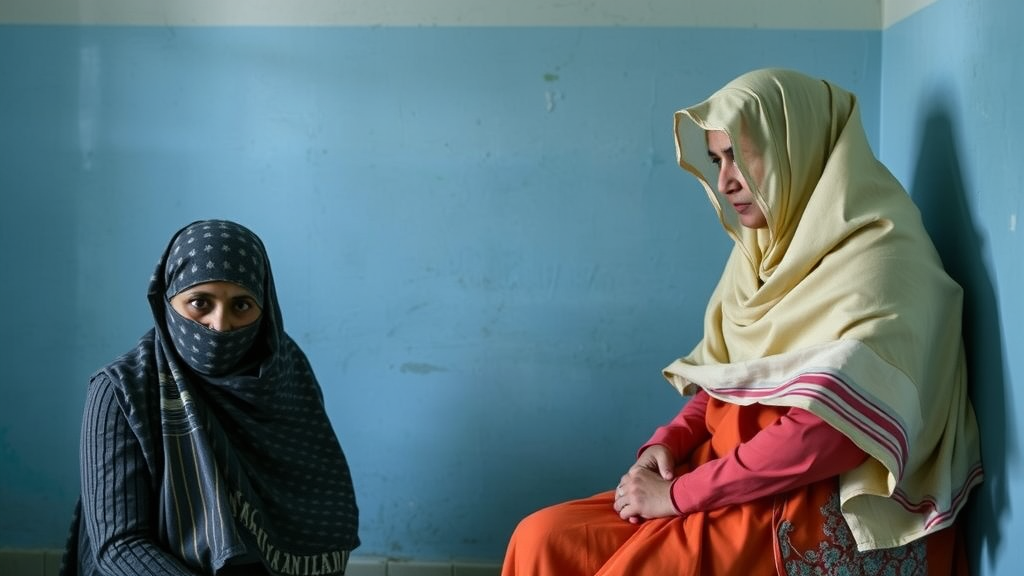
For millions of people in Pakistan living with disabilities, the hardest part of recovery is not the injury or the illness itself, but the journey to a rehabilitation clinic that may be physically unreachable, socially forbidden, or simply nonexistent. A new qualitative study published in the International Journal for Equity in Health maps, in unusually granular detail, how stigma, gender norms and systemic failures interlock to deny rehabilitation services to those who need them most. Drawing on focus group discussions with 55 adult patients and caregivers across rehabilitation facilities in Pakistan, the research reveals a layered architecture of exclusion that operates simultaneously at the level of the individual, the family, the community and the health system itself.
The study, led by Farzana Aziz of the Department of Community Health Sciences at Aga Khan University in Karachi, together with colleagues at Aga Khan University and the Johns Hopkins Bloomberg School of Public Health, employed a qualitative exploratory design based on secondary analysis of data collected from rehabilitation facilities. Seven focus group discussions were conducted using semi-structured guides, and the transcribed and translated data were analyzed through both inductive and deductive thematic approaches. Crucially, the researchers framed their analysis with three complementary theoretical lenses: the socioecological model, which situates health behavior within nested layers of influence; Erving Goffman’s classic theory of stigma, which describes how discredited identities reshape social interaction; and intersectionality theory, which examines how overlapping identities such as gender, disability and rural residence produce compounded disadvantage.
At the most intimate level of the socioecological framework, the findings describe a psychological battlefield. Participants reported internalized stigma and stereotyping that undermined their willingness to seek rehabilitation services in the first place. The fear of being labeled, pitied or judged created a form of self-censorship, in which psychological distress itself became a barrier to care. This is a well-documented phenomenon in disability studies, but the Pakistani data show how it operates with particular force in a context where disability is often interpreted through cultural misconceptions rather than medical understanding. When a condition is perceived as a moral failing, a curse or a source of family shame, the clinic door becomes not a gateway to recovery but a public declaration of difference.
The interpersonal layer of analysis exposed how family dynamics, which in many South Asian contexts function as the primary safety net, can paradoxically become instruments of exclusion. Participants described social isolation and limited family support as significant constraints on their participation in rehabilitation. Perhaps most striking is the gendered distribution of caregiving itself: the study documents how caregiving burdens fall disproportionately on women, who are expected to ferry children and relatives to appointments while simultaneously facing restrictions on their own mobility and autonomy. A mother seeking therapy for her child must negotiate not only the logistics of transport but also the social permission to travel, often without a male escort, in communities where such norms are strictly enforced.
At the community level, the built environment emerges as a silent but decisive gatekeeper. Participants described sidewalks that are uneven or broken, buildings without ramps, poorly maintained pathways and scarce public transport, all of which constrain the mobility of people with physical disabilities and delay the seeking of rehabilitation services. These are not minor inconveniences; for a wheelchair user in a city where curb cuts are rare and buses are inaccessible, a single appointment can require hours of negotiation with terrain, strangers and helpers. The study makes clear that inaccessible infrastructure is not an architectural afterthought but a structural expression of how little priority disabled citizens are accorded in public planning.
Cultural misconceptions and restrictive gender norms compound these physical barriers. The research found that community-level attitudes about disability and about women’s proper place in public space interact to restrict movement and delay care-seeking. A woman with a disability faces a double exclusion: she is constrained by norms governing female mobility, and by stigma attached to her disability, each amplifying the other. The intersectional analysis at the heart of the study demonstrates that these disadvantages are not merely additive but multiplicative, where gender, geography and disability status intersect to intensify inequities in access to rehabilitation services.
The health system itself, the layer where policy interventions might be expected to compensate for social barriers, instead reproduces them. In rural areas, participants reported inadequate rehabilitation facilities, insufficiently trained staff and gender-insensitive care. Discriminatory attitudes among providers, the study found, collectively limited access to services. This is a critical finding because it shifts responsibility away from individual patients and their families toward the institutions charged with serving them. A health system that cannot guarantee a trained therapist, a private examination space or respectful treatment effectively tells rural women and people with disabilities that rehabilitation is not meant for them, regardless of what official policy declares.
The compounded disadvantage experienced by women and rural participants stands out as the study’s central analytical contribution. A woman with a disability living in a rural district confronts, in a single journey to care, the full stack of barriers the research documents: internalized stigma, family permission structures, impassable roads, absent transport, distant facilities, untrained staff and providers who may treat her with disdain. Each barrier alone might be surmountable; together they form a nearly impenetrable wall. The intersectionality framework allows the researchers to show that these are not separate problems requiring separate solutions, but a single interlocking system of exclusion in which gender, geography and disability status reinforce one another at every level of the socioecological model.
The policy implications follow directly from this architecture. The authors argue that addressing these inequities requires the implementation of disability-inclusive laws and policies, inclusive training for rehabilitation staff, and stronger integration of rehabilitation within public health priorities. The study was conducted as part of the ReLAB-HS initiative, an international effort to strengthen rehabilitation as an essential component of health systems, and its findings speak directly to that agenda. Rehabilitation is often treated as a luxury service in low- and middle-income countries, an add-on to be funded after acute care needs are met. The Pakistani evidence suggests the opposite: rehabilitation is a gateway to participation in education, employment and community life, and its absence entrenches the very inequalities that development programs claim to combat.
What makes this study resonate beyond Pakistan is the methodological clarity with which it dissects exclusion. By combining the socioecological model with Goffman’s stigma theory and intersectionality, the researchers provide a template for understanding why health services fail marginalized populations even when they exist on paper. The ethical rigor of the work is equally notable: the study was approved by the Pakistan National Bioethics Committee and the Aga Khan University Ethical Review Committee, conducted in accordance with the Declaration of Helsinki, and all participants provided written informed consent. As global health moves toward universal health coverage, the message from Karachi is unambiguous: coverage that ignores stigma, gender and geography is not coverage at all. Equitable rehabilitation will require not just more clinics and more therapists, but a deliberate dismantling of the social and structural barriers that decide, long before any diagnosis is made, who gets to walk through the door.
Subject of Research: Intersecting sociocultural, gendered and structural barriers to rehabilitation access for people with disabilities in Pakistan
Article Title: Intersecting sociocultural, gendered, and structural barriers to rehabilitation access in Pakistan: a qualitative study
Article References: Aziz, F., Zia, N., Thobani, R. S., Ain, F. U., Fazal, M., Latif, A., & Asim, M. (2026). Intersecting sociocultural, gendered, and structural barriers to rehabilitation access in Pakistan: a qualitative study. International Journal for Equity in Health. https://doi.org/10.1186/s12939-026-02984-y
Image Credits: AI Generated
DOI: 10.1186/s12939-026-02984-y
Keywords: rehabilitation access, disability stigma, gender disparities, intersectionality, Pakistan, health equity, socioecological model, rural health, inclusive healthcare, caregiving burden, qualitative research, health systems
Cite Scienmag News
Courtney Benton. (September 23, 2026). Stigma, Gender Norms and Broken Systems Keep Rehabilitation Out of Reach in Pakistan. Scienmag. https://scienmag.com/stigma-gender-norms-and-broken-systems-keep-rehabilitation-out-of-reach-in-pakistan/
Courtney Benton. "Stigma, Gender Norms and Broken Systems Keep Rehabilitation Out of Reach in Pakistan." Scienmag, 23 September 2026, https://scienmag.com/stigma-gender-norms-and-broken-systems-keep-rehabilitation-out-of-reach-in-pakistan/. Accessed 5 October 2026.
Courtney Benton. "Stigma, Gender Norms and Broken Systems Keep Rehabilitation Out of Reach in Pakistan." Scienmag. September 23, 2026. https://scienmag.com/stigma-gender-norms-and-broken-systems-keep-rehabilitation-out-of-reach-in-pakistan/


