


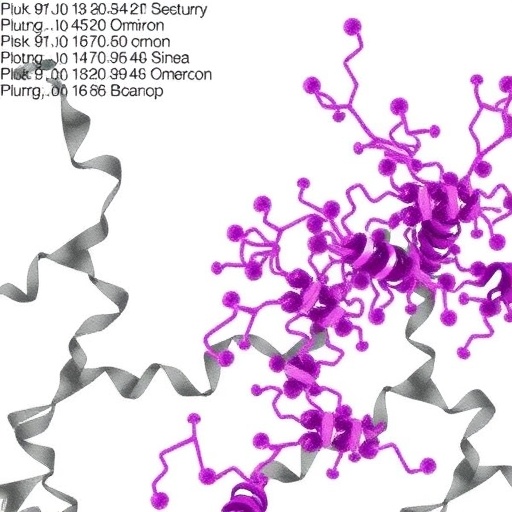
In an era where the SARS-CoV-2 virus continuously evolves, understanding the nuances of its spike protein’s conformation is pivotal for staying ahead in therapeutic development. Recently published research unveils groundbreaking insights into a conserved region of the coronavirus spike protein, which holds promise for broad-spectrum antiviral strategies. This study profoundly shifts the paradigm by revealing how the virus’s Omicron variants evade immune responses via steric hindrance mechanisms and how antibody engineering might overcome this challenge.
The spike protein of coronaviruses is the essential molecular machinery that facilitates viral entry into host cells. Central to this process is the S2′ site, localized within spike residues 815–825, a pan-coronavirus epitope. This region is typically hidden in the spike’s prefusion conformation, cloaked from antibody recognition. However, upon binding to the host cell receptor ACE2, transient but crucial conformational changes expose this epitope, rendering it temporarily vulnerable. Prior investigations highlighted this exposure but lacked a detailed structural and functional understanding of this fleeting state—commonly described as the early fusion intermediate.
Researchers deployed an integrative approach that combined high-resolution structural techniques with functional assays to dissect the nature of this elusive intermediate. Their discovery centered on a unique antibody, designated 76E1, which specifically targets the 815–825 epitope. What sets 76E1 apart is its selective affinity for the early fusion intermediate where the epitope forms a helical structure termed the “S2′-helix.” This conformation is not present in the canonical prefusion or postfusion states of the spike, underscoring antibody 76E1’s specialization in recognizing a transitional form.
Delving deeper, the team uncovered how the Omicron variants of SARS-CoV-2 take evasive action against such antibodies. Structural analyses revealed that these variants exhibit subtle but consequential shifts in the S2′-helix positioning. These shifts, in concert with restricted movement between the S1 subunit and the ACE2 receptor, create a spatially confined environment that sterically hinders the binding of antibodies like 76E1. This architectural modulation effectively shields the conserved epitope from immune recognition during the critical early fusion intermediate window.
However, the escape strategies of Omicron extend beyond spatial manipulation. Functional studies illuminated an increased reliance on cathepsin-mediated entry pathways in these variants. Cathepsins, a family of proteolytic enzymes, facilitate spike protein activation within endosomes, circumventing the membrane cleavage typically targeted by neutralizing antibodies. This cathepsin dependence undermines 76E1’s ability to inhibit cleavage at the S2′ site, further compromising its neutralizing potential against Omicron.
An intriguing twist in this immune evasion narrative is the pivotal role of a single mutation, H655Y. This mutation appears central to the conformational and functional adaptations that underpin Omicron’s resistance to 76E1 antibody activity. By influencing the spike’s dynamics and cleavage susceptibility, H655Y operates as a molecular linchpin, orchestrating the variant’s ability to escape neutralization without losing infectivity.
Recognizing the physical barrier imposed by antibody size, the investigators innovated by designing minimized versions of 76E1. This size reduction was more than a mere engineering feat; it fundamentally altered the antibody’s access to the S2′-helix under sterically constrained conditions. Remarkably, these smaller antibodies overcame the spatial hindrances that thwarted their larger predecessors, restoring and amplifying neutralizing activity across a spectrum of SARS-CoV-2 Omicron variants.
Moreover, this antibody minimization strategy yielded broad-spectrum antiviral efficacy, extending beyond SARS-CoV-2 to other coronaviruses including SARS-CoV-1 and HCoV-229E. These findings suggest that the S2′-helix region is a compelling universal target that, when paired with appropriately optimized antibodies, may form the basis of formidable pan-coronavirus therapies.
By elucidating the structural choreography of the spike’s early fusion intermediate and revealing how antibody sterics influence therapeutic efficacy, this research lays a robust foundation for the development of next-generation antivirals. Importantly, it spotlights small molecule inhibitors and minimized biologics as promising candidates capable of targeting conserved and transient viral epitopes otherwise hidden from conventional antibody strategies.
As the SARS-CoV-2 pandemic persists and new variants emerge, insights into the interplay between viral structural dynamics and immune evasion are invaluable. The convergence of structural biology, immunology, and virology within this study exemplifies interdisciplinary excellence, carving a path toward innovative interventions capable of curtailing coronavirus threats on a global scale.
Future therapeutic designs inspired by these findings will likely focus on harnessing conformational plasticity and steric compatibility to neutralize coronavirus infections more effectively. By prioritizing molecules that exploit fleeting but conserved spike configurations, researchers envision a new frontier of durable pan-coronavirus immunity that anticipates viral evolution rather than reacting to it.
This work not only enriches our mechanistic understanding of coronavirus fusion biology but also accelerates the translational trajectory from molecular discovery to clinical application. The notion that antibody size and structural accessibility dictate neutralization efficacy reframes vaccine and therapeutic antibody development, demanding a nuanced approach to molecular design.
Ultimately, the revelation that the transient exposure and helical rearrangement of the S2′-helix serve as a critical Achilles’ heel in coronaviruses injects fresh momentum into the global pursuit of universal treatments. Such targeting strategies may complement existing vaccines and antivirals, bolstering preparedness against current and future coronavirus pandemics.
As the field advances, the blueprint laid out by this study promises to inspire researchers and pharmaceutical innovators alike to reimagine how we combat viral diversity and immune escape. In this evolving war against pathogens, understanding the spike’s fleeting conformations could indeed be the key to unlocking lasting and comprehensive viral control.
Cite Scienmag News
Denise Maddox. (May 6, 2026). Steric Hindrance Blocks Antibody Binding in Omicron. Scienmag. https://scienmag.com/steric-hindrance-blocks-antibody-binding-in-omicron/
Denise Maddox. "Steric Hindrance Blocks Antibody Binding in Omicron." Scienmag, 6 May 2026, https://scienmag.com/steric-hindrance-blocks-antibody-binding-in-omicron/. Accessed 4 September 2026.
Denise Maddox. "Steric Hindrance Blocks Antibody Binding in Omicron." Scienmag. May 6, 2026. https://scienmag.com/steric-hindrance-blocks-antibody-binding-in-omicron/


