

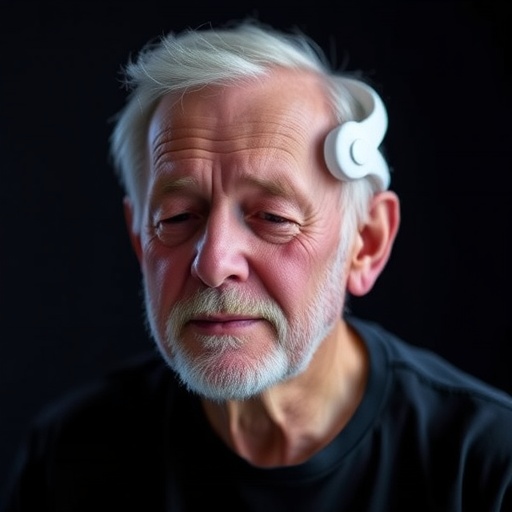
In an ambitious stride towards novel neurological therapies, researchers have unveiled promising results from a groundbreaking study investigating the effects of transcranial static magnetic field stimulation (tSMS) on essential tremor, a prevalent movement disorder that debilitates millions worldwide. This randomized pilot study, orchestrated by Urso et al., delves into the modulation of the primary motor cortex—a pivotal brain region implicated in motor control—by applying non-invasive, low-intensity static magnetic fields. The innovative approach shines new light on potential therapeutic strategies beyond conventional pharmacological interventions and invasive neuromodulation techniques.
Essential tremor is characterized by involuntary, rhythmic shaking primarily affecting the hands, but it often extends to the head, voice, and other body segments, severely impairing everyday activities and quality of life. Existing treatments, including beta-blockers and primidone, provide insufficient symptomatic relief for many patients, while surgical options such as deep brain stimulation carry risks and accessibility challenges. Hence, the pursuit of non-invasive neuromodulatory methods that can precisely target dysfunctional neuronal networks has emerged as a critical frontier in movement disorder research.
The investigative team employed transcranial static magnetic field stimulation, a technique that involves placing a magnet over the scalp to generate a static magnetic field that penetrates cortical tissue. Unlike traditional transcranial magnetic stimulation (TMS), which uses rapidly changing magnetic pulses to induce electric currents, tSMS produces a constant magnetic field, potentially inducing subtler neuromodulatory effects by altering ion channel function or membrane potentials. The allure of tSMS lies in its safety profile, simplicity, and cost-effectiveness, making it a viable clinical adjunct if efficacy is established.
Focusing on the primary motor cortex, the hub for initiating voluntary movements, researchers meticulously designed a randomized controlled trial enrolling patients diagnosed with essential tremor. Participants underwent a series of tSMS sessions, where a neodymium magnet was positioned over the motor cortex contralateral to the more affected side. Sham stimulation sessions, with identical setup but lacking magnetic field strength, served as controls to account for placebo effects. Tremor severity was meticulously quantified using clinical rating scales in conjunction with objective biomechanical measurements, ensuring rigorous outcome evaluation.
Initial findings indicate that tSMS applied to the primary motor cortex modulates tremor amplitude, with participants demonstrating statistically significant reductions compared to sham controls. These results suggest that static magnetic fields might influence motor cortical excitability in a manner conducive to tremor attenuation. The underlying mechanisms remain an area of intense scientific curiosity, with hypotheses ranging from magnetic field-induced modulation of calcium ion dynamics to altered synaptic transmission efficacy within corticospinal circuits.
Importantly, the intervention was well tolerated, with no adverse events reported, underscoring the safety and feasibility of tSMS in a clinical population. This safety profile contrasts favorably with the side effects commonly encountered in pharmacological therapies and the invasiveness of neurosurgical interventions, positioning tSMS as an attractive candidate for further exploration. Additionally, the study’s randomized, double-blind design enhances the credibility of the findings, mitigating biases inherent in open-label or observational investigations.
The implications of this work extend beyond essential tremor, opening avenues for leveraging static magnetic fields in other neuropsychiatric and neurodegenerative disorders where aberrant cortical excitability and network dysfunction are implicated. By refining stimulation parameters, such as magnetic field intensity, duration, and targeted cortical sites, future research can optimize therapeutic protocols and personalize interventions to individual neurophysiological profiles. Such precision neuromodulation would mark a paradigm shift in treating brain disorders.
Furthermore, the study contributes to the growing body of evidence supporting magnetic neuromodulation’s role in modulating brain plasticity. Unlike transient electrophysiological effects observed in conventional TMS, tSMS may induce longer-lasting alterations at the cellular and network levels via mechanisms such as modulated gene expression or neurochemical environment changes. These longer-term effects are especially relevant for chronic conditions like essential tremor, where sustained symptom control is paramount.
Neuroimaging and electrophysiological studies integrated into future protocols could unravel the neurobiological substrates engaged by tSMS, correlating clinical improvements with brain activity changes. Functional MRI, magnetoencephalography, and electroencephalography could map shifts in motor network connectivity and synchronization, elucidating how static magnetic fields recalibrate dysfunctional circuits. Such biomarker-driven approaches would accelerate mechanistic understanding and clinical translation.
The exploratory nature of this pilot study, while promising, necessitates larger-scale trials with extended follow-up to determine durability of therapeutic benefits and to optimize stimulation regimens. Investigating dose-response relationships and individual variability will be crucial for establishing standardized clinical guidelines. Additionally, comparative studies juxtaposing tSMS with established neuromodulation techniques could clarify relative efficacy and inform combinatorial treatment strategies.
In conclusion, Urso and colleagues’ pioneering efforts illuminate the potential of transcranial static magnetic field stimulation as a novel, non-invasive therapeutic avenue for essential tremor. By targeting the primary motor cortex with a static magnetic field, they have laid the groundwork for a new class of neuromodulatory interventions that balance efficacy, safety, and accessibility. As the neuroscience community seeks more refined approaches to complex movement disorders, tSMS offers a captivating blend of scientific intrigue and clinical promise.
The study’s innovative methodology and encouraging outcomes have already sparked conversations across neurology and biomedical engineering disciplines, reflecting a confluence of interdisciplinary expertise imperative for advancing brain health technologies. Embracing this convergence could accelerate breakthroughs that not only alleviate tremor symptoms but also enhance overall neural function and patient well-being.
This exciting frontier exemplifies how harnessing physical principles—in this case, magnetism—can transcend traditional treatment paradigms, highlighting the profound interplay between basic science and clinical innovation. The journey from pilot data to routine clinical application will demand collaborative efforts, robust validation, and patient-centered research to fully unlock the potential of tSMS in transforming lives afflicted by essential tremor and beyond.
Subject of Research: Neuromodulation of the primary motor cortex using transcranial static magnetic field stimulation in patients with essential tremor.
Article Title: Transcranial static magnetic field stimulation of the primary motor cortex in essential tremor: a randomized pilot study.
Article References:
Urso, D., Monje, M.H.G., Fernández-Rodríguez, B. et al. Transcranial static magnetic field stimulation of the primary motor cortex in essential tremor: a randomized pilot study. npj Parkinsons Dis. 11, 336 (2025). https://doi.org/10.1038/s41531-025-01182-x
Image Credits: AI Generated


