


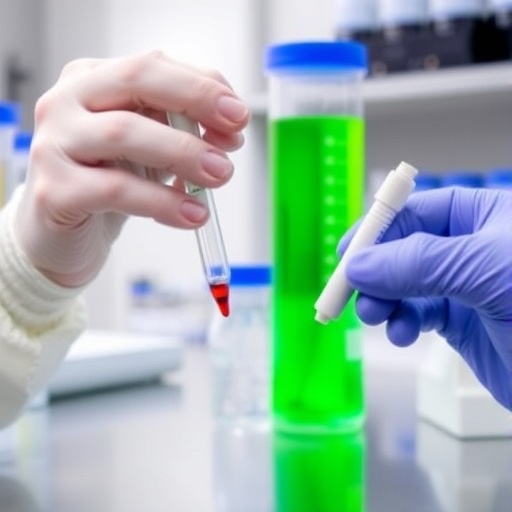
Oxidative stress lies at the center of many difficult biomedical problems, from inflammation and neurodegeneration to cardiovascular disease and tissue injury. As cells generate excessive reactive oxygen species, molecules such as superoxide anions and hydrogen peroxide can damage proteins, membranes and genetic material. A new protocol published in Nature Protocols aims to make one of the most promising countermeasures—antioxidant nanozymes—easier to evaluate, compare and improve.
Nanozymes are nanomaterials that imitate the catalytic behavior of natural enzymes. In the context of antioxidant research, the most important activities are often superoxide dismutase-like activity, which removes superoxide anions, and catalase-like activity, which breaks down hydrogen peroxide. Unlike natural enzymes, nanozymes can be engineered from carbon materials, metal oxides, noble metals or isolated metal atoms. Their physical and chemical diversity, however, has made it difficult to establish a consistent way to measure how well they work.
The protocol developed by Zhang, Zhao, Zhang and colleagues addresses this problem with a standardized, quantitative workflow. Rather than relying on a single test or a qualitative change in color, the procedure combines complementary biochemical assays to determine catalytic rates, kinetic constants and activity under controlled conditions. The researchers also demonstrate how the same framework can be extended from purified chemical systems to cellular models, where the ability of a nanozyme to reduce reactive oxygen species can be directly tested.
The superoxide dismutase-like assay uses a self-prepared system containing xanthine, xanthine oxidase and water-soluble tetrazolium salt-1, commonly known as WST-1. In this reaction, xanthine oxidase generates superoxide anions. These reactive molecules reduce WST-1 to a colored formazan product, producing a measurable signal. When a nanozyme with dismutase-like activity is added, it converts superoxide into hydrogen peroxide and molecular oxygen, reducing the amount of formazan formed. The decrease in color therefore provides an indirect measurement of superoxide removal.
A major challenge in studying superoxide is its short lifetime. Because the molecule rapidly reacts with other components of a solution, its concentration cannot be treated as a stable, easily measured substrate. The protocol tackles this issue by controlling the amount of superoxide generated through carefully adjusted concentrations of xanthine oxidase. Researchers can then record reaction rates across a range of conditions and apply Michaelis–Menten analysis. This approach makes it possible to estimate parameters such as the apparent maximum reaction rate and the apparent affinity of a nanozyme for the reactive species it removes.
That kinetic information could be more useful than a single headline activity value. Two nanozymes might appear equally effective in one fixed assay, yet behave very differently when substrate levels, catalyst concentrations or reaction times change. By measuring how the rate responds to controlled changes, investigators can begin to distinguish catalytic efficiency from simple signal suppression. The design also encourages researchers to report experimental conditions in sufficient detail for independent laboratories to reproduce the results.
The catalase-like assay follows a different strategy. Hydrogen peroxide decomposition is monitored directly by ultraviolet–visible spectrophotometry at 240 nanometers, where hydrogen peroxide absorbs light. As the peroxide is broken down, absorbance declines over time. From these measurements, the protocol can determine specific activity and kinetic constants for the nanozyme. These values help account for the amount of material used and provide a more meaningful basis for comparing catalysts with different compositions, particle sizes or surface structures.
The researchers also include a complementary assay based on 3,3′,5,5′-tetramethylbenzidine, or TMB. This test is important because some nanomaterials can display peroxidase-like activity, using hydrogen peroxide to oxidize other molecules rather than decomposing the peroxide in a catalase-like reaction. A material may therefore produce an apparently positive antioxidant result while acting through a different catalytic pathway. The TMB oxidation assay helps identify such interference and prevents catalase-like performance from being overstated.
To demonstrate the breadth of the workflow, the study applies it to representative nanozymes from several major material classes, including carbon-based systems, metal oxides, noble metals and single-atom catalysts. These examples show how a shared measurement framework can be used even when the materials have very different structures and chemical properties. The authors emphasize that standardized testing is essential for uncovering structure–activity relationships, such as how composition, active-site configuration or surface chemistry influences reactive oxygen species scavenging.
The protocol extends beyond test tubes through cellular validation using flow cytometry. In these experiments, cells exposed to oxidative stress can be examined for changes in intracellular reactive oxygen species after treatment with a nanozyme. Flow cytometry allows researchers to analyze large numbers of cells and quantify shifts in fluorescence associated with oxidant-sensitive probes. Although cellular experiments introduce additional variables, they provide an important functional check: a catalyst that performs well in a purified reaction must also remain stable, accessible and sufficiently safe in a biological environment to produce a measurable effect.
The complete workflow can be carried out in approximately 10–12 hours by researchers with standard training in biochemistry and flow cytometric analysis. Its significance lies not in introducing a new class of nanomaterial, but in creating a common language for evaluating materials that are often tested under incompatible conditions. More consistent measurements could make it easier to identify genuinely high-performing nanozymes, avoid misleading comparisons and guide the rational design of future therapeutics for oxidative stress-related disorders. As interest in nanomedicine continues to accelerate, reliable activity assays may prove as important as the materials themselves.
Cite Scienmag News
Ophelia Keating. (August 10, 2026). Standardized Tests Evaluate Nanozymes’ Superoxide Dismutase- and Catalase-Like Activities. Scienmag. https://scienmag.com/standardized-tests-evaluate-nanozymes-superoxide-dismutase-and-catalase-like-activities/
Ophelia Keating. "Standardized Tests Evaluate Nanozymes’ Superoxide Dismutase- and Catalase-Like Activities." Scienmag, 10 August 2026, https://scienmag.com/standardized-tests-evaluate-nanozymes-superoxide-dismutase-and-catalase-like-activities/. Accessed 4 September 2026.
Ophelia Keating. "Standardized Tests Evaluate Nanozymes’ Superoxide Dismutase- and Catalase-Like Activities." Scienmag. August 10, 2026. https://scienmag.com/standardized-tests-evaluate-nanozymes-superoxide-dismutase-and-catalase-like-activities/


