


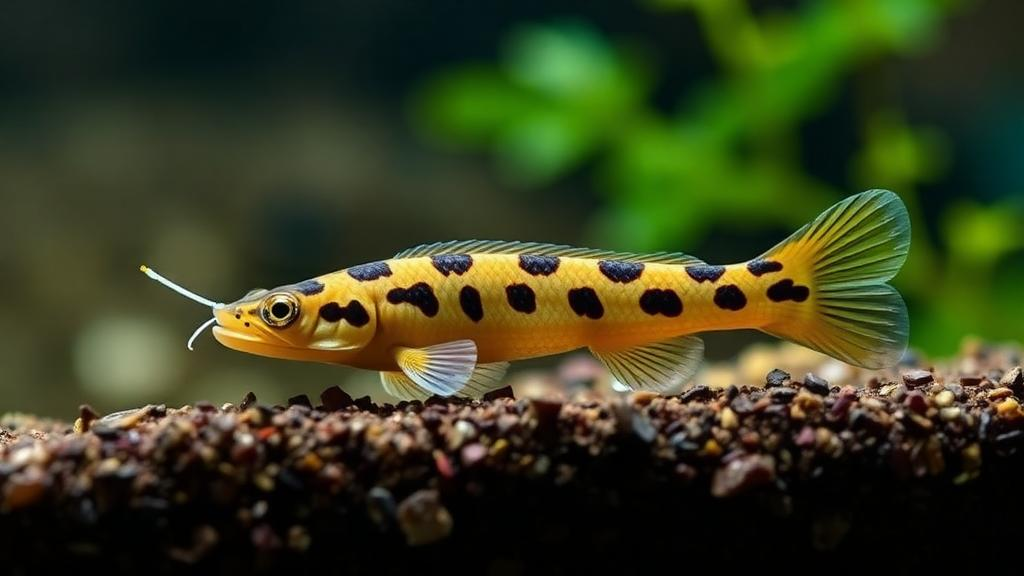
Freshwater loaches collected across Sri Lanka’s wet-zone river basins form a single evolutionary radiation but contain at least eight distinct mitochondrial lineages, according to a study combining DNA analyses, museum specimens and detailed measurements of body form. The findings indicate that the island’s recognized loach diversity is substantially incomplete: genetic structure is clearer than the traits traditionally used to distinguish species, and several lineages occupy the same basins or neighboring watersheds without closely resembling one another morphologically. They generated sequences for the mitochondrial genes cox1 and cytb and the nuclear genes rag1 and irbp, then reconstructed maximum-likelihood phylogenies.
Both the mitochondrial and nuclear trees strongly supported Sri Lankan Schistura as a monophyletic group, with 100% bootstrap support. This pattern is consistent with the island’s loaches having descended from one colonization event rather than representing several independent arrivals from South or Southeast Asia. The study did not include comparable molecular samples from peninsular India, where the ancestral population of the Sri Lankan radiation would have originated, so that broader relationship remains less fully resolved.
A tree-based molecular species delimitation analysis divided the mitochondrial dataset into eight molecular operational taxonomic units, or MOTUs, designated L1 through L8. A second, distance-based method generally recovered similar groupings but identified nine units: it split L7 into four, combined L2 with L3, and combined L4 with L5. These differences are not decisive evidence for a fixed number of species.
Both methods depend on sampling density and the number of haplotypes detected, and Sri Lanka’s steep terrain can make genetic divergence within a lineage appear unusually low while exaggerating separation between lineages. The eight MOTUs are therefore best treated as provisional evolutionary lineages whose limits may be refined with additional sampling and more informative nuclear data. The lineages have a pronounced geographic structure.
L1 is restricted to downstream sites in the Mahaweli basin at elevations of 1,155–1,182 metres above sea level, whereas L3 occurs across 17 localities in that basin between 243 and 1,266 metres, including the headwaters of the Menik, Kumbukkan and Gal rivers. L2 occupies the headwaters of the Maa, Attanagalu and Kelani rivers and is the sister lineage of L3. L4 occupies lowlands of the Kalu and Bentara basins, while L5 corresponds to the recognized Schistura scripta and L6 to S. madhavai.
In the second major clade, L7 is a mid-elevation lineage found at 125–648 metres in the Kalu, Gin, Nilwala and Walawe basins, while the higher-elevation L8 occurs at 571–835 metres, including specimens from the Kalu and Walawe headwaters. Genetic isolation between river basins was generally strong. Haplotype networks showed that, except within L3, sampled mitochondrial haplotypes were not shared across watersheds, even between adjacent basins.
L3 was the exception, with haplotypes occurring across the Mahaweli, Menik, Gal, Kumbukkan and Kelani systems. One L3 specimen from Makandawa in the Kelani basin, only about 10 kilometres from the Kelani–Mahaweli watershed, also grouped with the widespread highland lineage. The authors considered headwater capture a possible explanation for such transfers, but the available sampling identified only this isolated case and could not establish the precise mechanism.
The evidence therefore supports limited movement between some headwater systems rather than broad mixing throughout the island’s wet zone. Body measurements and coloration showed that genetic separation is only partly mirrored by visible differences. Principal component analysis of 39 size-corrected measurements and counts separated L1, L3, L5 and L8 clearly, whereas L2, L4, L6 and L7 overlapped substantially in morphological space.
Multiple correspondence analysis of 15 categorical traits also distinguished the lineages statistically, especially through anus position, body scaling, caudal-fin bars and the shape and width of dorsal bars. Yet some striking traits occurred in only one population of a genetic lineage, and populations assigned to the same lineage could differ noticeably. Altitude was associated with several conspicuous traits.
Highland lineages L1, L3 and L8 had larger average body sizes, generally possessed 8½ branched dorsal-fin rays and often had a rudimentary or distinct pelvic axillary lobe. The same lineages tended to have body scales that were distinct only behind the dorsal-fin origin. Lowland lineages more often had 7½ branched dorsal-fin rays, and most lacked the pelvic lobe.
Body-scalation patterns were not uniform across all lowland lineages: L2, L4, L6 and L7 showed inconsistent distributions of distinct scales. Standard length was positively correlated with elevation, while the number of body bars declined as fish became larger. The researchers suggested that reduced competition in species-poor mountain streams may contribute to larger body size, but the comparative study did not experimentally test that explanation.
The three recognized species remain valid. Genetic distances and re-examination of the rediscovered syntypes of S. notostigma support its separation from S. scripta and S. madhavai. S. scripta differed by more than 3.1% in uncorrected cox1 distance from the other lineages, including 6.0–6.9% from S. madhavai, while S. madhavai exceeded 4.8% from the other lineages.
The broader sampling also showed that both named species are more widely distributed than their original descriptions implied. In contrast, the apparent diagnostic value of some local features is limited: the distinctive body-bar and lateral-line patterns of S. scripta at its type locality were not consistently present in other populations assigned to the same genetic lineage. The type locality of S. notostigma remains uncertain because its original description gave only “Ceylon.”
The phylogeographic pattern suggests that Sri Lanka’s highlands were colonized more than once and may have lost older fish communities during dry climatic episodes. L3, the most widespread montane lineage, produced significantly negative results in both Tajima’s D and Fu and Li’s F neutrality tests, a pattern consistent with a recent expansion after population decline. Its presence in both the physiographically separate central mountains and Knuckles Massif strengthens the interpretation that the highlands were colonized recently, possibly after a climate-driven extinction as recent as the Last Glacial Maximum.
L1 and L8 appear to represent independent highland colonizations from southern basins, and L1 may instead be a relict that survived a previous highland desiccation. The southwestern lowlands contain more lineages in a smaller area, consistent with their role as refugia during dry periods. Overall, the study portrays a rapidly diversifying loach radiation whose evolutionary history is only partly visible in anatomy.
Sri Lankan Schistura apparently colonized the island relatively recently, spread through its moist southwestern quadrant to elevations of about 1,450 metres and separated into eight provisional mitochondrial lineages. Yet the traits traditionally used in loach taxonomy often failed to track those genetic boundaries, underscoring the risk of recognizing species from a single locality or a small series of specimens. The authors called for wider sampling and genome-scale nuclear markers, which could distinguish recent lineage sorting from historical gene flow and clarify how many species the eight groups ultimately represent.
The study itself is a research assessment rather than a formal revision of Sri Lankan Schistura taxonomy, so its MOTUs should not automatically be read as eight formally named species.
Subject of Research: Genetic and morphological diversification of Sri Lankan loaches in the genus Schistura
Article Title: The diversification of the loach genus Schistura McClelland, 1838 ( Teleostei , Nemacheilidae ) in Sri Lanka
Article References: Sudasinghe, H., Wijesooriya, K., Ranasinghe, T., Pethiyagoda, R., & Meegaskumbura, M. (2025). The diversification of the loach genus Schistura McClelland, 1838 (Teleostei, Nemacheilidae) in Sri Lanka. Zoosystematics and Evolution, 101(4), 2133-2159. https://doi.org/10.3897/zse.101.165370
Image Credits: AI Generated
Keywords: Schistura loaches, Sri Lanka, evolutionary lineages, mitochondrial DNA, nuclear DNA, phylogeography, cryptic diversity, freshwater fish, wet-zone rivers, highland colonization, diversification, loach
Cite Scienmag News
Gavin Prescott. (October 20, 2026). Sri Lanka’s loaches reveal eight hidden evolutionary lineages. Scienmag. https://scienmag.com/sri-lankas-loaches-reveal-eight-hidden-evolutionary-lineages/
Gavin Prescott. "Sri Lanka’s loaches reveal eight hidden evolutionary lineages." Scienmag, 20 October 2026, https://scienmag.com/sri-lankas-loaches-reveal-eight-hidden-evolutionary-lineages/. Accessed 20 October 2026.
Gavin Prescott. "Sri Lanka’s loaches reveal eight hidden evolutionary lineages." Scienmag. October 20, 2026. https://scienmag.com/sri-lankas-loaches-reveal-eight-hidden-evolutionary-lineages/


