


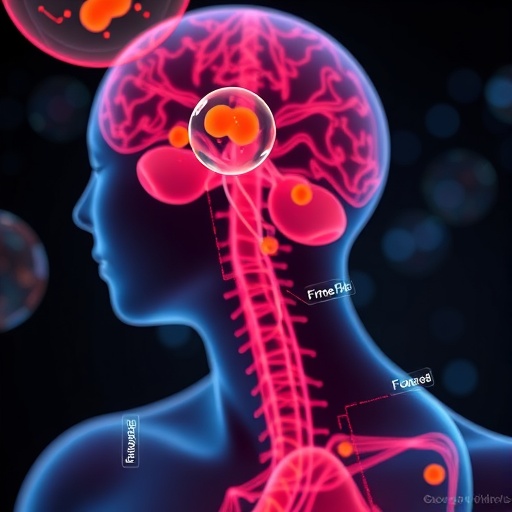
A new study published in Nature Communications is challenging one of psychiatry’s most persistent assumptions: that major mental disorders can be cleanly separated by their symptoms. Researchers report that cerebrospinal fluid, the clear liquid surrounding the brain and spinal cord, contains molecular signals pointing to a shared biological disturbance across several psychiatric conditions. The findings focus on synaptic dysfunction—the failure of communication points between nerve cells—and suggest that disrupted neural connectivity may represent a common biological thread linking disorders traditionally diagnosed as distinct.
The study, led by Göteson, Nilsson, Camporesi and colleagues, examines cerebrospinal fluid biomarkers associated with synaptic health. Synapses are highly specialized junctions through which neurons exchange electrical and chemical signals. They are essential for memory, learning, motivation, emotional regulation and perception. When synapses are formed, strengthened, weakened or eliminated, the brain continuously reshapes its networks in response to experience. Disturbances in this process have long been suspected in psychiatric illness, but much of the evidence has come from brain imaging, genetic studies or post-mortem tissue rather than direct molecular measurements in living patients.
Cerebrospinal fluid offers a rare window into the brain’s biochemical environment. It is produced within the central nervous system and circulates through the ventricles and around the brain and spinal cord, carrying proteins, metabolites and other molecular traces. Because it is in close contact with neural tissue, changes in its composition can reflect processes that may be difficult to detect in blood. Blood-based tests are easier to collect, but the blood–brain barrier limits the movement of many brain-derived molecules into the circulation. CSF sampling is more invasive, yet it can provide a much more direct view of neurological biology.
The researchers’ central message is transdiagnostic. In medicine, a diagnosis usually groups patients according to symptoms: mood changes, hallucinations, altered energy, impaired concentration or disturbed behavior. Transdiagnostic research instead asks whether the same biological mechanisms cut across multiple diagnostic categories. The new findings indicate that synaptic abnormalities may not belong exclusively to a single condition. Rather, they could be present in varying degrees across major psychiatric disorders, helping explain why different illnesses often share symptoms, risk factors and treatment responses.
This matters because psychiatric diagnoses are largely descriptive. Unlike many areas of medicine, they are not generally defined by a blood test, brain scan or single molecular abnormality. Two people carrying the same diagnosis can have very different biological profiles, while people with different diagnoses may show strikingly similar changes in cognition, sleep, emotion or social functioning. A biomarker pattern related to synaptic dysfunction could therefore help shift psychiatry toward a biology-based framework, in which treatments are selected according to the mechanisms active in an individual patient rather than diagnosis alone.
The study does not mean that all psychiatric disorders are the same, nor that a single CSF measurement can already diagnose illness or predict an individual’s future. Synapses are involved in virtually every major brain function, and their molecular signals can be influenced by age, medication, stress, inflammation, neurodevelopment and other medical factors. A useful clinical biomarker must be reproducible, specific enough to distinguish meaningful biological subgroups and practical to measure. Lumbar puncture, the procedure used to obtain CSF, is safe when performed appropriately but remains more demanding than a blood draw, limiting its immediate use for routine screening.
Even so, the work could have an important impact on how researchers design psychiatric studies. If synaptic dysfunction is shared across diagnostic boundaries, clinical trials may be more informative when they recruit participants based on biological characteristics rather than labels alone. A therapy aimed at protecting synapses, restoring plasticity or correcting abnormal neuronal signaling might benefit a carefully selected group of patients with different diagnoses. Conversely, a treatment could fail in a broad diagnostic population simply because only a subset of participants carries the relevant molecular disturbance.
The findings also connect psychiatry with a larger scientific effort to understand the brain as a dynamic network rather than a collection of isolated regions. Synapses constantly change in response to activity, hormones, immune signals and experience. Their breakdown or mistuning could help link molecular events to the symptoms seen in the clinic, from impaired attention and memory to altered reward processing and emotional instability. Future research will need to determine which synaptic pathways are affected, whether the changes arise early or late in illness, and whether they can be modified by medication, psychotherapy, lifestyle or emerging biological treatments.
For now, the study offers a compelling biological clue rather than a finished diagnostic revolution. By identifying cerebrospinal fluid signals that span major psychiatric disorders, the researchers add weight to the idea that the boundaries used to classify mental illness may not match the underlying biology. The next challenge is to validate these biomarkers in larger and more diverse populations, track them over time and test whether they can guide treatment. If that work succeeds, a fluid once viewed mainly as a protective cushion around the brain could become a powerful tool for revealing—and eventually treating—the hidden molecular architecture of mental illness.
Cite Scienmag News
Glenn Wilkins. (August 1, 2026). Spinal fluid biomarkers reveal shared synaptic dysfunction across major psychiatric disorders. Scienmag. https://scienmag.com/spinal-fluid-biomarkers-reveal-shared-synaptic-dysfunction-across-major-psychiatric-disorders/
Glenn Wilkins. "Spinal fluid biomarkers reveal shared synaptic dysfunction across major psychiatric disorders." Scienmag, 1 August 2026, https://scienmag.com/spinal-fluid-biomarkers-reveal-shared-synaptic-dysfunction-across-major-psychiatric-disorders/. Accessed 3 September 2026.
Glenn Wilkins. "Spinal fluid biomarkers reveal shared synaptic dysfunction across major psychiatric disorders." Scienmag. August 1, 2026. https://scienmag.com/spinal-fluid-biomarkers-reveal-shared-synaptic-dysfunction-across-major-psychiatric-disorders/


