


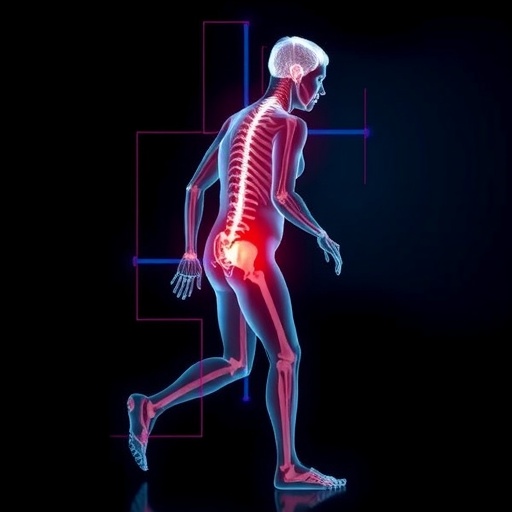
In an era marked by transformative advances in neurotechnology, the latest research into spinal cord stimulation (SCS) offers compelling hope for patients battling gait impairment associated with Parkinson’s disease. Published in Nature Communications in 2026, the study led by Terkelsen, Hvingelby, Johnsen, and colleagues presents data from a rigorously designed double-blinded, randomized feasibility trial aimed at assessing the therapeutic potential of SCS in alleviating one of the most debilitating symptoms of Parkinson’s: compromised mobility. This work stands at the intersection of clinical neurology and bioengineering, merging cutting-edge stimulation technology with nuanced understanding of motor control circuits in the spinal cord.
Parkinson’s disease, a progressive neurodegenerative disorder characterized by the loss of dopaminergic neurons primarily in the substantia nigra, manifests prominently as bradykinesia, resting tremor, rigidity, and postural instability. Among these symptoms, gait impairment is particularly incapacitating, often leading to falls and a subsequent decrease in quality of life. Traditional pharmacologic treatments, including levodopa administration and deep brain stimulation of basal ganglia structures, have shown variable success in mitigating gait disturbances and freezing of gait episodes. This research explores whether modulating spinal cord circuits electrically—thereby bypassing or complementing central dopaminergic pathways—can offer a novel therapeutic modality.
The study employed a robust methodology, enrolling subjects clinically diagnosed with moderate-stage Parkinson’s disease exhibiting notable gait impairments refractory to optimal medical therapy. Participants were randomized into two groups receiving either active SCS therapy or a sham stimulation, administered via surgically implanted epidural electrodes positioned over specific spinal cord segments relevant to locomotor pattern generation. The investigational design was double-blinded to minimize placebo effects, a critical consideration given the subjective nature of motor performance assessments. Importantly, an open-label extension phase followed the initial blinded trial, enabling all participants to experience active therapy and providing additional longitudinal data on safety and efficacy.
Technical sophistication underpinned the neuromodulation protocol. Spinal cord stimulation settings were finely tuned to deliver electrical pulses at carefully calibrated frequencies, amplitudes, and pulse widths, parameters derived from preclinical models as well as prior clinical experience in chronic pain management. The hypothesis centered on the neuromodulatory capacity of SCS to activate propriospinal interneurons and central pattern generators (CPGs) located within the dorsal and intermediate laminae of the spinal cord gray matter. By entraining these neuronal networks, the therapy aimed to restore rhythmic, coordinated lower limb movements disrupted in Parkinson’s disease.
Clinical endpoints focused on objective gait metrics, including stride length, walking speed, step symmetry, and balance assessments quantified through motion capture systems and force plate technology. Complementing these measures, patient-reported outcomes were carefully recorded using validated scales such as the Unified Parkinson’s Disease Rating Scale (UPDRS) part III and quality-of-life instruments. The breadth of data collected allowed for multifaceted analysis of functional gains attributable to SCS therapy.
Results from the trial offered intriguing evidence that targeted spinal cord stimulation can improve certain aspects of gait in Parkinson’s patients. Statistical analysis revealed significant enhancements in stride length and walking velocity in the active stimulation group compared to controls. Importantly, these improvements persisted and even augmented over the course of the open-label extension, suggesting sustained neuroplastic adaptations rather than transient symptomatic relief. Moreover, no serious adverse events directly related to the stimulation were reported, confirming a favorable safety profile essential for long-term implementation.
Mechanistically, the authors propose that electrically evoked activation of spinal locomotor circuits may compensate for dysfunctional basal ganglia-spinal cord interactions inherent in Parkinson’s disease. By enhancing the excitability and coordination of spinal interneuronal pools, SCS potentially reinstates more physiologic gait patterns disrupted by dopaminergic deficits. This concept resonates with emerging views on neurorehabilitation emphasizing network-level modulation rather than isolated targeting of single brain nuclei.
The implications of this study extend beyond Parkinson’s disease. Given the shared pathways involved in other neurological disorders characterized by impaired mobility—such as spinal cord injury, multiple sclerosis, or stroke—spinal cord stimulation could emerge as a versatile platform for neuromodulatory interventions aimed at restoring motor function. It also raises tantalizing questions about the interaction between ascending sensory feedback and descending control systems during locomotion, and how electrical stimulation can recalibrate these dynamics.
Furthermore, this research highlights the importance of precise electrode placement and parameter optimization in achieving maximal therapeutic benefit. The nerve roots and spinal cord segments implicated in lower limb motor control differ among individuals, underscoring the need for personalized stimulation strategies possibly guided by advanced imaging and electrophysiologic mapping in the future. The integration of machine learning algorithms to adapt stimulation patterns in real time based on gait feedback signals could represent the next frontier.
From a clinical perspective, the feasibility demonstrated here paves the way for larger randomized controlled trials powered to assess efficacy across diverse patient populations and disease severities. It also prompts reevaluation of existing neuromodulation protocols and consideration of spinal cord stimulation as an adjunct or alternative to deep brain stimulation, especially for symptoms less responsive to current modalities.
Ethical and socioeconomic dimensions also warrant attention. Accessibility and affordability of implantable neurostimulation devices remain challenges, particularly in resource-limited settings. Ensuring equitable deployment will require collaboration among researchers, clinicians, industry stakeholders, and policymakers. Moreover, careful long-term monitoring is vital to understand the durability of benefits and any unforeseen late adverse effects.
The prospect of transforming the lived experience of Parkinson’s patients through electrical spinal cord stimulation invites cautious optimism. While data remain preliminary, the convergence of neurophysiology, engineering, and clinical neuroscience in this research marks a significant stride toward novel treatments addressing complex motor disorders. As the field advances, continued interdisciplinary efforts will be essential to refine technology, validate efficacy, and ultimately deliver tangible improvements in patient outcomes.
This milestone publication by Terkelsen and colleagues stands as a testament to the potential locked within the spinal cord’s circuitry and the burgeoning power of neuromodulation to unlock new therapeutic horizons. As Parkinson’s disease continues to challenge clinicians and researchers alike, spinal cord stimulation offers a beacon of hope—transforming static impairments into dynamic possibilities for restoration and recovery.
Cite Scienmag News
Cassandra Pierce. (January 29, 2026). Spinal Cord Stimulation Eases Parkinson’s Gait Issues. Scienmag. https://scienmag.com/spinal-cord-stimulation-eases-parkinsons-gait-issues/
Cassandra Pierce. "Spinal Cord Stimulation Eases Parkinson’s Gait Issues." Scienmag, 29 January 2026, https://scienmag.com/spinal-cord-stimulation-eases-parkinsons-gait-issues/. Accessed 4 September 2026.
Cassandra Pierce. "Spinal Cord Stimulation Eases Parkinson’s Gait Issues." Scienmag. January 29, 2026. https://scienmag.com/spinal-cord-stimulation-eases-parkinsons-gait-issues/


