


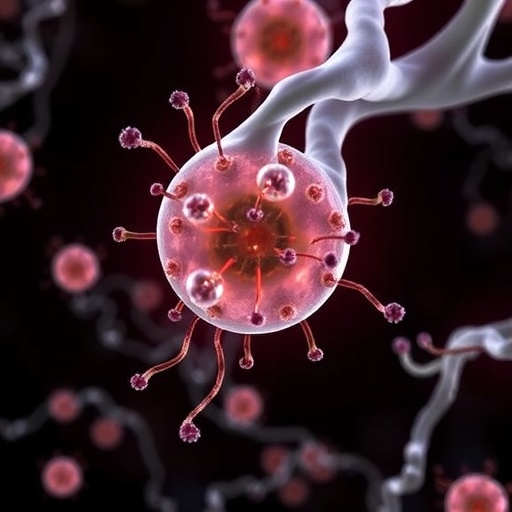
In a groundbreaking development that reshapes our understanding of cellular death pathways, researchers have unveiled spermine—an endogenous polyamine—as a natural and potent iron chelator that robustly inhibits ferroptosis, a form of programmed cell death intimately linked to lipid peroxidation and iron metabolism. This revelation charts new territory in cellular metabolism and opens unprecedented avenues for therapeutic intervention in diseases where ferroptosis plays a pivotal role.
Ferroptosis, first described in recent decades, is an iron-dependent mode of cell death characterized by the accumulation of lethal lipid peroxides. Unlike apoptosis or necrosis, ferroptosis has unique biochemical hallmarks that make it an attractive target for pharmacological modulation, especially in cancer and tissue injury contexts. The new study, led by Li, Yu, Ouyang, and colleagues, intricately delineates the molecular circuitry by which spermine functions as a natural blockade against ferroptotic cell demise through iron chelation.
At the heart of this discovery lies the enzyme aldehyde dehydrogenase 18 family member A1 (ALDH18A1), newly identified as a crucial driver of an alternative, glutamine-dependent metabolic pathway responsible for the de novo synthesis of spermine. Contrary to conventional polyamine biosynthesis routes predominantly relying on ornithine, this alternative pathway enables cells to synthesize spermine efficiently under specific metabolic contexts, tightly regulating intracellular iron bioavailability. This regulatory mechanism critically dampens iron-catalyzed lipid peroxidation, thus suppressing ferroptosis.
Using advanced metabolomics combined with stable isotope tracing, the researchers meticulously traced labeled glutamine through metabolic fluxes to spermine, revealing the pivotal role of ALDH18A1-mediated nitrogen metabolism in replenishing spermine pools. Biophysical studies provide compelling evidence demonstrating the direct binding affinity between spermine molecules and ferrous iron (Fe²⁺) ions. This interaction effectively sequesters iron, preventing its participation in Fenton chemistry, which drives the propagation of oxidative lipid damage.
The implications of this iron-chelating action were tested in the context of hepatocellular carcinoma (HCC), a malignancy notoriously dependent on complex iron and redox homeostasis. Genetic ablation or pharmacological inhibition of ALDH18A1 via adeno-associated virus-delivered shRNA or the small molecule inhibitor YG1702 precipitated a robust ferroptotic response, dramatically impairing both spontaneous and chemically induced liver tumorigenesis in murine models. These findings reveal ALDH18A1 and spermine biosynthesis as crucial metabolic checkpoints controlling ferroptosis sensitivity in cancer cells.
Crucially, the research also extends beyond cancer biology. When exogenously administered, spermine exhibited a remarkable protective effect against ferroptosis-driven ischemia-reperfusion injury across multiple organ systems, including the liver, intestines, and kidneys. This broad-spectrum cytoprotection underscores spermine’s potential as a therapeutic agent in mitigating tissue damage during acute ischemic episodes, transplantations, and other clinical scenarios where ferroptosis contributes to pathology.
This study not only elucidates a previously unrecognized metabolic axis in cell death regulation but also typifies the intricate relationship between polyamine metabolism and iron homeostasis. Notably, the research challenges existing paradigms by positioning spermine, typically recognized for roles in cell growth and gene regulation, as a frontline endogenous defense against iron-induced oxidative stress.
Furthermore, the identification of ALDH18A1 as a key enzyme in spermine biosynthesis links amino acid metabolism directly with ferroptosis regulation, emphasizing the therapeutic value of metabolic enzymes as drug targets. The use of YG1702 as an inhibitor exemplifies the potential for small molecule modulation of this pathway, offering a blueprint for future cancer therapies aimed at sensitizing tumor cells to ferroptosis.
Biophysical analyses elucidated the stoichiometry and thermodynamics of spermine-iron interactions, showcasing a highly specific and strong chelation capacity that effectively locks iron in a redox-inactive state. Importantly, this action prevents lipid peroxidation chain reactions, a critical step in ferroptotic death. These mechanistic insights provide a quantitative framework for understanding how intracellular small molecules can exert vast influence over cell fate decisions through metal ion regulation.
The research team’s integrated approach—spanning genomics, metabolomics, biophysics, and animal models—confirms the translational relevance of this discovery. By harnessing endogenous metabolic pathways, the study suggests a paradigm shift towards using intrinsically safe and physiologically relevant molecules like spermine to intervene in diseases driven by oxidative stress and ferroptosis.
Equally compelling is the nuanced metabolic flexibility revealed in cells, whereby alternative glutamine-dependent pathways adapt spermine synthesis under stress or transformation, ensuring cellular resilience. This metabolic plasticity could inform personalized medicine strategies, as variations in ALDH18A1 expression or spermine levels might predict susceptibility to ferroptosis-based therapies.
In sum, the identification of spermine as an endogenous iron chelator casts new light on iron metabolism’s role in cell death regulation. By elucidating the protective metabolic circuit controlled by ALDH18A1, this study opens promising therapeutic vistas ranging from cancer treatment to organ protection during ischemic injuries. Further exploration of this pathway could yield novel biomarkers and potentiate the design of precision medicines targeting ferroptosis.
As research continues to unravel the complexities of ferroptosis and iron handling at the cellular level, this discovery prompts a reevaluation of polyamine biology, inviting scientists and clinicians alike to consider spermine not just as a ubiquitous metabolite but as a critical guardian against ferroptotic demise. This leap forward exemplifies the power of integrated multi-omic and biophysical approaches to uncover fundamental life processes with far-reaching biomedical implications.
Cite Scienmag News
Denise Maddox. (June 3, 2026). Spermine: Natural Iron Chelator Prevents Ferroptosis. Scienmag. https://scienmag.com/spermine-natural-iron-chelator-prevents-ferroptosis/
Denise Maddox. "Spermine: Natural Iron Chelator Prevents Ferroptosis." Scienmag, 3 June 2026, https://scienmag.com/spermine-natural-iron-chelator-prevents-ferroptosis/. Accessed 4 September 2026.
Denise Maddox. "Spermine: Natural Iron Chelator Prevents Ferroptosis." Scienmag. June 3, 2026. https://scienmag.com/spermine-natural-iron-chelator-prevents-ferroptosis/


