


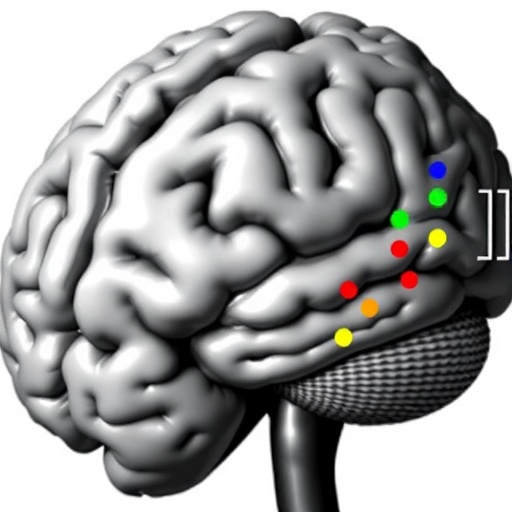
In a groundbreaking study published in Nature Neuroscience, researchers have unveiled a highly specialized architecture of neural population codes within the outputs of the parietal cortex, reshaping our understanding of how the brain encodes and transmits complex information. This discovery provides an unprecedented glimpse into the neural underpinnings of cognitive processing and offers tantalizing insights into the intricacies of brain function, promising to revolutionize both basic neuroscience research and clinical applications.
The parietal cortex has long been recognized as a pivotal region involved in multisensory integration and spatial awareness. Yet, the detailed mechanisms by which populations of neurons within this region encode and transmit information remained elusive. The current research team, led by Safaai and colleagues, employed state-of-the-art recording techniques combined with sophisticated computational models to decipher the structured patterns of activity that characterize neural outputs from this area.
What emerges from their work is an intricate tapestry of neural representations that is anything but random or uniform. Instead, the population codes are arranged with a remarkable degree of specialization, suggesting an underlying principle of neural organization that confers both efficiency and robustness. This suggests that the brain’s output pathways are primed to transmit information in a highly optimized manner, tailored to the demands of downstream processing.
Central to this discovery is the realization that neural population codes are structured in a way that highlights the balance between redundancy and diversity. Rather than each neuron acting independently or uniformly encoding similar features, there is a sophisticated distribution of tuning properties across the population. This arrangement enables the system to carry rich and complementary information streams, enhancing the fidelity and flexibility of neural communication.
The researchers leveraged chronic electrophysiological recordings from behaving subjects to capture the output activity of parietal cortical neurons during a series of sensory and cognitive tasks. Multiple simultaneous neuron recordings allowed for the dissection of population-level patterns rather than focusing solely on single-cell behavior. This shift toward population dynamics marks a crucial step in decoding the complex neural codes that underpin cognitive functions.
To interpret these large-scale neural datasets, the team employed advanced dimensionality reduction and information-theoretic analyses. These methods revealed that parietal cortex outputs are not merely noisy, high-dimensional signals but are instead constrained within low-dimensional manifolds imbued with meaningful structure. This finding alludes to an elegant neural code that balances simplicity in representation with the capability to encapsulate complex task-relevant variables.
An especially intriguing aspect of the study is the demonstration of how these specialized population codes facilitate effective communication with downstream brain regions. The outputs from the parietal cortex appear to be organized to align with the input requirements of their target areas, ensuring seamless information transfer and integration. This coordination is likely fundamental to the emergence of coherent behavior and cognitive flexibility.
Moreover, the research highlights the adaptive nature of these population codes. Neural coding structures evolve dynamically in response to changing task demands and learning processes, reflecting a plastic system capable of optimizing its representational scheme to meet environmental challenges. Such adaptability is vital for understanding how cognition can be modified through experience and intervention.
The findings also have profound implications for brain-machine interfaces and neuroprosthetics. By deciphering the specialized output codes of the parietal cortex, engineers can develop more precise and efficient interfaces that leverage the natural language of the brain, potentially restoring lost functions in patients with neurological impairments. This represents a promising horizon where neuroscience insights directly inform transformative technologies.
Importantly, this research bridges the gap between microcircuit-level properties and the large-scale functional dynamics recorded in human brain studies. The principles uncovered may serve as a universal framework for understanding how specialized neural codes operate across different brain areas and species, fostering a unified theory of neural information processing.
The study’s methodological rigor, combining experimental and computational approaches, sets a new standard for future investigations into population coding. The integration of detailed cellular-level measurements with system-wide analysis is key to unraveling the complex neural choreography underlying perception, decision-making, and action.
One cannot overstate the significance of delineating the specialized structure of neural codes in the parietal cortex for our comprehension of cognition. These insights challenge prevailing models that treat neural activity as stochastic or loosely organized, instead portraying a finely tuned and highly efficient communication system evolved to meet the brain’s computational needs.
Furthermore, this work sheds light on long-standing puzzles regarding how the brain preserves information integrity despite the noise inherent in neural systems. The structured population codes may represent a robust strategy to mitigate variability, ensuring reliable behavioral outputs without sacrificing the flexibility necessary for adaptation and learning.
The implications extend beyond neuroscience into artificial intelligence, where mimicking such optimized coding schemes could yield more powerful and efficient algorithms. Understanding the brain’s coding strategies may inspire novel computational architectures capable of robust and flexible information processing in complex environments.
As neuroscience advances, the discovery of specialized population codes in parietal cortex outputs exemplifies the power of combining innovative recording technology with analytical precision. The next frontier will be to explore how these codes interact dynamically across brain networks during real-world behaviors, ultimately translating this knowledge into clinical and technological breakthroughs.
In summary, Safaai and colleagues have opened a new chapter in cognitive neuroscience by elucidating the specialized organization of neural population codes in the parietal cortex. This research provides foundational insights into the neural basis of cognition and offers a roadmap for future explorations into the brain’s enigmatic language.
Cite Scienmag News
Cassandra Pierce. (October 31, 2025). Specialized Neural Population Codes in Parietal Cortex. Scienmag. https://scienmag.com/specialized-neural-population-codes-in-parietal-cortex/
Cassandra Pierce. "Specialized Neural Population Codes in Parietal Cortex." Scienmag, 31 October 2025, https://scienmag.com/specialized-neural-population-codes-in-parietal-cortex/. Accessed 7 September 2026.
Cassandra Pierce. "Specialized Neural Population Codes in Parietal Cortex." Scienmag. October 31, 2025. https://scienmag.com/specialized-neural-population-codes-in-parietal-cortex/


