In a groundbreaking study that sheds new light on the intersection of climate change, atmospheric chemistry, and glacier dynamics, researchers have illuminated the alarming acceleration of anthropogenic emissions from South Asia depositing on the glaciers of southern Tibet throughout the 21st century. This investigation reveals not only the extent and speed at which human-made pollutants are transported and accumulated but also their profound implications for the cryosphere’s stability and regional hydrology in one of the world’s most climatically sensitive and geopolitically significant areas.
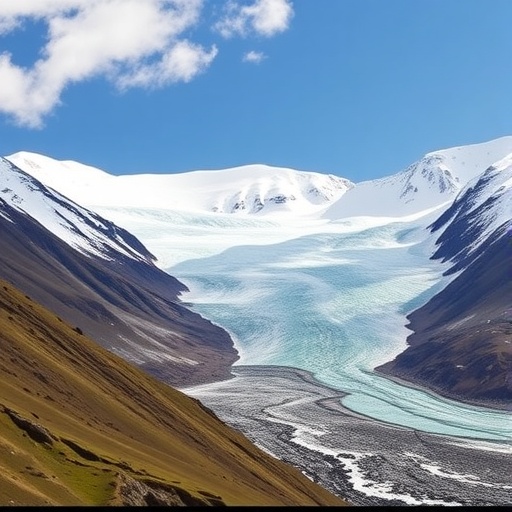
The Tibetan Plateau, often referred to as the “Third Pole,” is home to the largest reserve of glacial ice outside the polar regions. These glaciers serve as a critical freshwater source for billions downstream, fundamentally influencing water availability in several major Asian rivers. The research spearheaded by Yang, Xu, Li, and colleagues utilized a combination of high-resolution atmospheric transport models, satellite data, and ice core samples to trace and quantify the deposition patterns of pollutants originating from South Asian urban and industrial hubs. Such a multifaceted methodological approach allowed the team to capture both spatial and temporal dimensions of aerosol and particulate matter fluxes onto the glacial surfaces.
Central to the study’s findings is the role of black carbon (BC), a potent particulate pollutant produced predominantly by incomplete combustion of fossil fuels and biomass. Black carbon’s absorptive properties not only degrade air quality but also darken glacier surfaces, increasing the absorption of solar radiation and accelerating ice melt. The researchers demonstrated that emissions from densely populated South Asian regions — including the Indo-Gangetic Plain, one of the world’s most polluted areas — have increasingly influenced the deposition rates on the southern slopes of the Tibetan Plateau. This trend correlates directly with industrialization, urban expansion, and increased vehicle emissions witnessed throughout the early decades of the 21st century.
The temporal correlation between rising emissions and enhanced deposition was further bolstered by ice core analysis retrieved from several key glaciers. These cores act as historical archives, embedding within them chemical signatures of past atmospheric composition. The data revealed a marked uptick in anthropogenic markers starting in the early 2000s, with a steep increase as industrial activities intensified. These records suggest a troubling trend wherein lakes and ecosystems relying on glacier-fed water may experience accelerated perturbations due to earlier and more intense melt seasons fostered by surface albedo reduction.
Spatial heterogeneity emerged as a critical nuance in the research, as not all glaciers respond uniformly to external forcings. The researchers identified that southern Tibetan glaciers, exposed to prevailing monsoonal winds and located downhill from emission hotspots, are disproportionately impacted compared to their northern counterparts. Moreover, episodic weather phenomena, such as dust storms and atmospheric blocking events, were found to episodically amplify pollutant transport, contributing to complex deposition dynamics that challenge simple, linear models of pollutant flux.
Understanding the chemical composition of the deposited materials is equally paramount. The study highlighted contributions from sulfates, nitrates, organic aerosols, and heavy metals accompanying black carbon. While black carbon’s role in radiative forcing and ice melt is well-known, co-deposited chemicals contribute to acidification and nutrient cycles on glacier surfaces, potentially impacting microbial life and biogeochemical interactions within glacial ecosystems. This multi-pollutant effect exacerbates the environmental stress placed on the fragile Tibetan cryosphere, emphasizing the need for integrated environmental monitoring frameworks.
In addition to physical and chemical analyses, the researchers employed advanced atmospheric chemistry transport models to simulate emission scenarios under different socio-economic pathways. These models projected the potential progression of pollutant deposition under ‘business-as-usual’ conditions, highlighting a continued acceleration unless stringent emission control policies are implemented in South Asia. This prognostic element of the study provides a crucial tool for policymakers and environmental agencies to anticipate and mitigate impacts through cross-border collaboration and clean energy transitions.
The consequences of accelerated deposition extend far beyond local glacier loss. The Tibetan Plateau acts as a climatic and hydrological linchpin for Asia, impacting monsoon patterns, river flows, and regional climatic variability. Enhanced glacier melt driven by pollutant darkening influences river discharge timing and volume, potentially exacerbating water scarcity during dry seasons and increasing flood risks during melt peaks. This dynamic underscores the intricate feedback loops linking human activities, atmospheric processes, and cryosphere responses.
The study also brings to the foreground critical questions about the transboundary nature of air pollution and the interconnectedness of environmental challenges. The deposition of South Asian emissions on Tibetan glaciers epitomizes a regional externality where industrial and urban growth in one area induces environmental repercussions hundreds to thousands of kilometers away. Such insights reinforce the necessity of coordinated international approaches under frameworks such as the United Nations Environment Programme and regional cooperation agreements aimed at air quality and climate resilience.
Climate modelers and glaciologists alike stand to benefit from these findings. Incorporating detailed pollutant deposition data improves the fidelity of glacier mass balance models and subsequent projections of regional water availability. As the Himalayan region’s water security is intricately tied to glacier health, improving predictive accuracy is imperative for crafting adaptation strategies amid growing populations and changing climate regimes.
Furthermore, this research advances our understanding of unintended pollutant pathways and their environmental consequences in high-altitude ecosystems. The integration of satellite remote sensing with in situ observations and modeling represents a significant methodological advancement, enabling a more holistic grasp of pollutant dynamics in complex mountainous regions. The multi-institutional collaboration underlying this study exemplifies the interdisciplinary efforts needed to tackle global environmental challenges.
The urgency embedded within these findings calls for immediate attention. While the contribution of anthropogenic emissions to regional degradation is clear, reversing or mitigating these trends requires aggressive emission reductions coupled with sustainable development practices. Cleaner energy technologies, enhanced public transportation networks, and stricter industrial emission standards in South Asia can collectively reduce the pollutant load reaching the Tibetan Plateau.
In conclusion, the accelerated deposition of South Asian anthropogenic emissions onto southern Tibetan glaciers unveiled by this study is not only a marker of environmental degradation but a clarion call for concerted action. It symbolizes the intricate nexus between human activity, atmospheric chemistry, and cryospheric health — an interrelation that is increasingly becoming a defining feature of climate change’s regional impacts. Protecting these glaciers is tantamount to preserving a vital hydrological lifeline for a significant portion of the world’s population and maintaining the ecological equilibrium of one of Earth’s most extraordinary natural landscapes.
Subject of Research: Accelerated deposition of South Asian anthropogenic emissions on southern Tibetan glaciers during the 21st century.
Article Title: Accelerated deposition of South Asian anthropogenic emissions on southern Tibetan glaciers in the 21st century.
Article References:
Yang, D., Xu, B., Li, Z. et al. Accelerated deposition of South Asian anthropogenic emissions on southern Tibetan glaciers in the 21st century. Commun Earth Environ (2026). https://doi.org/10.1038/s43247-026-03444-9
Image Credits: AI Generated