

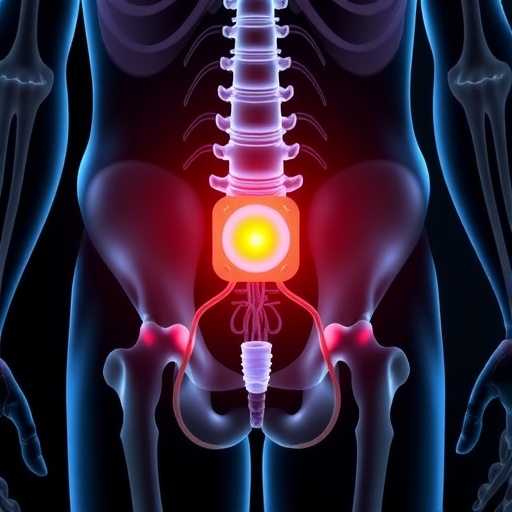
In a groundbreaking advancement for the treatment of neurogenic bladder dysfunction, researchers have unveiled an innovative implantable soft bladder-machine interface that promises to revolutionize patient care and quality of life. Neurogenic bladder dysfunction, a condition arising from neurological damage affecting bladder control, has long posed significant challenges for medical interventions due to the complex nature of neural signaling and the organ’s delicate structure. This pioneering technology, developed by a multidisciplinary team led by Li, H., Wang, S., and Yu, Q., and published in Nature Communications, represents a major leap forward, combining cutting-edge materials science, bioelectronics, and neural engineering.
The soft bladder-machine interface is designed to seamlessly integrate with the dynamic and highly flexible tissue of the bladder, a critical factor that distinguishes this innovation from conventional rigid devices. Traditional neuroprosthetics often struggle to maintain stable contact and effective functionality when interacting with organs subject to continuous movement and deformation. The use of soft, stretchable materials in this interface addresses these issues, allowing for biocompatible implantation that conforms closely to the bladder’s surface, reducing tissue irritation and improving long-term operational stability.
Underpinning this technology is an advanced neuroelectronic system capable of bidirectional communication with the peripheral nervous system. This interface not only records neural signals associated with bladder filling and voiding but also delivers targeted electrical stimulation to restore and modulate bladder function. Such sophistication enables precise control over bladder activities, potentially alleviating symptoms like incontinence and urinary retention that drastically impact daily living for millions of patients worldwide.
The development process involved integrating soft microelectrode arrays with wireless communication modules embedded within an ultra-flexible substrate. The electrode arrays capture subtle neural activities with high fidelity, while the wireless component facilitates external programming and data monitoring without impeding patient mobility. The entire system is powered by an innovative, miniaturized energy-harvesting or battery mechanism tailored for long-term implantation, ensuring the device remains operational without frequent interventions.
A striking feature of this bladder-machine interface is its adaptive learning algorithm. Drawing from state-of-the-art machine learning, the system interprets complex neural patterns, dynamically adjusting stimulation parameters in response to changing physiological conditions. This personalized approach to neuromodulation represents a paradigm shift in treating neurogenic bladder dysfunction, moving beyond one-size-fits-all therapies to patient-specific solutions that evolve over time.
Extensive preclinical trials have demonstrated the interface’s ability to restore controlled bladder voiding in animal models with induced neural injury. The researchers reported significant improvements in urinary function, with the soft interface maintaining intimate contact with the bladder even during cycles of filling and emptying, proof of its mechanical resilience and biocompatibility. These promising results pave the way for forthcoming clinical trials aimed at verifying safety, efficacy, and long-term outcomes in human patients.
One of the compelling advantages of this system lies in its minimally invasive implantation method. The device’s softness and flexibility allow for implantation via laparoscopic procedures, thereby reducing surgical trauma and accelerating patient recovery. Moreover, the low profile of the interface minimizes risks of infection and foreign body sensation, common complications associated with implanted prosthetic devices.
The team also focused on real-time data acquisition and processing. Continuous monitoring of bladder status and neural activity provides valuable insights for patients and clinicians, enabling finer adjustments of the device and enhancing overall therapeutic effectiveness. This data-driven feedback loop supports proactive management of bladder dysfunction, potentially preventing complications such as urinary tract infections and bladder overdistension.
Importantly, this technology aligns with the broader trend of integrating bioelectronic medicine into therapeutic regimens. By interfacing electronics directly with neural circuits, the device exemplifies how responsive, implantable systems can replace or supplement pharmacological treatments, which often have systemic side effects. The soft bladder-machine interface, therefore, not only improves physiological function but also heralds a future where personalized electronic therapeutics become a mainstay in chronic disease management.
The potential impact of this research extends beyond neurogenic bladder dysfunction. The principles of soft electronics, wireless communication, and machine learning integration can be adapted to other organ systems affected by neurological impairments, such as bowel, respiratory, or cardiac dysfunctions. This versatility underscores the transformative nature of the technology and its capacity to broaden therapeutic horizons.
As with any emerging biomedical device, challenges remain before widespread clinical deployment. Long-term biostability, immune response mitigation, and device integration with standard medical practices require further investigation. Additionally, ethical considerations surrounding neural modulation and patient autonomy must be carefully addressed to ensure responsible application of this technology.
Nevertheless, the implantable soft bladder-machine interface marks a monumental step forward in neuroprosthetic design. Its synthesis of flexible materials, advanced electronics, and intelligent algorithms exemplifies the future of medical devices: minimally invasive, highly adaptive, and deeply integrated with human physiology. For patients suffering from neurogenic bladder dysfunction, this innovation represents renewed hope for regaining autonomy and enhancing life quality.
This breakthrough is expected to catalyze further research into soft bioelectronic interfaces, inspiring new applications and accelerating the convergence of engineering, neuroscience, and medicine. As clinical trials progress, the medical community eagerly awaits confirmation of its potential to set new standards in treating bladder dysfunction and beyond.
In conclusion, the work by Li, H., Wang, S., Yu, Q., and colleagues exemplifies the remarkable advancements in bioelectronic medicine through the development of an implantable, soft bladder-machine interface. Their pioneering contribution offers a comprehensive solution to a challenging medical problem, combining multidisciplinary expertise to deliver a device that is as functional as it is innovative. As this technology moves closer to clinical reality, it not only promises improved therapeutic outcomes but also highlights the power of technology-driven personalized medicine in addressing complex neurogenic disorders.
Subject of Research: Development of an implantable soft bladder-machine interface aimed at treating neurogenic bladder dysfunction through advanced bioelectronic and neural engineering approaches.
Article Title: Implantable soft bladder-machine interface for neurogenic bladder dysfunction
Article References:
Li, H., Wang, S., Yu, Q. et al. Implantable soft bladder-machine interface for neurogenic bladder dysfunction. Nat Commun 17, 2458 (2026). https://doi.org/10.1038/s41467-026-70680-0
Image Credits: AI Generated


