


As the world races to plug ever-larger volumes of wind and solar power into electrical grids, one of the most stubborn problems remains where to put the energy when the sun is not shining and the wind is not blowing. A new review published in the journal Ionics by Kaixuan Cui of Hainan University and Tsinghua University, together with Yunpeng Du and Lin Wang, takes stock of a technology that has quietly been gaining ground as a candidate for grid-level storage: sodium-based liquid metal batteries. The review, which appeared on 7 October 2026, argues that these batteries, built from molten sodium and molten alloy electrodes separated by a sea of molten salt, could offer the long cycle life, low material cost, and inherent safety that massive stationary storage demands, provided several stubborn scientific and engineering obstacles can be overcome.
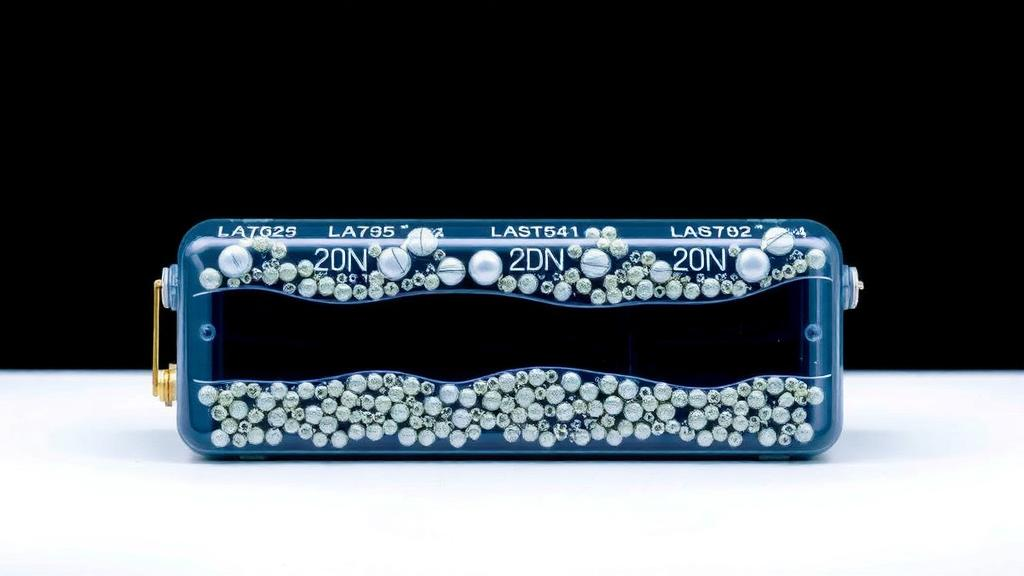
The basic architecture of a liquid metal battery is deceptively simple. Two liquid metal electrodes of different densities sit in a container, one above the other, with a molten salt electrolyte sandwiched between them because it is denser than the light negative electrode but less dense than the heavy positive electrode. Because everything is liquid, there are no fragile solid microstructures to crack or degrade, which is why these cells can tolerate tens of thousands of charge and discharge cycles. The concept traces back to fused-salt galvanic cells studied at Argonne National Laboratory in the 1960s, but it was the 2013 landmark review by Donald Sadoway’s group at MIT and the 2014 demonstration of a lithium-antimony-lead cell in Nature that transformed the idea into a serious contender for stationary storage. Sodium, with its abundance, low cost, and favorable electrochemistry, has emerged as the most attractive negative electrode metal for grid applications.
Yet sodium brings a fundamental problem that has dogged the technology for years. Molten sodium dissolves appreciably in conventional single-cation halide molten salts, such as the sodium chloride-based systems long used as electrolytes. Dissolved sodium, along with solvated electrons in the melt, can shuttle across the electrolyte to the positive electrode without passing through the external circuit, causing severe self-discharge and dragging Coulombic efficiency down to levels that would be unacceptable in a commercial product. The review highlights how researchers have attacked this problem by reformulating the electrolyte itself. Instead of relying on a single cation, teams have developed multi-cation molten salts that blend sodium with lithium, calcium, potassium, or other ions, fundamentally changing the chemistry of the melt and suppressing the dissolution of sodium metal.
The mechanism behind this improvement is one of the most technically interesting threads in the review. In a multi-cation electrolyte, the additional cations compete for space in the salt structure and alter the activity of sodium in the melt, lowering its solubility and thereby choking off the parasitic dissolution pathway that causes self-discharge. Multi-cation salts also tend to have lower melting points than their single-cation counterparts, which allows the entire battery to operate at reduced temperatures. That matters enormously for engineering: lower operating temperatures mean less thermal stress on seals and containers, slower corrosion of structural materials, and reduced parasitic energy consumption to keep the cell molten. Studies from groups in China and Germany, including work on multi-cationic electrolytes published in Energy Storage Materials and the Journal of Power Sources, have demonstrated sodium-based cells with markedly improved cycling stability and efficiency when these mixed-salt electrolytes are employed.
The positive electrode presents a different set of challenges. In a sodium-based liquid metal battery, the positive electrode is typically a molten alloy of antimony, bismuth, tin, or combinations of these metals, and during discharge, sodium ions arriving from the electrolyte alloy into this pool. The trouble is that sodium diffuses sluggishly through many of these alloy electrodes, which limits how much of the active material can actually be used and therefore caps the energy density of the cell. The review describes design principles for overcoming this bottleneck, including engineering liquid-phase diffusion pathways within the electrode and tuning the alloy composition to accelerate interfacial reaction kinetics. Ternary systems such as bismuth-antimony-tin have shown synergistic stabilization mechanisms, with bismuth contributing a self-healing action that helps the electrode recover its structure over repeated cycles, an approach the review’s lead author has explored in earlier work on lithium-based systems.
Interfacial behavior between the liquid electrodes, the molten salt, and the solid current collectors emerges as another decisive factor. Wetting, the tendency of a liquid to spread across a solid surface, governs how well the molten positive electrode makes electrical contact with its current collector, and poor wetting can raise internal resistance and destabilize cycling. Researchers have found that improving wettability at the positive electrode enhances the cycling stability of bismuth-based cells, and the review emphasizes that controlling these interfacial phenomena is as important as bulk chemistry. The review also covers the charge and discharge mechanisms themselves, noting that mass transport in the liquid phases creates asymmetries between charging and discharging behavior, since convection patterns driven by thermal gradients and electrical currents redistribute species differently depending on the direction of operation.
That last point opens onto one of the most fascinating aspects of liquid metal battery physics: the multiphysics coupling inside the cell. Because the electrodes and electrolyte are all molten, the battery is a fluid-dynamical system as much as an electrochemical one. Thermal convection of the Rayleigh-Bénard type, driven by temperature differences between the bottom and top of the cell, interacts with electro-vortex flows generated by the current entering and leaving the electrodes, and with solutal convection caused by composition gradients during alloying and dealloying. A comprehensive review of the fluid mechanics of sodium-zinc liquid metal batteries published in Applied Physics Reviews catalogued these coupled phenomena, and the new Ionics review integrates them into a thermal-flow-electrical-corrosion framework. How these flows behave determines whether the salt layer stays cleanly between the electrodes or whether metal droplets could short the cell, so understanding and regulating them is essential for scaling up.
Scaling up is precisely where the engineering challenges become daunting. A grid-storage module must be sealed reliably against oxygen and moisture ingress for decades while operating at several hundred degrees Celsius, and the review identifies sealing, thermal management, and corrosion as the central integration problems. Molten salts and molten metals are aggressive corrosive media, and current collectors in particular must survive prolonged contact with them; research on stainless steel and coated collectors for lithium-antimony-tin cells illustrates the materials science effort underway. Thermal management systems, studied numerically for liquid metal battery modules, must keep the entire cell within its operating window without wasting energy. Cost, the ultimate arbiter for grid storage, depends on cheap raw materials but also on manufacturing reliability and the ability to build large-capacity cells without defects.
Looking forward, the review maps out four directions that its authors believe will determine whether sodium-based liquid metal batteries make the leap from laboratory to substation. Computation-driven materials screening promises to accelerate the discovery of optimal electrolyte and electrode combinations by simulating thermodynamics and kinetics before any crucible is filled. Multiphysics collaborative regulation aims to exploit, rather than merely tolerate, the fluid dynamics of the cell to enhance mass transport and performance. Highly reliable packaging must deliver the hermetic, corrosion-resistant enclosures that decades of service demand. And full-lifecycle recycling, already demonstrated for key materials of low-cost liquid metal batteries in work published in ACS Sustainable Chemistry and Engineering, could give the technology a decisive sustainability advantage, since the constituent metals and salts can in principle be recovered and reutilized with relative ease compared with the complex chemistries of conventional lithium-ion cells.
The stakes for getting this right are considerable. Recent analyses of long-duration storage, including studies of the value of storage in zero-emissions grids and of Europe’s vulnerability to prolonged wind droughts known as Dunkelflaute events, all point to the same conclusion: decarbonized electricity systems will need vast quantities of affordable storage capable of discharging for many hours or days. Sodium-based liquid metal batteries, with their abundant raw materials, tolerance of deep cycling, and potential for decades-long lifetimes, fit that requirement profile unusually well. The review by Cui, Du, and Wang makes clear that the remaining hurdles are real, spanning electrolyte chemistry, electrode kinetics, fluid mechanics, and heavy engineering, but it also shows a field that has moved from proving the concept to systematically dismantling each obstacle. If the multi-cation electrolyte strategy and the accompanying electrode and packaging advances continue on their current trajectory, the strange and elegant idea of storing electricity in pools of molten metal may soon be humming quietly beside the power plants it helps to tame.
Subject of Research: Sodium-based liquid metal batteries for grid-scale energy storage
Article Title: Research progress in Na-based liquid metal batteries: multi-cation systems, interfacial mechanisms, and engineering challenges
Article References: Cui, K., Du, Y., & Wang, L. (2026). Research progress in Na-based liquid metal batteries: multi-cation systems, interfacial mechanisms, and engineering challenges. Ionics. https://doi.org/10.1007/s11581-026-07567-z
Image Credits: AI Generated
DOI: 10.1007/s11581-026-07567-z
Keywords: sodium liquid metal batteries, molten salt electrolytes, multi-cation systems, grid energy storage, self-discharge, alloy electrodes, interfacial wetting, electro-vortex flow, thermal management, corrosion, recycling, long-duration storage
Cite Scienmag News
Faith Mcneil. (October 7, 2026). Sodium Liquid Metal Batteries Edge Closer to Grid-Scale Energy Storage. Scienmag. https://scienmag.com/sodium-liquid-metal-batteries-edge-closer-to-grid-scale-energy-storage/
Faith Mcneil. "Sodium Liquid Metal Batteries Edge Closer to Grid-Scale Energy Storage." Scienmag, 7 October 2026, https://scienmag.com/sodium-liquid-metal-batteries-edge-closer-to-grid-scale-energy-storage/. Accessed 7 October 2026.
Faith Mcneil. "Sodium Liquid Metal Batteries Edge Closer to Grid-Scale Energy Storage." Scienmag. October 7, 2026. https://scienmag.com/sodium-liquid-metal-batteries-edge-closer-to-grid-scale-energy-storage/


