


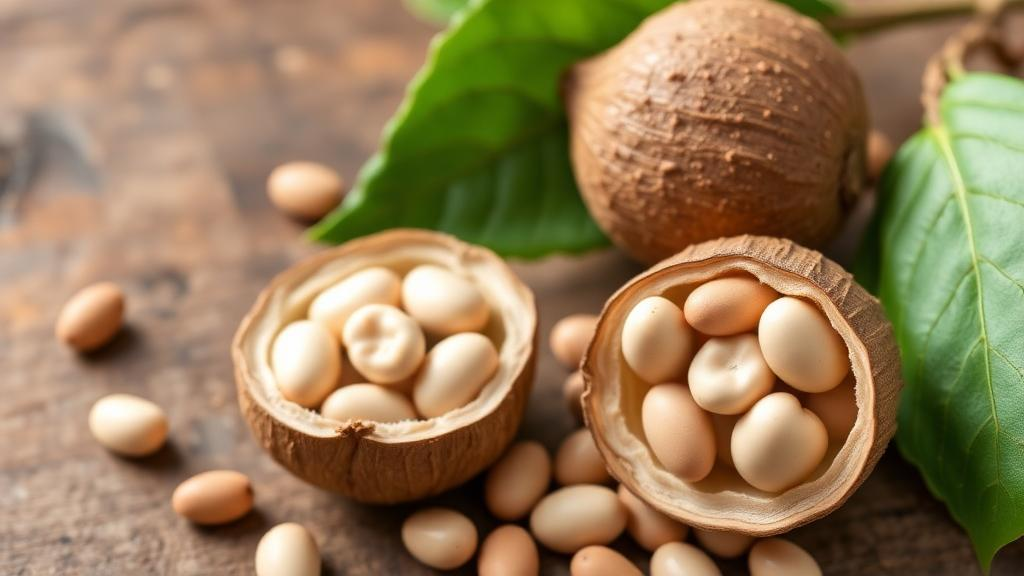
The humble soapnut tree has long been prized for its sudsy fruit, but its seeds have remained largely overlooked. Now, a new study from Manipur in northeastern India suggests that the discarded kernels may be a chemical treasure trove. Researchers at Standard College in Kongba analyzed the seed kernel of Sapindus mukorossi, the deciduous tree better known as Reetha, soapberry or washnut, and found a phytochemical profile strikingly different from anything previously reported for the species. Using gas chromatography-mass spectrometry, the team tentatively identified 28 compounds, several of which had never been documented in this plant before. The extract also showed measurable antibacterial activity against two important pathogenic bacteria and a level of antioxidant reducing power that outperformed many earlier studies on the same species.
The findings, published in the journal Discover Chemistry, matter because the world urgently needs new sources of antimicrobial and antioxidant compounds. The World Health Organization estimates that more than 80 percent of the global population relies on plant-based remedies for primary healthcare, and pathogenic bacteria are increasingly resisting synthetic antibiotics. Medicinal plants produce a vast arsenal of secondary metabolites, with more than 30,000 compounds exhibiting antimicrobial activity already identified from over 1,340 plant species. Against that backdrop, systematically characterizing underexplored plant parts and regional variants is a practical strategy for discovering candidates that could eventually feed into drug development, food preservation, cosmetics, or green chemistry applications such as nanoparticle synthesis.
Sapindus mukorossi is no stranger to traditional medicine. The tree grows across tropical and subtropical Asia, from western Nepal and southern China to the Shivalik ranges, the Indo-Gangetic plains and the lower Himalayan foothills of India. Its saponin-rich pericarp pulp has been used for centuries as a natural soap, which is reflected in its common English names, and its fruits appear in both Traditional Chinese Medicine and Ayurveda as treatments for ailments ranging from the common cold and constipation to epilepsy and nausea. In Japan the pericarps are known as enmei-hi and in China as wu-huan-zi. Previous biomedical research on the seed oil has pointed to roles in promoting bone growth, stabilizing oral microbiota, supporting skin health and accelerating wound healing. Yet almost all prior phytochemical work focused on the pericarp or on oily lipid fractions, leaving the kernel’s water-soluble chemistry largely unmapped.
To fill that gap, the research team deliberately departed from established extraction protocols. Earlier studies typically used non-polar solvents such as hexane to pull out lipids, or pure methanol and water to isolate high-molecular-weight saponins from the fruit husk. Instead, the researchers opted for a 70 percent ethanol solution, a hydroalcoholic mixture never before applied to this species’ seed kernel. Wild-harvested fruits were collected in December 2025 from Langthabal Kunja in Imphal West, Manipur, where the tree is locally called Kekru. The botanical identity was confirmed by a taxonomist at Manipur University and a voucher specimen was deposited in the university’s herbarium under accession number 001798. Fifty grams of dried, ground seed powder were extracted in a Soxhlet apparatus for six hours, and after solvent removal by rotary evaporation and freeze-drying, four grams of solid extract remained for analysis.
The GC-MS results were the study’s headline surprise. The dominant compound was 3-methyl-4-oxopentanoic acid, accounting for a remarkable 63.15 percent of the total peak area, followed by caffeine at 25.03 percent and 1,2,3-benzenetriol at 3.57 percent. Caffeine’s prominence in a soapnut seed is particularly unexpected, and the authors note that several constituents were tentatively identified for the first time in this species. Minor components included theobromine, the related xanthine alkaloid found in chocolate, the aromatic compound 2-methyl-5-(1-methylethyl)phenol, and a cyclohexanetetrol. Trace-level detections, each below one percent, spanned terpenes such as p-cymene and gamma-terpinene, a nitrogenous heterocycle, and heavy late-eluting molecules including a long-chain docosenamide and the sterol chondrillasterol. The temperature program, ramping from 45 to 280 degrees Celsius, allowed the instrument to resolve everything from small volatile molecules to bulky sterols within a single chromatographic run.
The researchers took care to rule out contamination artifacts, a common pitfall in GC-MS work. They confirmed that the major peaks, including 3-methyl-4-oxopentanoic acid and caffeine, were distinct from common laboratory plasticizers such as phthalate esters or stationary-phase siloxane bleed from the capillary column, supporting their status as genuine plant metabolites. The 30 percent water fraction in the extraction solvent appears to have played a key role, balancing polarity so that hydrophilic, volatile-rich metabolites and organic acids could partition out of the seed kernel’s dense carbohydrate-protein matrix. Notably absent were the fatty acids known to make up roughly 23 percent of the seed oil, mainly oleic and eicosenoic acids. The authors explain that these exist as non-volatile triglycerides heavier than 800 daltons, which decompose at GC injection temperatures and would require transesterification into fatty acid methyl esters to be detected, a step not performed in this protocol.
On the biological side, the extract showed a selective, dose-dependent antibacterial effect. Tested by the well diffusion method at concentrations of 2.5, 5 and 10 milligrams per milliliter, it produced zones of inhibition of 11.83 plus or minus 0.29 millimeters against Escherichia coli and 10.67 plus or minus 0.58 millimeters against Streptococcus mutans at the highest dose, roughly 52 to 54 percent of the activity of the ciprofloxacin control. All assays were run in triplicate with statistically significant dose-dependent variation. Intriguingly, the extract showed no activity at all against Klebsiella pneumoniae or Bacillus subtilis, even though ciprofloxacin produced robust zones above 25 millimeters against both. The authors suggest the extract may simply be unable to breach the thick polysaccharide capsule of K. pneumoniae or the particular cell envelope structures of B. subtilis. This narrow spectrum contrasts with the broad-spectrum membrane-lysis typically attributed to the saponin-rich pericarp, hinting at a distinct, strain-dependent mechanism driven by the kernel’s unique chemistry.
The antioxidant results were equally encouraging. In the ABTS radical cation decolorization assay, the extract achieved an IC50 value of 180.26 micrograms per milliliter, indicating moderate to strong radical-scavenging potency. That figure comfortably beats the fruit pericarp, whose IC50 often exceeds 1,000 micrograms per milliliter, and comes close to methanol extracts of the stem bark, previously reported at 162.5 micrograms per milliliter. The benchmark remains ascorbic acid at 21.23 micrograms per milliliter, but for a natural crude extract the kernel’s performance is competitive. The FRAP assay reinforced the picture, yielding a mean ferric reducing power of 355.394 micromolar iron(II) equivalents per gram, a value the authors say surpasses many prior studies on this species. High R-squared values and low standard deviations across triplicates underscored the reproducibility of both assays, lending weight to the kernel’s credentials as a dual radical-scavenging and electron-donating agent.
What makes these results scientifically interesting is the paradigm shift they represent. For decades, the phytochemical story of Sapindus mukorossi has been dominated by saponins extracted from the pericarp, while the seed kernel was treated mainly as a source of fixed oil. This study establishes a novel chemical baseline for a regionally distinct Manipur variant, showing that a simple hydroalcoholic extraction can unlock a profile rich in alkaloids and organic acids rather than saponins or lipids. The combination of caffeine, theobromine, benzenetriol and phenolic constituents offers a plausible, though not yet proven, chemical basis for the observed antibacterial and antioxidant effects. The authors are careful to frame the work as preliminary: the compound identifications are tentative, based on library matching of retention indices and mass spectra, and the biological assays are in vitro only.
The road ahead involves in vivo validation and mechanistic exploration before any practical application can be claimed. Still, the potential directions are appealing. The extract’s strong reducing power makes it a candidate for green synthesis of metal nanoparticles, a rapidly growing field where plant extracts serve as benign reducing and capping agents. Its activity against E. coli and S. mutans, the latter a key driver of dental caries, suggests possible oral-care or food-safety applications, consistent with earlier findings that soapnut seed oil can help stabilize oral microbiota. For a tree already cultivated widely across Asia and valued as a sustainable natural soap, the prospect that its most discarded part could yield antimicrobial and antioxidant agents adds genuine economic and scientific value. As antibiotic resistance spreads and demand for plant-derived bioactives grows, studies like this one remind us that some of the most promising chemistry may be sitting in the waste stream, waiting for the right solvent to set it free.
Subject of Research: GC-MS chemical profiling and antibacterial and antioxidant evaluation of Sapindus mukorossi seed kernel extract from Manipur, India
Article Title: GC-MS based chemical profiling, and evaluation of the antibacterial and antioxidant properties of Sapindus mukorossi seed extract
Article References: Devi, K. S., & Singh, T. P. (2026). GC-MS based chemical profiling, and evaluation of the antibacterial and antioxidant properties of Sapindus mukorossi seed extract. Discover Chemistry, 3(1), Article 448. https://doi.org/10.1007/s44371-026-00906-z
Image Credits: AI Generated
DOI: 10.1007/s44371-026-00906-z
Keywords: Sapindus mukorossi, soapnut, GC-MS, phytochemistry, antibacterial activity, antioxidant, caffeine, natural products, Escherichia coli, Streptococcus mutans, ABTS assay, FRAP assay
Cite Scienmag News
Bethany Barker. (October 14, 2026). Soapnut Seeds Reveal Surprising Chemistry With Antibacterial and Antioxidant Power. Scienmag. https://scienmag.com/soapnut-seeds-reveal-surprising-chemistry-with-antibacterial-and-antioxidant-power/
Bethany Barker. "Soapnut Seeds Reveal Surprising Chemistry With Antibacterial and Antioxidant Power." Scienmag, 14 October 2026, https://scienmag.com/soapnut-seeds-reveal-surprising-chemistry-with-antibacterial-and-antioxidant-power/. Accessed 14 October 2026.
Bethany Barker. "Soapnut Seeds Reveal Surprising Chemistry With Antibacterial and Antioxidant Power." Scienmag. October 14, 2026. https://scienmag.com/soapnut-seeds-reveal-surprising-chemistry-with-antibacterial-and-antioxidant-power/


