

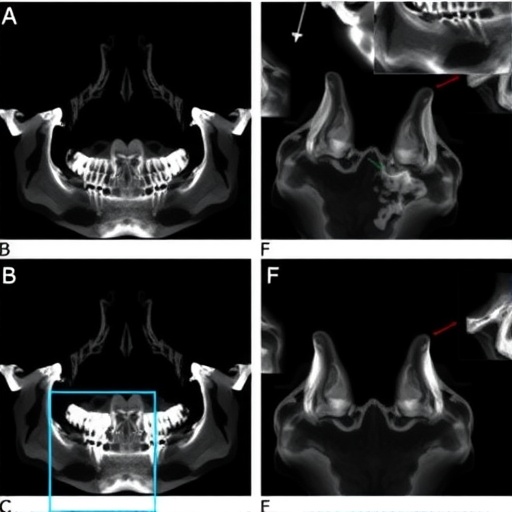
In a pioneering advancement that could reshape our understanding of temporomandibular joint osteoarthritis (TMJ OA), a new study delves deeply into the genetic underpinnings of this debilitating condition, revealing significant associations with specific single nucleotide polymorphisms (SNPs) in the FILIP1-SENP6 and FTO genes. This landmark research, published in Scientific Reports in 2026, combines clinical data with sophisticated in silico analysis to unravel the intricate genetic architecture influencing TMJ OA susceptibility and progression.
Temporomandibular joint osteoarthritis represents a complex degenerative disease characterized by the progressive breakdown of articular cartilage, subchondral bone remodeling, and chronic pain affecting the jaw joint and surrounding musculature. Despite its prevalence, especially among middle-aged adults, the biological mechanisms driving TMJ OA remain poorly elucidated. Genetic factors, however, have long been suspected to play a critical role in modulating disease onset and severity, inspiring a wave of molecular investigations in recent years.
In this comprehensive study, Ono and colleagues embarked on a dual-pronged approach. First, they conducted a genetic association analysis in a well-defined patient cohort diagnosed with TMJ OA, examining the prevalence of SNPs within two candidate gene loci, FILIP1-SENP6 and FTO. Concurrently, they employed advanced in silico computational modeling to predict the functional impacts of these polymorphisms on gene expression and protein interactions relevant to cartilage homeostasis and inflammatory response modulation.
The findings highlight a statistically significant correlation between TMJ OA and polymorphic variations within the FILIP1-SENP6 region. FILIP1 is implicated in cytoskeletal remodeling and cellular signaling pathways, while SENP6 encodes a protease crucial for the dynamic regulation of SUMOylation—a post-translational modification that governs protein stability and activity in osteoarthritic cartilage. Dysregulation of SENP6-mediated SUMOylation has been postulated to exacerbate inflammatory milieu and chondrocyte apoptosis, key pathological events in osteoarthritis.
Moreover, the study’s revelation of FTO gene involvement marks a transformative insight. Originally characterized for its association with obesity and metabolic disorders, FTO has recently emerged as an influential gene in bone biology and inflammatory disease pathways. The researchers discovered that specific FTO SNPs correlate robustly with TMJ OA incidence, underscoring the gene’s multifaceted role beyond metabolic regulation and pointing to novel pathophysiological links between systemic metabolic status and localized joint degeneration.
The in silico component of the investigation utilized cutting-edge bioinformatics tools, including protein-protein interaction networks and gene expression modulation simulations, to predict how these genetic variations may alter molecular dynamics within the TMJ environment. This approach identified several key nodes where mutant alleles propagate dysregulated signaling cascades that promote cartilage matrix degradation and subchondral bone sclerosis, hallmark features of TMJ OA.
Clinically, these insights pave the way for the development of personalized diagnostic biomarkers, enabling earlier and more accurate detection of individuals at heightened risk for TMJ OA based on their genetic profile. Moreover, these findings open up new avenues for targeted therapeutic interventions aimed at modulating SENP6 and FTO-related pathways to halt or potentially reverse joint degeneration processes.
Importantly, the study acknowledges the multifactorial nature of TMJ OA by integrating genetic insights with environmental and biomechanical factors influencing disease trajectory. The SNP associations identified do not operate in isolation but rather in complex interplay with external stressors such as masticatory load, inflammation, and systemic metabolic conditions, highlighting the necessity for holistic treatment paradigms.
The application of precision medicine in TMJ OA could ultimately revolutionize patient management by transitioning from symptomatic alleviation to etiology-targeted therapies. The implicated genes may serve as molecular targets for novel drug development or gene-editing strategies designed to restore normal SUMOylation dynamics or correct FTO-associated metabolic imbalances within the joint microenvironment.
Furthermore, the integration of clinical and in silico methodologies exemplifies a new frontier in osteoarthritis research, where high-throughput genetic screening synergizes with computational modeling to predict disease outcomes with unprecedented accuracy. This hybrid approach accelerates hypothesis generation and validation, significantly reducing the translational gap from bench to bedside.
Despite its groundbreaking contributions, the study calls for additional large-scale, multi-ethnic cohort studies and functional assays to validate these genetic associations and elucidate underlying mechanisms further. Longitudinal analyses will be essential to determine causal relationships and assess how these SNPs influence disease progression and response to treatment modalities over time.
The research also highlights the importance of expanding genetic investigations to encompass epigenetic and transcriptomic factors that may interact with the identified polymorphisms, adding another layer of regulatory complexity. Such integrative omics approaches promise to deepen our molecular understanding of TMJ OA pathogenesis comprehensively.
In summary, the work by Ono et al. delineates an unprecedented genetic landscape for TMJ osteoarthritis, unveiling critical roles for FILIP1-SENP6 and FTO gene polymorphisms and setting a new standard for future investigations into temporomandibular joint disorders. This study not only enriches our molecular insight but also propels the field toward precision health strategies that could dramatically improve patient outcomes for this often-overlooked yet profoundly impactful condition.
As TMJ disorders increasingly emerge as significant contributors to orofacial pain syndromes worldwide, the translational potential of these findings offers renewed hope for millions suffering from chronic TMJ OA symptoms. By illuminating novel gene-disease linkages and pathways, this research heralds a paradigm shift from generic symptomatic treatments to innovative, tailored medical solutions aligned with each patient’s genetic and molecular profile.
With the advent of genomics-driven medicine, insights from studies such as this are instrumental in shaping the future landscape of musculoskeletal health. The elucidation of how genetic variants interface with joint biomechanics and inflammatory circuits underscores the intricate biological choreography underlying TMJ osteoarthritis and invites continued exploration into unlocking new therapeutic targets.
The promise of integrating genomics, bioinformatics, and clinical phenotyping as demonstrated here will undoubtedly catalyze broader applications in related osteoarthritic and musculoskeletal disorders, reinforcing the imperative to prioritize such interdisciplinary research endeavors within translational medicine frameworks globally.
In compelling scientists and clinicians alike to reconsider the genetic dimension of TMJ OA, this study serves as a clarion call to embrace holistic, multi-modal research strategies that bridge molecular genetics with patient-centered clinical care. The potential to mitigate disease burden through early genetic screening and precision interventions now seems more tangible than ever, marking a transformative moment in our approach to temporomandibular joint osteoarthritis.
Subject of Research: Genetic associations of single nucleotide polymorphisms in FILIP1-SENP6 and FTO with temporomandibular joint osteoarthritis using clinical and in silico approaches.
Article Title: Association of single nucleotide polymorphisms in FILIP1-SENP6 and FTO with temporomandibular joint osteoarthritis: clinical and in silico study.
Article References:
Ono, E., Takaoka, R., Kuyama, K. et al. Association of single nucleotide polymorphisms in FILIP1-SENP6 and FTO with temporomandibular joint osteoarthritis: clinical and in silico study. Sci Rep (2026). https://doi.org/10.1038/s41598-026-47515-5
Image Credits: AI Generated


