


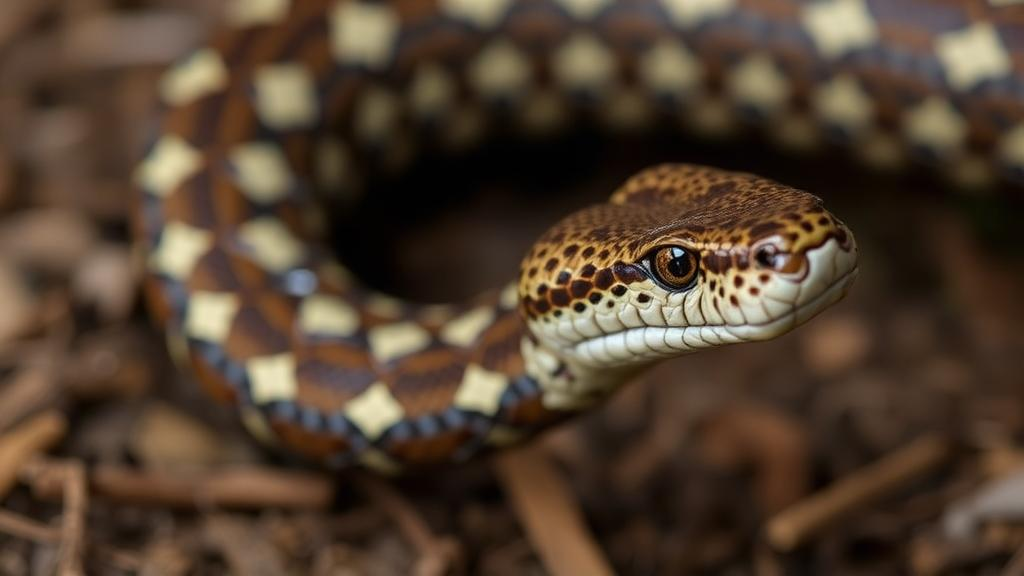
Snakes occupy a uniquely paradoxical place in the human imagination. They are feared as venomous killers, respected as regulators of rodent populations, revered in religious traditions, harvested for food and traditional medicine, and increasingly recognized as vital components of biodiversity. A new collection of studies published in Frontiers in Amphibian and Reptile Science brings these threads together under the banner of ethno-ophidiology, the study of the cultural, symbolic and practical relationships between people and snakes, and argues that neither snakebite prevention nor snake conservation can succeed in isolation from one another.
The editorial, led by Deb P. Pandey of Agriculture and Forestry University in Nepal, together with Cormac Price of the University of KwaZulu-Natal in South Africa and Emily N. Taylor of California Polytechnic State University, introduces a Research Topic that drew ten manuscript submissions, of which seven were accepted for publication, a 70% acceptance rate. The published work involved 27 authors from 21 institutions across eight countries spanning four continents: Nepal, India, Zambia, Namibia, Taiwan, Germany, the United States and the United Kingdom. The contributions ranged from original research articles and a review to a perspective, a brief research report and a technology-and-code paper, covering snakebite epidemiology, prevention, urban ecology, conservation, impacts on domestic animals, traditional knowledge and novel public engagement tools.
The central theme emerging from the collection is the continuing global burden of snakebite and the need for innovative, locally grounded prevention strategies. Snakebite remains a pressing public health problem in many rural tropical regions, and the editorial stresses that effective responses must be embedded within broader social and health systems rather than treated as isolated medical interventions. The studies collectively demonstrate that snake-related challenges transcend geographical, cultural and disciplinary boundaries, and that solutions require both biological understanding and meaningful engagement with the communities who live alongside snakes.
Two contributions focus on community-level prevention. Singh and colleagues examined community-targeted snakebite prevention in rural Zambia, drawing on grassroots experience to identify the practical barriers and enabling factors that determine whether educational initiatives succeed in resource-limited settings. Their analysis highlights the importance of locally tailored interventions, genuine community participation and improved healthcare accessibility. In a parallel effort, Chandrasekharuni and colleagues produced a narrative review of the Madras Crocodile Bank Trust’s long-running snakebite mitigation programme in India, showing how sustained institutional commitment, community engagement, education, research and advocacy can reduce the snakebite burden in one of the world’s most snakebite-affected countries. Together, these papers offer a template for organizations and policymakers working in comparable contexts.
The collection also pushes the boundaries of snakebite epidemiology. Damm and colleagues reported clinically relevant envenoming from the Western Hognose Snake (Heterodon nasicus), a species not generally counted among the world’s major medically important snakes. The finding underscores that lesser-known or inadequately described species can still cause clinically significant bites under specific circumstances, and the authors call for improved reporting, documentation and awareness of risks posed by minor medically significant snakes, a reminder that the global snakebite burden may be underestimated when surveillance focuses only on recognized danger species.
Urbanization and land-use change are increasingly important drivers of human-snake conflict, producing both bites and the unnecessary, unregulated and often illegal killing of snakes. Mao and colleagues investigated conflicts involving the brown-spotted pit viper Protobothrops mucrosquamatus in northeastern Taiwan, analysing conflict patterns, environmental characteristics and the outcomes of snake removal operations. Their work shows how urban ecology can inform evidence-based management that balances public safety with animal welfare and conservation objectives. In a related vein, Attre and colleagues documented the impacts of snakebite envenoming on domestic animals in Goa, India, revealing the economic and emotional toll on livestock owners and pet keepers. Frequent losses of animals, they note, harden public attitudes toward snakes and can intensify retaliatory killing, creating a feedback loop in which conflict begets further conflict.
Effective mitigation ultimately rests on understanding snake ecology and behaviour. Pandey and Piya contributed a study of the gut contents of Wall’s Krait (Bungarus walli), a medically important species in South Asia. Although framed as natural history, the research carries direct implications for conservation and bite prevention: knowing where snakes occur, what they eat, how they respond to environmental change and why they enter human settlements provides the foundation for pragmatic strategies that protect both people and reptiles. Ecological knowledge of this kind, the editorial argues, is the bedrock upon which realistic coexistence plans must be built.
Overcoming fear and misinformation remains one of the most persistent obstacles to snake conservation, because snakes are rarely perceived with the same sympathy as charismatic wildlife. Addressing this, Bachhuber and colleagues described the use of livestreaming technology to connect the public with secretive and frequently misunderstood snake species. By broadcasting encounters in real time, the approach broadens access to wildlife experiences, improves public understanding and fosters appreciation for animals that are often feared or persecuted. In the digital era, the authors suggest, livestreaming could become a promising tool for conservation education and public engagement, reaching audiences who may never encounter a snake in the field.
The concept of ethno-ophidiology runs through the entire collection. It acknowledges the diverse cultural, religious, symbolic, economic and traditional dimensions of human relationships with snakes, from community outreach programmes and local knowledge systems to attitudes toward venomous species and customary responses to snake encounters. The editorial emphasizes that successful interventions rarely depend on biological knowledge alone; they require an appreciation of how communities perceive risk, value biodiversity and engage with local traditions and belief systems. Integrating these social and cultural perspectives, the editors argue, is what elevates the Research Topic from a set of case studies into a more holistic framework for understanding human-snake interactions worldwide.
Looking ahead, the editors identify clear priorities for future research: expanding geographical representation, strengthening documentation of traditional ecological knowledge, evaluating the effectiveness of interventions, investigating the socioeconomic drivers of conflict, and exploring how climate change and urbanization will reshape human-snake interactions in the decades to come. The collection, they conclude, serves as a reference for researchers, conservation practitioners, public health professionals, educators and policymakers working on snakebite mitigation and coexistence, reinforcing the principle that sustainable solutions demand both scientific rigour and genuine engagement with the social dimensions of one of humanity’s oldest and most complicated relationships with wildlife.
Subject of Research: Global human-snake conflict, ethno-ophidiology and snakebite prevention research
Article Title: Editorial: Global human-snake conflicts and ethno-ophidiology—bridging human health, biodiversity conservation, and cultural understanding
Article References: Editorial: Global human-snake conflicts and ethno-ophidiology—bridging human health, biodiversity conservation, and cultural understanding. (n.d.). https://doi.org/10.3389/famrs.2026.1917690
Image Credits: AI Generated
DOI: 10.3389/famrs.2026.1917690
Keywords: snakes, snakebite, ethno-ophidiology, human-wildlife conflict, conservation, public health, urban ecology, venomous snakes, community engagement, livestock, livestreaming, traditional knowledge
Cite Scienmag News
Margaret Porter. (October 16, 2026). Snakebite, Culture and Conservation: A Global Research Collection Reframes Human-Snake Conflict. Scienmag. https://scienmag.com/snakebite-culture-and-conservation-a-global-research-collection-reframes-human-snake-conflict/
Margaret Porter. "Snakebite, Culture and Conservation: A Global Research Collection Reframes Human-Snake Conflict." Scienmag, 16 October 2026, https://scienmag.com/snakebite-culture-and-conservation-a-global-research-collection-reframes-human-snake-conflict/. Accessed 16 October 2026.
Margaret Porter. "Snakebite, Culture and Conservation: A Global Research Collection Reframes Human-Snake Conflict." Scienmag. October 16, 2026. https://scienmag.com/snakebite-culture-and-conservation-a-global-research-collection-reframes-human-snake-conflict/


