

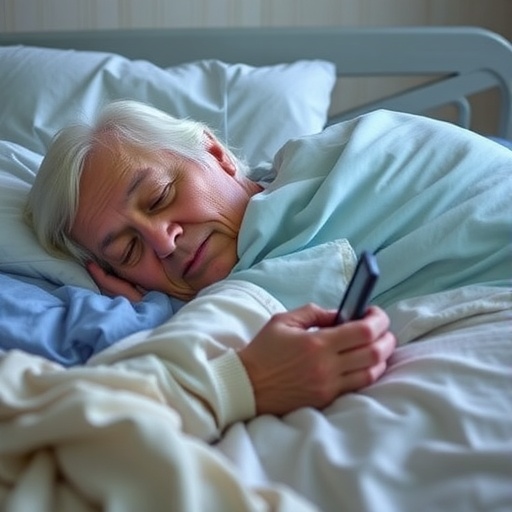
In a groundbreaking exploration of the interplay between sleep patterns and cognitive function in older adults, a new study led by Tanaka et al. sheds light on how physiological parameters, specifically the minimum pulse rate during sleep, correlate with scores on the Mini-Mental State Examination (MMSE). This research is particularly significant given the increasing global elderly population and the pressing need to understand factors contributing to cognitive decline. The study, which is set to be published in 2025 in BMC Geriatrics, offers a fresh perspective on the complexities of aging, sleep health, and mental acuity.
The research is built on a comprehensive framework that takes into account various aspects of health and lifestyle in older adults who do not qualify for long-term care certification. This unique demographic is crucial to observe since they represent a segment of the aging population that is often overlooked in studies about cognitive impairment and sleep disturbances. By targeting this specific group, Tanaka and colleagues aim to unveil patterns that may have major implications for health policy and geriatric care.
One of the most significant findings of this study is the identification of a relationship between minimum pulse rate during sleep and performance on cognitive assessments like the MMSE. The physiological monitoring of pulse rates provides objective data that researchers can analyze, offering insights that subjective reports or observational studies cannot. Participants were monitored over several nights, and the data collected illuminates how fluctuations in heart rate during different sleep stages may correlate with cognitive functioning.
The research methodology is robust, incorporating not only physiological measures but also a series of cognitive tests administered to each participant. This multifaceted approach allows for deeper analyses and greater reliability in findings. The study’s design acknowledges the fact that cognitive health is influenced by a myriad of factors—ranging from physical health to psychological wellbeing—which necessitates a comprehensive evaluation of older adults’ health profiles.
A notable aspect of the study is its emphasis on the significance of sleep quality versus quantity. Traditionally, much focus has been placed on the number of hours individuals spend asleep. However, Tanaka et al. argue that the quality of sleep, particularly as it relates to physiological responses such as heart rate, may provide more pertinent insights into cognitive health. This shift in perspective could influence future research and clinical practices, leading to strategies that prioritize enhancing sleep quality among older adults.
Moreover, the implications of these findings extend beyond individual health. Public health initiatives aimed at improving sleep hygiene in older adults could potentially mitigate cognitive decline and improve overall quality of life. By understanding how essential sleep characteristics impact cognitive health, caregivers and healthcare providers can develop targeted interventions designed to support older adults.
In considering the broader context of aging populations, this study serves as a reminder of the importance of proactive health management. As the global demographic shifts towards an older age range, societies must adapt to meet the needs of this population. This includes not only physical health care but also a holistic approach that considers mental and cognitive health as interconnected components of aging well.
Looking towards the future, the team of researchers leads by Tanaka emphasizes the potential for further studies to expand upon their findings. There is a growing need for long-term studies that would track changes in pulse rates and cognitive functioning over extended periods. Such research could identify trends that could ultimately lead to early identification of cognitive decline and facilitate timely interventions.
Integrating technology into sleep monitoring presents exciting opportunities for advancing research in this area. Wearable devices capable of tracking heart rates and sleep stages could provide real-time data, not only for researchers but also for the individuals themselves. This technological integration may empower older adults with self-management tools, fostering a sense of agency in their health and wellbeing.
As this research gains traction, it invites dialogue on the ethical considerations associated with monitoring physiological parameters in older populations. The balance between monitoring for health benefits and maintaining individual privacy is essential. Thus, protocols must be established to ensure that participants are informed and their data is handled with the utmost care and respect.
In conclusion, Tanaka et al.’s study is a critical step toward unraveling the complexities of aging and cognitive health. By examining the correlation between minimum pulse rates during sleep and MMSE scores, the researchers open up important avenues for future inquiry and patient care. Ultimately, the findings not only challenge existing paradigms regarding sleep and cognition but also lay the groundwork for innovative strategies to enhance the quality of life for older adults globally.
As we continue to face the challenges of an aging population, understanding and promoting cognitive health through quality sleep emerges as a shared responsibility among researchers, healthcare professionals, caregivers, and society as a whole.
Subject of Research: Correlation between minimum pulse rate during sleep and MMSE scores in older adults.
Article Title: Minimum pulse rate during sleep as a MMSE-associated factor: a multifaceted exploratory study in older adults without long-term care certification.
Article References:
Tanaka, Y., Saito, K., Tsuchiya, K. et al. Minimum pulse rate during sleep as a MMSE-associated factor: a multifaceted exploratory study in older adults without long-term care certification.
BMC Geriatr (2025). https://doi.org/10.1186/s12877-025-06584-3
Image Credits: AI Generated
DOI:
Keywords: Cognitive health, sleep quality, heart rate, aging, MMSE, eldercare.


