

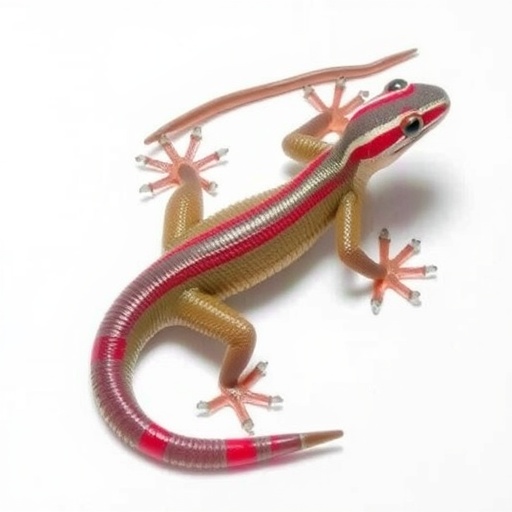
In a groundbreaking study slated for publication in BMC Genomics, researchers have identified the mechanisms underlying sex chromosome dosage compensation in the fascinating world of skinks, specifically focusing on a species known for its remarkable ability to change sexual phenotype. The study, led by scientists including B.J. Hanrahan and J. Chang, offers vital insights into the biological intricacies of sex determination and chromosome behavior in reptiles, pushing the boundaries of our understanding in evolutionary biology, genetics, and ecology.
This research highlights the unique processes involved in how sex chromosomes are expressed in species that can exhibit both male and female characteristics depending on environmental or developmental factors. The skink in question is an exceptional model organism due to its capacity for sex reversal. Such phenomena raise questions about the evolutionary advantages of flexibility in sexual development and how organisms can adapt to varying ecological contexts. The findings challenge previous beliefs that sexual phenotype significantly influences dosage compensation systems.
At the core of the study lies the concept of dosage compensation, a process that ensures equal expression of genes on sex chromosomes, compensating for differences in their number between the sexes. In many species, primarily mammals, dosage compensation mechanisms like X-inactivation are well-established, wherein one of the two X chromosomes in females is silenced. The researchers delved into whether similar mechanisms are at play in the sex-reversing skink or if these processes are altered by the skink’s unique sexual plasticity.
Through meticulous experimentation and genetic analysis, Hanrahan and colleagues found that the skink’s sex chromosomes do not adapt in their expression when the phenotype changes from male to female or vice versa. This discovery is particularly intriguing as it suggests a more rigid dosage compensation strategy that is not influenced by fluctuating sexual identity. This is contrary to expectations and indicates a strong evolutionary divergence from other vertebrates where sexual phenotype often correlates with chromosomal expression patterns.
Understanding how skinks achieve this level of stability in dosage compensation opens avenues for broader research into the genetic foundations of sex determination and the interplay between genetics and environmental influences. The implications are vast, ranging from insights into evolutionary adaptation strategies to practical applications in conservation biology, particularly as environmental changes continue to threaten diverse species.
The methodology employed in the study involved a combination of genomic sequencing, comparative analysis, and innovative bioinformatics tools to evaluate gene expression patterns across different sexual phenotypes. The researchers meticulously charted the differences and similarities in gene expression across a population of sex-reversing skinks, ensuring that the data collected was comprehensive and representative. This detailed approach provides a solid foundation for the conclusions drawn.
In the context of climate change and habitat destruction, understanding the ability of certain species to change their sexual phenotype is becoming increasingly critical. As traditional habitats shift, some species might benefit from being able to adapt faster than others through such mechanisms, potentially impacting population dynamics and species survival. Thus, the study not only enriches our understanding of one specific organism but also contributes valuable information to the larger narrative of biodiversity and resilience in the face of global change.
The researchers postulate that the skink’s ability to maintain genomic stability in the face of sexual phenotypic changes may operate through a yet-unknown regulatory network. This finding raises important questions about the evolution of sex determination systems and the extent to which reproductive strategies can evolve under different ecological pressures. Comparative studies involving both sex-reversing skinks and multiple other organisms that exhibit diverse sex-determining mechanisms could yield transformative insights into genetic and evolutionary biology.
As the scientific community digests this research, it is clear that it opens significant discussions regarding sexual dimorphism and genetic expression. The notion that sexual phenotype does not alter gene expression patterns in this particular skink species poses interesting philosophical questions about the nature of sex and identity in the living world, challenging researchers to rethink how we categorize organisms based on sexual characteristics.
This study serves as a stepping stone for future exploration into other species with similar sexual plasticity and could guide geneticists and biologists toward discovering new paradigms in genetic regulation and evolutionary biology. The results not only challenge existing frameworks but also set a precedent for future investigations into the role of environmental factors in determining genetic expression.
In conclusion, Hanrahan and colleagues have intricately threaded a narrative that links sex chromosome dosage compensation to the evolutionary biology of sex-reversing skinks, unveiling a robust system that defies traditional expectations. As these findings are disseminated through the scientific community and beyond, the potential implications for fields ranging from ecology to genetics and even social sciences may be profound, inviting interdisciplinary collaborations that bridge the gap between these disciplines.
The study thus not only illustrates the wonders of biological adaptation but also amplifies the call for conservation efforts to preserve the ecological niches that such extraordinary organisms inhabit, ensuring that future generations can explore the vast intricacies of life on Earth.
Subject of Research: Sex chromosome dosage compensation in a sex-reversing skink.
Article Title: Sex chromosome dosage compensation in a sex reversing skink is not influenced by sexual phenotype.
Article References: Hanrahan, B.J., Chang, J., Milton, A.M. et al. Sex chromosome dosage compensation in a sex reversing skink is not influenced by sexual phenotype. BMC Genomics (2025). https://doi.org/10.1186/s12864-025-12217-1
Image Credits: AI Generated
DOI:
Keywords: Sex chromosome, dosage compensation, sex reversal, skink, genetics, evolutionary biology, gene expression, reproductive strategies.


