

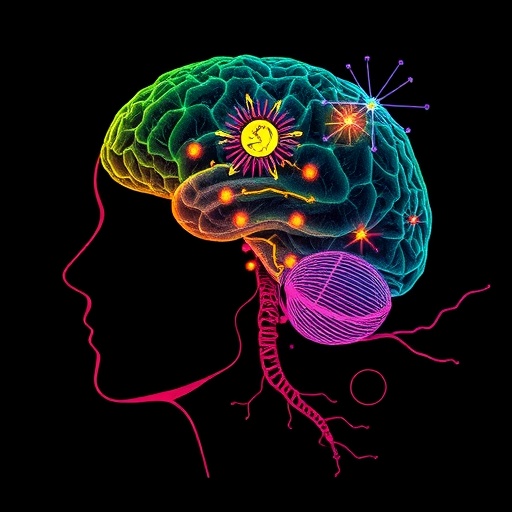
In a groundbreaking study poised to redefine our understanding of depression and its treatment, researchers have uncovered compelling evidence that a single administration of DMT—a potent psychedelic compound—can reverse the debilitating symptoms of anhedonia and cognitive decline by restoring neurogenesis in a stress-induced model of depression. This discovery, recently published in Translational Psychiatry, opens unprecedented avenues for therapeutic intervention, especially in cases where conventional antidepressants fall short.
Depression, a pervasive mental health disorder affecting millions worldwide, often manifests through anhedonia—the inability to feel pleasure—and significant cognitive impairments. Traditional antidepressants typically require prolonged use and do not fully alleviate these core symptoms in a substantial subset of patients. The pursuit of rapid-acting antidepressants capable of producing swift and durable remission has intensified in recent years, with psychedelic substances emerging as promising candidates. Yet, the precise mechanisms by which these substances alleviate depressive symptoms remain elusive.
The study led by Lima da Cruz and colleagues systematically evaluates the impact of a single DMT dose on behavioral and neuronal parameters within a rigorously validated rodent model of stress-induced depression. Chronic stress, a well-established etiological factor in human depression, is simulated to induce persistent anhedonia and cognitive deficits in animals, thereby offering an incisive platform for therapeutic screening. Notably, the DMT intervention was both rapid and striking in reversing these detrimental behavioral hallmarks.
Central to this effect is the restoration of neurogenesis—the process by which new neurons are generated in the adult brain, particularly within the hippocampus, a region implicated in mood regulation and cognitive function. Chronic stress is known to suppress hippocampal neurogenesis, thereby exacerbating mood disorders. Employing sophisticated neuroanatomical techniques, including immunohistochemical labeling of proliferative markers such as BrdU and doublecortin, the authors demonstrate a marked resurgence of neuronal birth and maturation following DMT exposure.
Moreover, electrophysiological assessments conducted in the study reveal that DMT not only reinstates the proliferation of neural progenitors but also contributes to functional synaptic remodeling. Enhanced synaptic plasticity, evident through increased long-term potentiation (LTP), likely underpins the observed improvements in cognitive processing, memory, and learning. This dual action on cellular regeneration and synaptic efficacy underscores a multifaceted therapeutic potential inherent in DMT’s neuropharmacology.
Importantly, the research delineates the molecular cascades mediating DMT’s neurogenic effects. Activation of the serotonin 5-HT2A receptor emerges as a critical initiator, aligning with well-established roles of serotonin signaling in neuroplasticity. Downstream, the engagement of brain-derived neurotrophic factor (BDNF) pathways further propagates neurogenic and synaptogenic processes. The interplay of these molecular signals culminates in restructuring of the neural architecture compromised by chronic stress.
Behaviorally, treated animals display a profound resurgence of interest in rewarding stimuli, reversing anhedonic states traditionally resistant to monoaminergic antidepressants. Parallel cognitive tests—such as novel object recognition and maze-based paradigms—confirm improvements in executive function, spatial memory, and attentional control. These findings collectively suggest that DMT’s capacity to restore brain plasticity translates into tangible ameliorations of complex mood and cognitive phenotypes.
Given the typically rapid onset of action observed—effects evident within hours and sustained over days—the translational relevance for human depression treatment is unmistakable. Unlike selective serotonin reuptake inhibitors (SSRIs) and other antidepressants that require weeks for efficacy to manifest, DMT presents a paradigm shift toward immediate symptom relief, potentially revolutionizing acute depressive episode management.
This study further addresses safety and tolerability, documenting no overt toxicological effects in their animal subjects. While psychedelic agents carry historical stigmas related to their hallucinogenic properties and misuse potential, controlled clinical contexts could harness their mechanisms for therapeutic gain without adverse psychiatric sequelae. Establishing precise dosing regimens and treatment protocols remains imperative for clinical translation.
Beyond the molecular and behavioral insights, the findings invigorate broader discussions about the neurobiology of depression. The notion that profound structural and functional brain repair can be triggered by pharmacological agents challenges entrenched skepticism about adult brain plasticity. It also fosters hope for regenerative mental health treatments targeting the root causes of dysfunction rather than merely symptomatic relief.
Moreover, this research contributes to an expanding compendium of evidence positioning psychedelics as potent modulators of neuroplasticity. Parallel studies with compounds like psilocybin and ketamine corroborate the therapeutic potential of transiently altering neural circuitry to instigate lasting behavioral change, suggesting a unifying framework encompassing diverse psychedelic modalities.
Future investigations are merited to explore combinatorial strategies that pair DMT with behavioral therapies aimed at consolidating neuroplastic gains into enduring clinical recovery. Longitudinal studies in higher-order models and ultimately human clinical trials will be essential to validate efficacy, dosage optimization, and safety profiles across diverse patient populations.
In conclusion, the pioneering work by Lima da Cruz and colleagues heralds a new frontier in depression therapeutics, demonstrating that a single DMT dose can catalyze neurogenesis and reverse the core deficits wrought by chronic stress. Their insights propel the field toward innovative, rapid-acting antidepressant strategies that harness the brain’s intrinsic capacity for renewal, offering renewed optimism for millions suffering from refractory depression.
As the scientific and medical communities accelerate efforts to translate these findings, responsible regulation and public education will be vital to integrating psychedelic-assisted therapies within mainstream psychiatric practice. This seminal study not only charts an exciting path forward but also challenges current paradigms, underscoring the immense potential latent in psychedelics to transform mental health treatment globally.
Subject of Research: The therapeutic effects of single-dose DMT on neurogenesis, anhedonia, and cognitive deficits in a stress-induced model of depression.
Article Title: Single-dose DMT reverses anhedonia and cognitive deficits via restoration of neurogenesis in a stress-induced depression model.
Article References:
Lima da Cruz, R.V., Costa, R.B.G.d.M., de Queiroz, G.M. et al. Single-dose DMT reverses anhedonia and cognitive deficits via restoration of neurogenesis in a stress-induced depression model. Transl Psychiatry (2026). https://doi.org/10.1038/s41398-026-03852-7
Image Credits: AI Generated


