

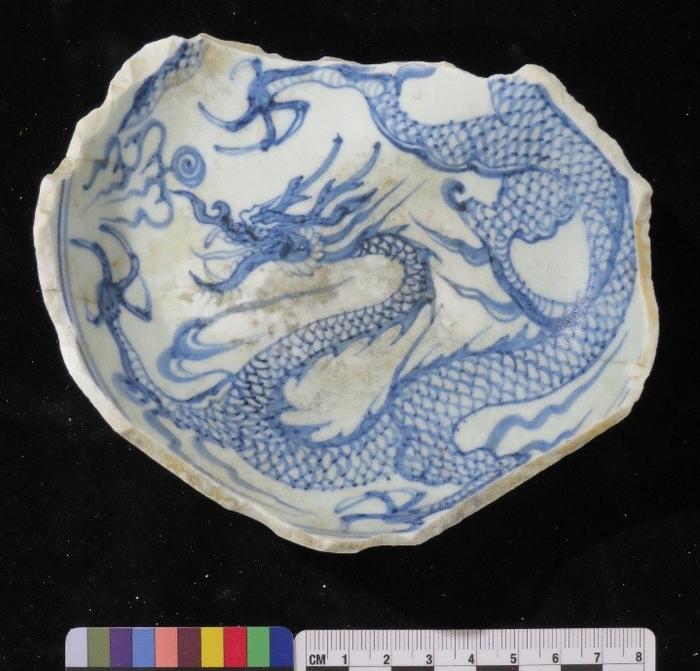
In a groundbreaking maritime archaeological discovery in the waters surrounding Singapore, researchers have unearthed the Temasek Wreck, a site teeming with an extraordinary collection of Yuan dynasty ceramics. This excavation, meticulously conducted over the course of several years from 2016 through 2019, has revealed approximately 3.5 tonnes of ceramic fragments, including a considerable number of intact and nearly complete artifacts. The Temasek Wreck stands out not only for its immense scale but also for its unparalleled significance in the study of blue-and-white porcelain from the Yuan period, a rarity in Southeast Asia.
The prominence of blue-and-white porcelain in this find is particularly striking. According to Dr. Michael Flecker, a specialist affiliated with HeritageSG, a branch unit of the Singapore National Heritage Board, this discovery represents the first ancient shipwreck ever documented within Singaporean territorial waters. Remarkably, the ship’s ceramic cargo far exceeds the volume of blue-and-white porcelain discovered in any other known shipwreck to date. The blue-and-white shards alone weigh an estimated 136 kilograms, encompassing in excess of 2,350 fragmented pieces in addition to several well-preserved, near-intact vessels that constitute roughly 3.9% of the ceramic assemblage by weight.
The ceramics recovered span an impressive variety of types and origins. While the Yuan dynasty blue-and-white porcelain originated from Jingdezhen, China—a historically renowned center for ceramic production whose peak zenith occurred later during the Ming and Qing dynasties—the cargo also features notable quantities of Longquan celadon, the bluish-white glazed Qingbai ware, and the rare Shufu ware, sometimes referred to as “Privy Council” ware. Additionally, the assemblage contains Dehua whiteware and a selection of greenware and storage vessels believed to come from Fujian province, including Cizao storage jars and small-mouth jars that highlight regional ceramic diversity.
Despite the scarcity of intact porcelain vessels, the overall craftsmanship and quality of the recovered ceramics are deemed exceptional. Dr. Flecker underscores the remarkable finesse and technical proficiency demonstrated in the Jingdezhen blue-and-white porcelain and Qingbai/Shufu wares, as well as Longquan celadon’s refined characteristics. These wares exhibit meticulous glazing techniques and vivid cobalt blue decorations that exemplify the pinnacle of ceramic artistry during the Yuan dynasty, shedding light on technological advancements made in kiln temperature control, pigment preparation, and glazing precision at the time.
Beyond the ceramics themselves, the excavation offers vital insights into the ship’s identity and the maritime trade routes active during the mid-14th century. Although the wooden hull has not survived, contextual archaeological evidence supports the classification of the vessel as a Chinese junk—a distinctive type of ship renowned for its sturdy build and efficient sailing design well-suited for long-distance voyages across the South China Sea. Dr. Flecker posits that the ship was likely loaded at the bustling port city of Quanzhou in Fujian province and destined for the thriving entrepot of Temasek, the precursor to modern Singapore. This identification situates the wreck squarely within the vibrant maritime trade network that connected China to Southeast Asia during the Yuan era.
The meticulous excavation and subsequent analyses of the Temasek Wreck ceramic cargo provide a crucial temporal and material benchmark for archaeologists and historians studying the dynamics of Yuan dynasty trade. The tightly constrained dating of this assemblage offers a rare opportunity to compare less well-dated or poorly documented finds in the region, enhancing understanding of production centers, trade patterns, and cultural exchanges across the maritime Silk Road. Furthermore, the data obtained contribute to broader discourses on economic history, technological diffusion, and cross-cultural interactions during a pivotal period in Eurasian history.
From the technical perspective, the discovery underscores the sophisticated production and export capabilities of Jingdezhen kilns in the 14th century. The blue-and-white porcelain, characterized by its intricate dragon motifs and symbolic iconography, utilized cobalt pigment imported from the Middle East, reflecting the interconnectedness of global trade even in medieval times. The preservation state of the shards and intact vessels also provides material for scientific analyses such as petrographic examination, compositional studies through X-ray fluorescence (XRF), and thermoluminescence dating, all of which enrich the archaeological narrative.
Complementing the blue-and-white products, the Longquan celadon pieces from the wreck illustrate advanced glazing methods that achieved a distinctive jade-like finish, a hallmark of Southern Chinese ceramic art. The Qingbai and Shufu wares further diversify the stylistic and functional repertoire aboard the ship, revealing both utilitarian and luxury item cargos destined for different markets. Dehua whiteware’s presence signals the movement of items from eastern Fujian, while storage jars underscore the practical needs of merchants for transporting bulk goods alongside fine ceramics.
The Temasek Wreck’s findings expand scholarly comprehension of the transregional economic networks operating during the Yuan dynasty, underscoring Singapore’s historical role as an entrepot well before its modern incarnation. This archaeological occurrence provides an unprecedented glimpse into the complexity and scope of maritime commerce and the circulation of fine goods. It also stimulates renewed investigations into the technological innovations that supported high-volume ceramic production and export, including kiln design, pigment sourcing, and quality control techniques maintained by Jiangxi’s ceramic artisans.
In sum, the excavation of the Temasek Wreck offers a transformative contribution to the study of Southeast Asian maritime history and Chinese ceramic production. By encompassing a broad spectrum of ceramic types, exceptional craftsmanship, and contextually rich provenance, this discovery illuminates interconnected histories of trade, technology, and cultural exchange during the early phases of the maritime Silk Road. It reinforces the importance of underwater archaeology in rediscovering submerged chapters of global heritage and contextualizing material culture within broader historical frameworks.
Looking forward, ongoing conservation efforts and detailed artifact analysis will continue to shed light on the technological nuances of Yuan dynasty ceramics and the logistical intricacies of maritime trade routes that linked distant ports. The Temasek Wreck stands not only as a tangible record of 14th-century economic vitality but also as a bridge connecting present-day Singapore with its illustrious maritime past, encouraging deeper appreciation and scholarly inquiry into the complex histories beneath our oceans.
Subject of Research: Not applicable
Article Title: The Temasek Wreck ceramics cargo: Yuan blue-and-white porcelain, celadon and other ceramics found in Singapore waters
Web References: http://dx.doi.org/10.1016/j.joics.2025.100013
Image Credits: Credit: Dr. Michael Flecker
Keywords: Archaeology


