


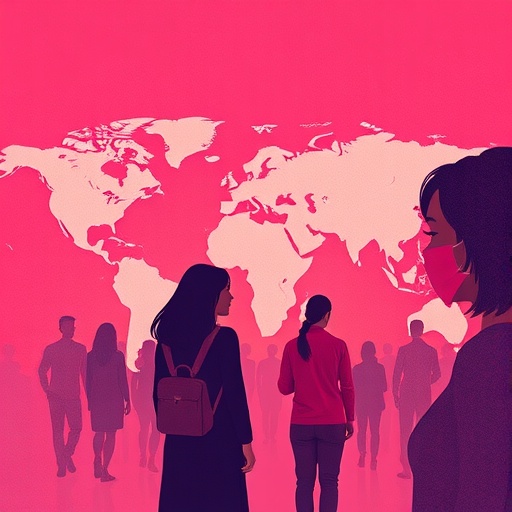
A groundbreaking scholarly compendium entitled Feminism and COVID-19: How Women Fare in the Face of a Global Crisis has emerged as a pivotal work elucidating the intersection of gender and public health responses in pandemic scenarios. Edited by Dr. Julia Smith of Simon Fraser University and Dr. Clare Wenham from the London School of Economics, this volume rigorously investigates the multifaceted and disproportionate burdens borne by women worldwide during the COVID-19 pandemic. Through an interdisciplinary and transnational lens, the book compiles case studies from nine countries spanning diverse socio-economic and cultural contexts, thereby offering a comprehensive exploration of systemic inequities exacerbated by the global health crisis.
The COVID-19 pandemic, while unprecedented in its scale and impact, has underscored existing structural disparities, particularly along gender lines. Women have occupied dual roles as frontline responders pivotal to pandemic containment and as individuals disproportionately impacted by the socio-economic fallout. The compendium delves into critical secondary effects, including but not limited to the exacerbation of unpaid care responsibilities, increased exposure to gender-based violence, and significant income loss. These factors collectively undermine the wellbeing and socio-economic stability of women, further entrenching long-standing gender inequities.
The editorial team curated contributions from a diverse cohort of researchers, policymakers, and health experts who meticulously examined COVID-19’s gendered repercussions in Bangladesh, Brazil, Canada, China, the Democratic Republic of Congo, Hong Kong, Kenya, Nigeria, and the United Kingdom. This geographic breadth allows for a nuanced understanding of how varying political economies, health infrastructures, and social norms shaped divergent yet intersecting outcomes for women during the pandemic. The empirical richness affirms the necessity of integrating gender-responsive frameworks within pandemic preparedness and response strategies.
Dr. Julia Smith emphasizes the imperative to institutionalize lessons learned from this global crisis to safeguard those central to public health responses—women—from future pandemics’ most deleterious effects. Central to this advocacy is the recognition that pandemic preparedness must transcend biomedical paradigms and incorporate socio-political determinants influencing gendered vulnerabilities. This approach necessitates systemic reforms that amplify women’s voices in decision-making and allocate resources equitably to mitigate adverse impacts.
The scholarly reception of Feminism and COVID-19 has been notably positive, with academics like Dr. Jennifer Piscopo of the University of London highlighting its critical contribution to understanding how health emergencies reinforce patriarchal and intersectional inequalities rather than catalyzing transformative social change. This insight challenges optimistic narratives of crises as opportunities for egalitarian restructuring and urges a reevaluation of pandemic governance through an intersectional feminist lens.
Among the illuminating chapters is the investigation of Bangladesh, where women’s heightened unpaid labor amid lockdowns unraveled precarious household economies and intensified care burdens. Similarly, the Brazilian study evidences entrenched gender disparities manifesting in overlapping paid and unpaid work responsibilities exacerbated by social stratification and racial inequalities. Canadian research foregrounds immigrant women’s lived realities, revealing layered vulnerabilities compounded by xenophobia and inadequate institutional support.
China’s analysis presents the gendered experiences of first responders, underscoring how societal expectations and protective paternalism influenced women’s occupational challenges and psychological stress during crisis management. In the socio-politically complex environment of Hong Kong, the pandemic intersected with ongoing civil unrest, amplifying women’s perceptions of constrained agency amidst evolving risks. Kenya’s case spotlights community health volunteers, predominantly women, whose indispensable contributions occurred against a backdrop of systemic neglect and minimal institutional support.
In Nigeria, the research reveals how women market traders, slum dwellers, and those with disabilities encountered unique hardships exacerbated by restrictive measures and limited social safety nets. The United Kingdom’s study on pregnant women during the pandemic delineates gaps in healthcare provision and emotional support, illuminating broader systemic inadequacies in maternal care during emergencies. Cross-national comparative analyses further distill lessons on economic and social vulnerabilities, traversing contexts from Bangladesh to Kenya and Nigeria.
Concluding the volume is a chapter dedicated to gender-responsive pandemic planning, advocating for the integration of feminist principles into public health frameworks. This includes the institutionalization of gender-disaggregated data collection, participatory policy development with marginalized women’s inclusion, and the reallocation of resources to address intersecting vulnerabilities effectively. Such a paradigm shift is essential not only for equitable pandemic response but also for building resilient public health systems attuned to gender dynamics.
Feminism and COVID-19 stands as a seminal contribution to scholarship at the nexus of gender studies, public health, and social justice. Its rigorous empirical foundation and critical analyses provide invaluable guidance for academics, policymakers, and practitioners committed to a more just and effective pandemic preparedness infrastructure. By centering women’s experiences and systemic inequities, this compendium challenges existing paradigms and charts a course toward inclusive and transformative health governance.
News Publication Date: Not specified
Web References: https://mitpress.mit.edu/9780262554039/feminism-and-covid-19/
Cite Scienmag News
Kristina Jarvis. (March 6, 2026). New Study Explores How the COVID-19 Pandemic Deepened Global Gender Inequality. Scienmag. https://scienmag.com/new-study-explores-how-the-covid-19-pandemic-deepened-global-gender-inequality/
Kristina Jarvis. "New Study Explores How the COVID-19 Pandemic Deepened Global Gender Inequality." Scienmag, 6 March 2026, https://scienmag.com/new-study-explores-how-the-covid-19-pandemic-deepened-global-gender-inequality/. Accessed 4 September 2026.
Kristina Jarvis. "New Study Explores How the COVID-19 Pandemic Deepened Global Gender Inequality." Scienmag. March 6, 2026. https://scienmag.com/new-study-explores-how-the-covid-19-pandemic-deepened-global-gender-inequality/


