


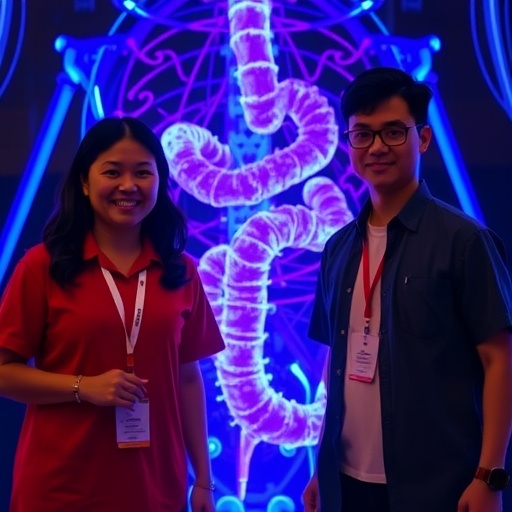
In a groundbreaking advancement that promises to redefine precision oncology for colorectal cancer, researchers at the Agency for Science, Technology and Research’s Institute of Molecular and Cell Biology (ASTAR IMCB) in Singapore have made a landmark discovery identifying distinct stem cell markers responsible for cancer origination in specific regions of the colon. This pioneering work, recently published in the high-impact journal Nature Cell Biology*, elucidates how two proteins, NOX1 and NPY1R, demarcate separate stem cell populations within the colon’s anatomy, each serving as the nidus for region-specific colorectal cancer formation. By discerning these unique cellular origins, the research delineates a critical biological framework that could revolutionize targeted therapeutic development and improve patient-specific treatment outcomes for one of the world’s most lethal cancers.
Colorectal cancer ranks alarmingly as both the third most frequently diagnosed malignancy and the second leading cause of cancer-related deaths globally. Singapore, in particular, faces disproportionately high incidence rates, underscoring an urgent need for innovative research addressing the disease’s complexity. Historically, colorectal cancers were studied as a homogenous entity, yet clinical experiences have long revealed stark disparities in tumor behavior, treatment responsiveness, and prognostic outcomes contingent on the anatomical regions—from the caecum through to the rectum—where tumors arise. Such disparities complicated the development of effective, one-size-fits-all therapies.
The team at A*STAR IMCB employed cutting-edge single-cell analytical techniques paired with sophisticated genetic tools to delve into the intricate cellular ecology of the colon epithelium. Their investigations demonstrated that the NOX1 protein marks a quiescent yet tumorigenic stem cell compartment predominantly located in the caecum, the proximal extension of the large intestine. In contrast, the NPY1R protein identifies an entirely different cohort of stem cells enriched in the distal portions of the colon. This compartmentalization implies that colorectal tumors are not a monolith but arise from distinct progenitor populations that likely determine their biological behavior and clinical trajectory.
To translate this discovery into actionable insights, the researchers engineered novel in vivo mouse models that exploit these marker proteins to induce genetic mutations selectively within region-specific stem cells. Unlike existing animal models, which typically activate oncogenic drivers throughout the colon indiscriminately, these new tools enable precise replication of human colorectal cancer initiating events restricted to either the caecum or distal colon. This region-specific oncogenesis allows unprecedented exploration of tumor development, progression, and metastasis within relevant microenvironmental contexts, facilitating the study of advanced cancer stages that were previously challenging to model.
This refined understanding of regional cancer origination illuminates why caecum-associated colorectal cancers often present with high lymph node metastasis rates and are diagnosed at more advanced stages compared to tumours originating elsewhere. Conversely, rectal cancers—constituting around 40 percent of colorectal carcinoma cases—manifest distinct phenotypic features, often detected earlier but notoriously difficult to treat effectively. The disparate behaviors can now be partly attributed to the discrete stem cell compartments from which these cancers derive, a revelation that challenges conventional diagnostic and therapeutic paradigms.
Senior Principal Scientist Prof Nick Barker, the study’s lead, emphasized the transformative potential of these findings. Prof Barker, a luminary in gastrointestinal stem cell biology, has significantly shaped the scientific approach to digestive tract cancers through his prior identification of LGR5 as an intestinal stem cell marker back in 2007. His current work extends these foundational insights by demonstrating how stem cell heterogeneity within the colon underpins regional cancer differences, enabling the design of highly specialized, precision oncology strategies. This nuanced perspective fosters tailored therapeutic interventions that address the intrinsic biological nuances of tumors based on their cellular and anatomical origins rather than broad generalized treatments.
Prof Barker’s illustrious career includes the isolation of gastric stem cells via the Aquaporin-5 (AQP5) marker, further exemplifying his expertise in pinpointing stem cell populations critical to gastrointestinal cancers. Recognized internationally with prestigious accolades such as the 2022 Japanese Cancer Association International Award, Prof Barker’s contributions have been globally influential, continuously referenced by tens of thousands of researchers and positioning him among the world’s top 2% most-cited scientists over multiple consecutive years.
The implications of this research extend beyond molecular biology into the realm of clinical practice. With the identification of NOX1 and NPY1R as region-specific stem cell markers, diagnostic paradigms can evolve towards early detection protocols that monitor patients with pre-cancerous lesions according to their specific colon segment at risk. Moreover, therapeutic regimes could become increasingly refined, deploying agents that selectively target the stem cell populations fueling tumorigenesis in a given region, potentially mitigating systemic side effects and enhancing treatment efficacy.
Additionally, the establishment of region-specific cancer mouse models provides an invaluable platform for preclinical testing of novel drugs and immunotherapies. By recapitulating the human tumor microenvironment in a controlled yet anatomically accurate manner, these models enable researchers to assess the spatial dynamics of tumor-stromal interactions and therapeutic responses. The knowledge garnered from these studies can accelerate drug discovery pipelines and refine clinical trial designs with improved translational fidelity.
This paradigm shift toward regionally informed precision medicine represents an evolutionary leap in oncology, where treatments are no longer defined solely by tumor histopathology but by the cellular origins and molecular signatures intrinsic to distinct colon segments. Implementing such strategies promises considerable clinical benefit, particularly in Singapore, where colorectal cancer burdens are high, potentially leading to reduced mortality rates through earlier intervention and individualized therapeutic targeting.
Looking ahead, the A*STAR IMCB team is actively pursuing validation studies using human colorectal cancer samples to corroborate the translational relevance of NOX1 and NPY1R as predictive and prognostic biomarkers. Parallel efforts are underway to integrate these markers into non-invasive screening methodologies that could revolutionize colorectal cancer surveillance programs. If successful, these advancements will pave the way for a new generation of diagnostics that identify high-risk individuals with precision and enable dynamic monitoring of disease progression or remission.
Furthermore, unraveling the mechanistic pathways regulated by NOX1 and NPY1R within stem cells offers promising avenues for discovering novel drug targets. Understanding how aberrant signaling mediated by these proteins contributes to oncogenic transformation, tumor progression, and resistance mechanisms will be critical for devising next-generation targeted therapies that can overcome current treatment limitations.
In sum, this seminal study published in Nature Cell Biology not only deepens our fundamental understanding of colorectal cancer biology but also ushers in an era of personalized medicine attuned to the intrinsic heterogeneity of cancer stem cell niches along the colon. The work embodies the core mission of A*STAR IMCB: leveraging precise biological insights to transform diagnostics and therapeutics, ultimately improving patient outcomes and reducing the global burden of colorectal cancer.
News Publication Date: 2 September 2025
References: Gasnier, M., Chen, T.C.-Y., Yada, S. et al. NOX1 and NPY1R mark regional colon stem cell populations that serve as cancer origins in vivo. Nature Cell Biology (2025).
Cite Scienmag News
Nathaniel Bowman. (October 14, 2025). Singapore Scientists Uncover Key Stem Cell Markers Driving Colorectal Cancer Development. Scienmag. https://scienmag.com/singapore-scientists-uncover-key-stem-cell-markers-driving-colorectal-cancer-development/
Nathaniel Bowman. "Singapore Scientists Uncover Key Stem Cell Markers Driving Colorectal Cancer Development." Scienmag, 14 October 2025, https://scienmag.com/singapore-scientists-uncover-key-stem-cell-markers-driving-colorectal-cancer-development/. Accessed 7 September 2026.
Nathaniel Bowman. "Singapore Scientists Uncover Key Stem Cell Markers Driving Colorectal Cancer Development." Scienmag. October 14, 2025. https://scienmag.com/singapore-scientists-uncover-key-stem-cell-markers-driving-colorectal-cancer-development/


