


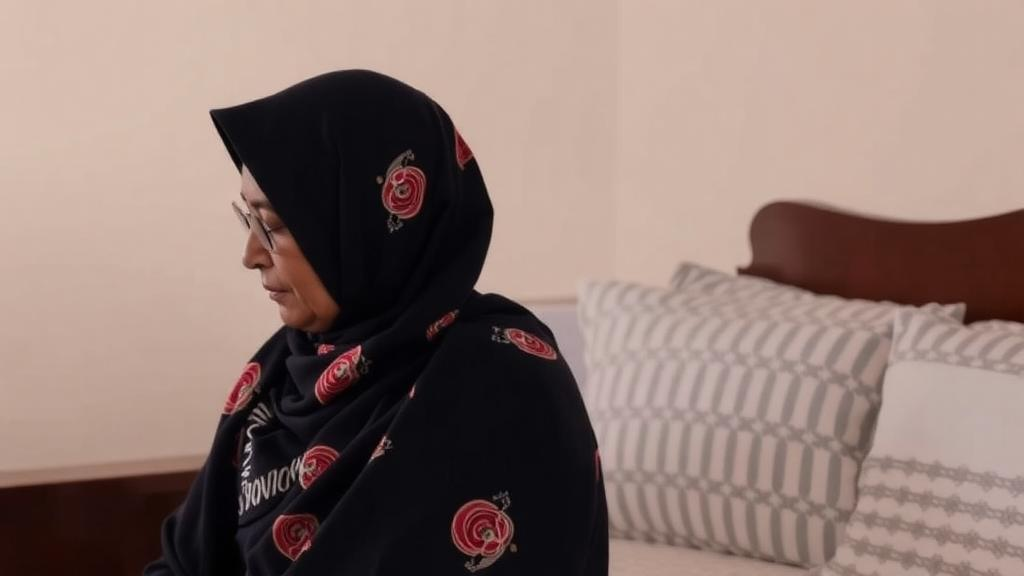
When a mother in Oman hears the words “breast cancer,” her first thought is often not about herself but about who to tell, when to tell them, and how much to reveal. A new phenomenological qualitative study published in Supportive Care in Cancer offers one of the most detailed portraits to date of how women in a collectivist, faith-oriented Arab society manage that delicate calculus. Researchers at Sultan Qaboos University and the Sultan Qaboos Comprehensive Cancer Care and Research Centre in Muscat conducted in-depth, semistructured interviews in Arabic with 18 Omani mothers diagnosed with stage I to III breast cancer, each raising at least one child between the ages of 6 and 18. Their accounts, analyzed using the framework method with NVivo software, reveal that disclosure is not a single conversation but an evolving, morally charged negotiation shaped by maternal identity, anticipated stigma, and religious meaning.
The participants, aged 33 to 55 with an average age of about 44, were recruited through purposive sampling at the national tertiary oncology facility. Most were married, two-thirds were unemployed or retired, and half reported a family history of cancer. The majority had been diagnosed at stage II. Of 26 eligible women approached, 18 agreed to participate, with interviews lasting from roughly 17 minutes to an hour and a half. Recruitment stopped once data saturation was reached, meaning no new themes were emerging from the conversations. The interviews were transcribed verbatim, translated into English, and cross-checked by two researchers to preserve linguistic and conceptual fidelity, a technical safeguard that matters greatly when the subject matter touches on modesty, family honor, and religious devotion.
Three major themes emerged from the analysis: how women disclosed or concealed their illness, how family and community responded once the diagnosis was known, and how the mothers coped through faith, patience, and deliberate behavioral adjustment. On disclosure, the researchers found three broad patterns: open sharing, selective sharing, and complete nondisclosure. The reasoning behind each pattern differed sharply depending on the audience. With adults, openness was often framed as a practical necessity. One participant put it plainly: support and encouragement cannot arrive if nobody knows. With children, however, the calculus shifted toward age, developmental readiness, and the demands of upcoming treatment, with some mothers deciding that informed children could respond appropriately in emergencies.
Just as compelling were the reasons women gave for withholding the truth. Many concealed their diagnosis from elderly parents or emotionally sensitive relatives to shield them from distress. One mother told her own mother only that she was undergoing surgery, omitting the cancer entirely, because her mother was easily upset by bad news. Others worried about cultural embarrassment, with one participant noting how difficult it would be to say the word “breast” in front of male relatives. The concealment strategies were often remarkably resourceful: swapping medication bags to hide hospital branding, removing pills from their boxes, or framing a cancer appointment as a routine infection. These were not acts of denial but carefully engineered performances designed to preserve family emotional equilibrium.
The study also documented the psychological toll running in both directions. Women who disclosed described watching their families weep and feeling that the diagnosis had become a shared household crisis, with one participant saying the tears and sadness made everything feel heavier. Women who concealed described a chronic, physical tension during family gatherings, a constant fear of accidental revelation. The consequences of secrecy could be severe: one participant’s son learned of her illness from neighbors rather than family and reacted with crying, shouting, and a profound sense of betrayal. Another daughter refused to attend school, terrified that her mother would die while she was away, a fear apparently rooted in the earlier loss of her grandmother. These accounts challenge any simple assumption that openness is always therapeutic or silence always harmful.
Once a diagnosis was shared, even with a select few, support networks mobilized quickly and in culturally distinctive ways. Emotional support flowed from husbands, daughters, siblings, aunts, neighbors, and friends, but it often took forms that Western psychosocial models might overlook. One participant described a husband who never once commented on the changes to her body, attended most appointments, and conveyed stability through silent presence rather than verbal affirmation. The researchers interpret this restraint not as detachment but as a culturally specific caregiving style in which emotional quietude signals strength. Daughters emerged as central caregivers, accompanying mothers to appointments, managing medications, and mediating tense moments, a role the authors connect to the Islamic ethic of birr al-walidayn, righteousness toward parents, expressed through quiet duty.
Practical support proved equally vital. Relatives living next door helped with childcare and chores, a brother-in-law’s wife took over tutoring a young son and even prompted a school transfer for proximity, and some families hired domestic help that was scaled back as health improved. One participant recounted posting in the family WhatsApp group asking relatives in Muscat to donate blood for her surgery, a disclosure driven by urgent logistics rather than a desire for emotional processing. The authors argue that these networks reflect a culturally embedded system of collective caregiving, in which sickness becomes a shared family event and a moral obligation rather than an individual burden, echoing research on Muslim family caregiving across other collectivist societies.
The third theme, coping, wove together spiritual meaning-making and purposeful action. Many women framed their cancer as ibtila, a divine test, and drew on concepts of sabr, patience, and tawakkul, trust in divine will, even when they did not name these terms explicitly. Far from promoting passivity, the authors contend that this theological framing provided existential meaning and regulated emotional expression, transforming suffering into dignified endurance. This aligns with established psychological models of positive religious coping, in which faith supplies a framework for managing adversity and reducing existential anxiety. Previous studies of Muslim cancer patients have similarly found that trust in divine will can lower anxiety about illness and death while reinforcing moral resilience.
Alongside faith, the mothers engaged in deliberate behavioral and lifestyle strategies to reclaim agency. Some filled their days with household tasks, farming, exercise, and shopping; others attended school ceremonies despite physical pain or consciously surrounded themselves with cheerful companions whose optimism they hoped would prove contagious. Several insisted on maintaining their social lives as if the disease did not exist, pausing only during chemotherapy when infection risk demanded isolation. Some avoided weddings and public events where they felt self-conscious about changes in appearance, showing how coping behaviors could both enable and restrict engagement. The researchers interpret this lifestyle continuity as a culturally valued assertion of dignity, combining problem-focused coping, through preserved routines and self-efficacy, with emotion-focused coping, through distraction and normalcy.
The study’s authors acknowledge limitations: women with stage IV disease and those treated abroad were not represented, and cultural norms of modesty and emotional restraint may have led some participants to underreport fear, spiritual doubt, or unconventional coping methods. Yet the findings carry clear clinical weight. They challenge the psycho-oncological assumption that full disclosure is universally beneficial, showing instead that in collectivist contexts deliberate silence can function as an act of care, consistent with research among Saudi, Japanese, and Chinese families. The authors call for culturally responsive, family-centered psychosocial care that helps mothers make communication decisions, recognizes quiet and action-based expressions of support as legitimate, and integrates spiritual and relational resources into treatment pathways. For the 18 women who shared their stories, the message is unmistakable: coping with cancer in Oman is not a solitary psychological task but a relational, moral, and profoundly spiritual practice conducted within the family circle.
Subject of Research: Illness disclosure, social support, and meaning-based coping among Omani mothers living with breast cancer
Article Title: Disclosure, social support, and meaning-based coping among Omani mothers living with breast cancer: a phenomenological qualitative study
Article References: Al-Alawi, K. S., Al Sumri, H. H., Al Fahdi, A. S., Chan, M. F., Al Kayoumi, Z. T., & Al-Azri, M. (2026). Disclosure, social support, and meaning-based coping among Omani mothers living with breast cancer: a phenomenological qualitative study. Supportive Care in Cancer, 34(10), Article 1040. https://doi.org/10.1007/s00520-026-11266-w
Image Credits: AI Generated
DOI: 10.1007/s00520-026-11266-w
Keywords: breast cancer, illness disclosure, Oman, qualitative research, phenomenology, social support, religious coping, psychosocial oncology, family caregiving, cancer stigma, maternal health, Middle East
Cite Scienmag News
Nathaniel Bowman. (October 1, 2026). Silence as Care: How Omani Mothers Navigate Breast Cancer, Faith, and Family. Scienmag. https://scienmag.com/silence-as-care-how-omani-mothers-navigate-breast-cancer-faith-and-family/
Nathaniel Bowman. "Silence as Care: How Omani Mothers Navigate Breast Cancer, Faith, and Family." Scienmag, 1 October 2026, https://scienmag.com/silence-as-care-how-omani-mothers-navigate-breast-cancer-faith-and-family/. Accessed 17 October 2026.
Nathaniel Bowman. "Silence as Care: How Omani Mothers Navigate Breast Cancer, Faith, and Family." Scienmag. October 1, 2026. https://scienmag.com/silence-as-care-how-omani-mothers-navigate-breast-cancer-faith-and-family/


