


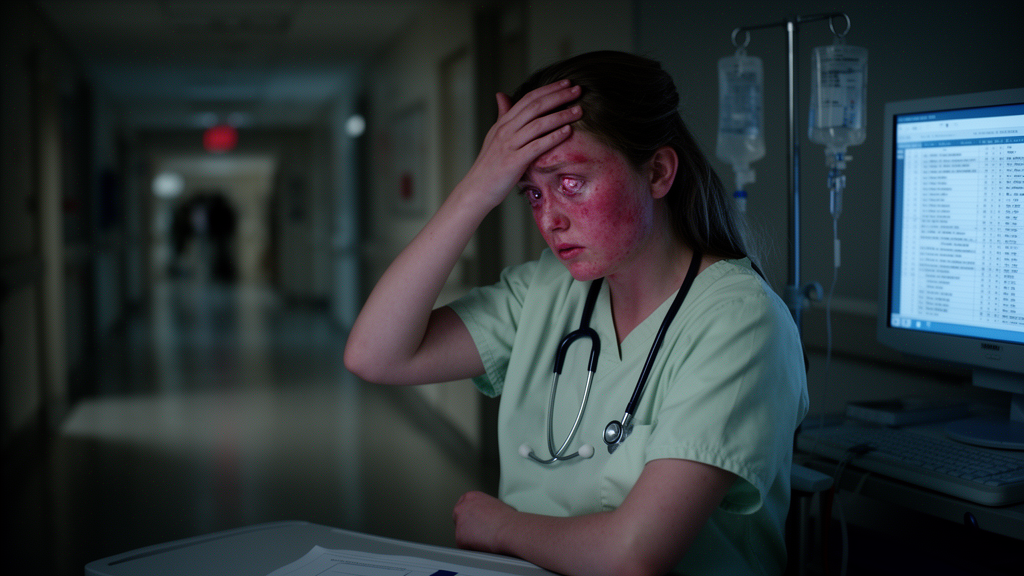
When a doctor falls ill, the instinctive assumption is that they will rest, recover, and return to the hospital when they are well. For many postgraduate medical residents, however, the reality is starkly different. A new qualitative study published in Discover Psychology suggests that residents living with chronic illness frequently continue working through their sickness, a phenomenon researchers call presenteeism, and that this behavior is driven not by simple dedication but by a web of professional identity, financial insecurity, moral obligation, and institutional culture. The findings, drawn from interviews with residents in Pakistan, offer a rare window into an experience that has been largely invisible in graduate medical education policy.
The study, led by Mohammad Zaib of the Department of Medicine at MTI-Lady Reading Hospital in Peshawar, together with Usman Mahboob of Khyber Medical University and Naheed Mahsood of Khyber Girls Medical College, set out to understand why residents with chronic illness choose to perform their clinical duties while unwell. Presenteeism, the act of attending work despite being sick, is common among postgraduate residents, yet the authors note it has received negligible attention in the policies that shape graduate medical education. Rather than measuring how often it happens, the team wanted to understand what it feels like from the inside, and what forces push young doctors to sacrifice their own health in service of their patients and their careers.
To capture that lived experience, the researchers employed a qualitative phenomenological design, an approach that seeks to describe the essence of a shared experience through the eyes of those who live it. They conducted semi-structured interviews with twelve postgraduate residents drawn from different medical specialties in hospitals across Khyber Pakhtunkhwa province in Pakistan. Semi-structured interviews allowed participants to speak freely about their experiences while ensuring that key topics were covered consistently. The researchers then analyzed the transcripts using Braun and Clarke’s reflexive thematic analysis, a widely used method in which researchers systematically code the data and develop themes that capture patterns of meaning across the accounts. The study received ethics approval from the Advanced Studies and Research Board of Khyber Medical University, and all participants provided written informed consent, with confidentiality and the right to withdraw explicitly guaranteed.
A distinctive strength of the work lies in its theoretical framing. The researchers interpreted their findings through two complementary psychological theories. The first is Conservation of Resources theory, which holds that people strive to obtain, retain, and protect resources they value, and that stress arises when those resources are threatened, lost, or invested without return. The second is Self-Determination theory, which describes human motivation in terms of three basic psychological needs: autonomy, competence, and relatedness. Together, these frameworks allowed the team to explain presenteeism not as an isolated individual choice but as the outcome of an interaction between motivational stress and resource-related pressures. A resident who fears losing income, career standing, or professional respect is experiencing a resource threat; a resident whose sense of purpose depends on being present at the bedside is experiencing a motivational pull. In the lives of chronically ill residents, both forces operate at once.
From the analysis, five major themes emerged, and together they sketch a portrait of a group caught between what they believe they owe their patients and what their bodies and circumstances demand. The first theme, described by the authors as the essence of duty, revealed an internalized professional identity in which physical presence at the workplace defined what it meant to be a good doctor. For these residents, showing up while sick was not seen as recklessness but as the very expression of medical virtue. Absence, by contrast, carried the sting of failure and guilt. This finding illustrates how deeply the culture of medicine equates commitment with corporeal presence, a norm that leaves little room for the realities of chronic disease.
The second theme, the reality of precarity, exposed the material conditions underlying that commitment. Participants described financial precariousness and persistent anxiety about their careers, including fear of economic victimization, rooted in a dearth of resources. In a training system where residents often depend on their positions for income and future employment, the prospect of taking sick leave can feel economically dangerous. Conservation of Resources theory illuminates this dynamic clearly: when material resources are scarce, any threat to them, such as a supervisor’s disapproval or a lost paycheck, is magnified, and residents respond by protecting their jobs at the expense of their health.
The third theme, the moral burden, captured the painful conflict between self-care and responsibility to patients. Residents described feeling morally torn when illness forced them to weigh their own needs against the care they believed their patients deserved. This tension is precisely where Self-Determination theory becomes explanatory: the residents’ motivation to work while ill was not purely external pressure but also an internalized sense of duty that shaped their identity. Yet when motivation is driven by obligation and fear rather than by genuine autonomy, the theory predicts, psychological well-being suffers. The fourth theme, the erosion of self, confirmed that prediction in lived detail. Participants reported that ongoing presenteeism and exhaustion were adversely affecting both their well-being and their learning, undermining the very competence that residency is designed to build. A chronically exhausted resident absorbs less, errs more, and burns out faster, a cycle that threatens not only the individual but also patient safety and the integrity of the training program itself.
The fifth theme, the yearning for support, expressed what residents said they needed to break this cycle: empathetic institutional systems, financial stability, and psychological safety. They wanted workplaces where admitting illness would not invite stigma or penalty, where leave policies were equitable, and where the basic economic anxieties of training life did not make every sick day feel like a gamble. The authors argue that sustainable graduate medical education requires a balance between the service needs of hospitals and organizational support for trainees, including the promotion of autonomy, financial and psychosocial support, and fair leave policies. In their conclusion, they place the safeguarding of residents’ health at the center of professional development, patient safety, workforce stability, and the integrity of medical education itself.
The significance of the study extends beyond the hospitals of Khyber Pakhtunkhwa. Presenteeism among healthcare workers is a global concern, because a sick clinician who keeps working can transmit illness, make errors, and model unhealthy norms for the next generation of doctors. What this research adds is a theoretically grounded explanation of why the problem persists even among highly motivated professionals. It is not simply that residents lack awareness of the risks; it is that the architecture of their training, combining scarce resources, rigid expectations of presence, and moralized notions of duty, makes working while ill the rational and even virtuous-seeming choice. Changing that calculus requires policy, not exhortation. The authors’ findings suggest that reforms addressing financial security, psychological safety, and equitable sick leave would attack the resource threats that Conservation of Resources theory identifies as the engine of the problem, while reforms that expand resident autonomy would satisfy the motivational needs described by Self-Determination theory.
For a phenomenon so consequential, presenteeism among chronically ill residents has been remarkably under-studied, and this phenomenological account is a step toward making it visible. The study’s limitations are those inherent to qualitative work: twelve participants in one region of Pakistan cannot represent every training system, and the findings describe experiences rather than quantify prevalence. Yet the depth of the themes, and their coherence with established psychological theory, give the work explanatory power that surveys alone cannot provide. The image that emerges is sobering: young doctors, already carrying the weight of chronic disease, performing their duties through pain and exhaustion because their profession has taught them that a good doctor is one who is always there. Until medical education systems learn to value the health of their trainees as highly as their attendance, presenteeism will remain the hidden price of medical training, paid in the well-being of the very people entrusted with patients’ lives.
Subject of Research: Presenteeism among postgraduate medical residents with chronic illness
Article Title: Exploring the lived experiences of presenteeism among postgraduate residents with chronic illness
Article References: Zaib, M., Mahboob, U., & Mahsood, N. (2026). Exploring the lived experiences of presenteeism among postgraduate residents with chronic illness. Discover Psychology. https://doi.org/10.1007/s44202-026-00937-8
Image Credits: AI Generated
DOI: 10.1007/s44202-026-00937-8
Keywords: presenteeism, postgraduate medical education, chronic illness, conservation of resources theory, self-determination theory, qualitative research, reflexive thematic analysis, resident well-being, occupational health, Pakistan, medical training, patient safety
Cite Scienmag News
Glenn Wilkins. (October 9, 2026). Sick but Still on Duty: The Hidden Cost of Presenteeism in Medical Residency. Scienmag. https://scienmag.com/sick-but-still-on-duty-the-hidden-cost-of-presenteeism-in-medical-residency/
Glenn Wilkins. "Sick but Still on Duty: The Hidden Cost of Presenteeism in Medical Residency." Scienmag, 9 October 2026, https://scienmag.com/sick-but-still-on-duty-the-hidden-cost-of-presenteeism-in-medical-residency/. Accessed 9 October 2026.
Glenn Wilkins. "Sick but Still on Duty: The Hidden Cost of Presenteeism in Medical Residency." Scienmag. October 9, 2026. https://scienmag.com/sick-but-still-on-duty-the-hidden-cost-of-presenteeism-in-medical-residency/


