


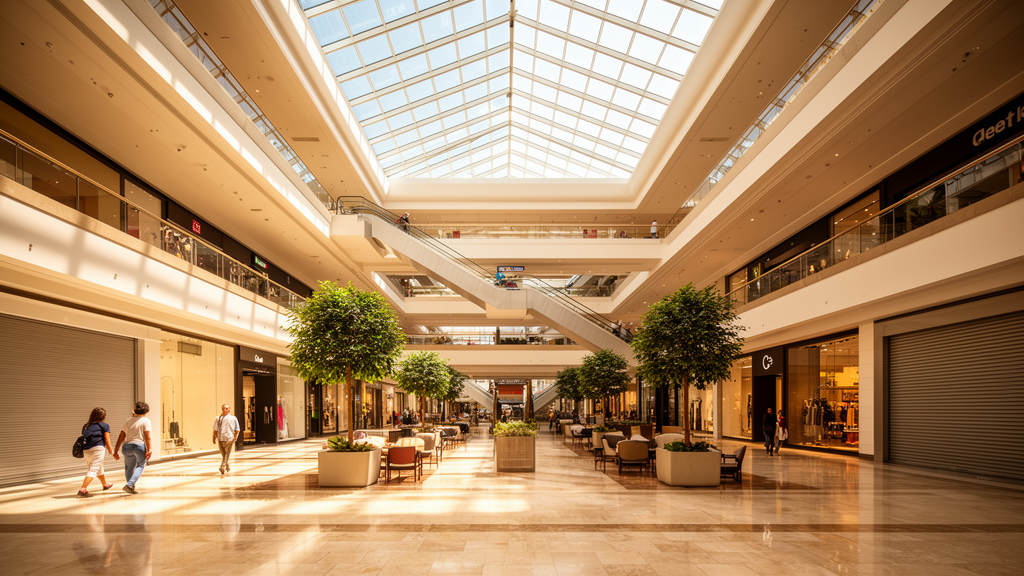
Shopping malls, once celebrated as icons of consumer culture and urban modernity, are being rethought by researchers as candidates for adaptive reuse and sustainable regeneration. A new systematic review traces how scholarship on these structures has evolved from celebrating retail growth to confronting decline and imagining second lives for vacant retail space. The study, conducted by Dilara Berk Coşkun of Yıldız Technical University and Kunter Manisa, follows the PRISMA 2020 framework for systematic reviews.
The authors searched the Scopus and Web of Science databases and identified 69 relevant publications, which they analyzed using citation analysis, author co-citation analysis, keyword co-occurrence analysis, and overlay visualization techniques. The work is set to appear in the journal Frontiers in Sustainable Cities, within its section on Sustainable Infrastructure. The bibliometric approach allowed the researchers to map the intellectual structure of a field rather than summarize individual papers.
The analysis identified a three-phase conceptual trajectory in shopping mall research. The first phase centered on retail-oriented development, reflecting an era when malls were studied primarily through retail-oriented perspectives. A second phase turned to decline and crisis, as structural transformations in retail systems, consumer behavior, and urban economies increasingly challenged the sustainability of conventional mall typologies.
The third and most recent phase focuses on adaptive reuse and spatial transformation, treating aging malls as raw material for urban regeneration rather than simply as failed retail assets. According to the authors, this trajectory illustrates a broader paradigm shift in how shopping malls are understood within contemporary urban systems. Mall decline, they argue, should not be interpreted solely as an economic or retail-related problem.
Instead, it is a broader socio-spatial process shaped by changing consumption patterns, the rise of e-commerce, and evolving models of urban development. The findings point to adaptive reuse, mixed-use redevelopment, and urban resilience as increasingly central concepts in the literature. The review highlights the growing importance of these strategies for the long-term regeneration of aging retail environments, particularly within rapidly urbanizing Asian and emerging economy contexts.
The review’s keyword and co-citation maps provide a quantitative snapshot of where that scholarly attention is concentrating. As a bibliometric study, the work has inherent limits. It captures published research indexed in two databases, so gray literature, practitioner reports, and non-indexed regional journals fall outside its scope, and the corpus of 69 publications is modest.
The authors position their contribution accordingly: a systematic interpretation of the field’s intellectual evolution rather than an evaluation of which redevelopment strategies perform best on the ground. Even so, the review offers urban planners and policymakers a structured map of a shifting research landscape.
By documenting how the field moved from retail-oriented development through decline and crisis to adaptive reuse and spatial transformation, the study frames retail decline not as an endpoint but as a stage in the ongoing restructuring of urban space. The findings contribute to urban studies and planning literature by demonstrating how shopping mall research has been progressively reframed within broader discussions of urban regeneration and sustainable urban transformation.
Subject of Research: Bibliometric review of shopping mall decline, adaptive reuse, and sustainable urban transformation research
Article Title: From retail decline to sustainable urban transformation: a bibliometric review of shopping mall research
Article References: Berk Coşkun, D., & Manisa, K. (2026). From retail decline to sustainable urban transformation: a bibliometric review of shopping mall research. Frontiers in Sustainable Cities, 8, 1928442. https://doi.org/10.3389/frsc.2026.1928442
Image Credits: AI Generated
DOI: 10.3389/frsc.2026.1928442
Keywords: shopping malls, retail decline, adaptive reuse, urban regeneration, sustainable urban development, bibliometric analysis, e-commerce, mixed-use redevelopment, urban resilience, PRISMA, Scopus, Web of Science
Cite Scienmag News
Gavin Prescott. (October 27, 2026). Shopping Malls Reimagined: Study Maps Shift From Retail Boom to Urban Regeneration. Scienmag. https://scienmag.com/shopping-malls-reimagined-study-maps-shift-from-retail-boom-to-urban-regeneration/
Gavin Prescott. "Shopping Malls Reimagined: Study Maps Shift From Retail Boom to Urban Regeneration." Scienmag, 27 October 2026, https://scienmag.com/shopping-malls-reimagined-study-maps-shift-from-retail-boom-to-urban-regeneration/. Accessed 27 October 2026.
Gavin Prescott. "Shopping Malls Reimagined: Study Maps Shift From Retail Boom to Urban Regeneration." Scienmag. October 27, 2026. https://scienmag.com/shopping-malls-reimagined-study-maps-shift-from-retail-boom-to-urban-regeneration/


