

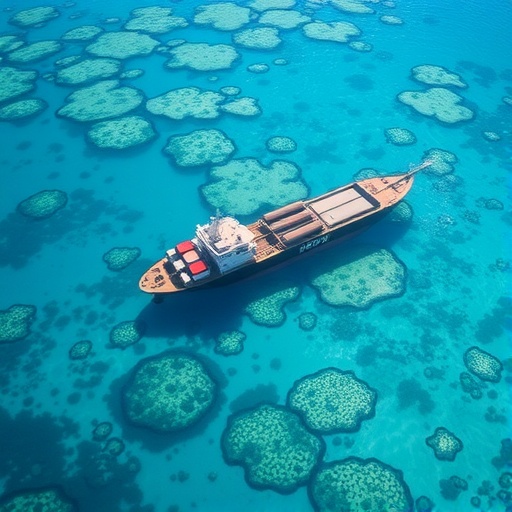
Coral reefs, often dubbed the “rainforests of the sea,” are among the most vibrant and biodiverse ecosystems on the planet. However, they find themselves at a proverbial crossroads, faced with existential threats underscored by recent research from the field. The study led by Ryan et al. highlights a particularly troubling intersection of environmental policy and marine ecology: the link between ship fuel sulfur content regulations and the exacerbation of mass coral bleaching events, especially in the Great Barrier Reef (GBR). This study shines a bright light on how legislative action in one area can ripple outwards, affecting critical ecosystems that have already been pushed to the brink.
At the heart of the research is the growing concern about the sulfur content in ship fuels. The International Maritime Organization (IMO) has been moving toward stricter regulations on sulfur emissions since 2020, aiming to reduce the air pollution produced by ships. While this initiative is noble in its pursuit of cleaner air, the fallout for coral ecosystems has yet to be fully understood. The study posits that while reducing sulfur emissions in ship fuels is a step forward for air quality, it inadvertently influences ocean chemistry and tempers thermal dynamics, thereby exacerbating thermal stress on coral systems.
Coral reefs thrive within a delicate thermal range, and any significant deviation in water temperatures can trigger distress signals among these organisms. Coral bleaching occurs when corals expel the symbiotic zooxanthellae algae living within their tissues, leading to a stark loss of color and critical nutrients. The phenomenon is often symptomatic of greater stressors within the marine environment, often linked markedly to elevated water temperatures—an outcome predicted to worsen as climate change progresses. Consequently, the intersection of reduced sulfur emissions and rising sea temperatures presents a compounded threat to these ecosystems.
One of the crucial aspects of this study is its examination of how decreased sulfur emissions can disrupt the atmospheric and oceanic processes that regulate temperature. Sulfur dioxide and other sulfate aerosols naturally reflect sunlight away from ocean surfaces, acting as a natural thermostat for marine environments. When sulfur emissions are curtailed, this cooling effect diminishes, allowing ocean temperatures to rise at an alarming rate. The researchers note that without these aerosols, the GBR could see an acceleration in thermal stress events, potentially leading to widespread and severe coral bleaching.
Furthermore, the researchers undertaken an analysis of historical data to assess the correlation between sulfur emissions, coral bleaching events, and temperature anomalies over time. The findings reveal a striking pattern of increased bleaching incidents coinciding with changes in local air quality and the resultant shifts in oceanic thermal dynamics. Coral ecosystems stand as intricately woven webs of life, and any disruption to one strand can compromise the integrity of the whole. The GBR is a living testament to this interconnectedness, underscoring the essence of protective measures that consider all facets of marine biology.
The implications of these findings extend beyond mere observations; they serve as a clarion call for policymakers and conservationists alike. The research indicates that stricter controls on sulfur emissions by ships might inadvertently propel marine ecosystems toward further decline. As countries and institutions grapple with the aims of clean air initiatives while also embracing the principles of ecosystem resilience, the findings underscore the necessity for a multidimensional approach to environmental legislation.
As the Great Barrier Reef continues to face these compounded threats, coordination between environmental policies targeting atmospheric health and those aimed at marine conservation becomes paramount. This will require interdisciplinary collaboration among climate scientists, marine biologists, and policymakers to establish protocols that mitigate risks while advancing public health objectives. The study advocates for a holistic view, reminding stakeholders that regulatory measures must consider their ripple effects on complex marine ecosystems.
Moreover, rising awareness of the linkages between anthropogenic emissions and ocean health should generate public discourse surrounding these issues. Studies like this not only illuminate the challenges faced by coral reefs but also invite a deeper conversation about environmental stewardship and the stewardship of the oceans. Initiatives focusing on reducing carbon footprints and promoting sustainable maritime practices become essential in bridging the gap between air quality improvements and marine ecosystem preservation.
This research further integrates into the broader narrative of climate change impacting marine health, highlighting the urgency of adaptive management strategies. For many coral ecosystems, the future hinges on the implementation of innovative solutions that prioritize both ecological integrity and human health. Promoting eco-friendly shipping practices, exploring alternative fuels, and investing in technological developments for marine industries could represent significant steps toward resolving this intricate dilemma.
What’s necessary now is increased public and scientific engagement around coral ecosystems, fostering an appreciation for their intricate connections to human endeavors. Public education campaigns shedding light on the direct impacts of maritime regulations on marine environments can galvanize community action while spurring collective support for actionable change. Harnessing the power of citizen science to monitor coral health can also facilitate a sense of shared responsibility for the fate of biodiverse marine ecosystems.
Indeed, as conversations around climate change, marine conservation, and public health evolve, this research serves as both a warning and a guidepost. The potential exacerbation of coral bleaching events due to shipping regulations must be met with the same urgency as corrective actions for air quality. Coral reefs signify resilience and biodiversity, but without the sustained commitment to their protection in light of comprehensive environmental policies, these vital systems risk succumbing to the very changes intended to promote global well-being.
To conclude, Ryan et al.’s study uncovers a pathway toward greater understanding of the interdependencies that exist within global ecosystems. The intricate dance between regulatory frameworks and ecological realities necessitates a thoughtful approach in environmental policymaking. Through these insights, we are reminded of our interconnectedness with the planet and challenged to rethink the very foundations upon which we build policies aimed at fostering ecological and public health. Thus, the fate of the iconic Great Barrier Reef serves as a barometer for global ecosystems bearing witness to the tempestuous interplay of human activity and natural resilience.
Subject of Research: The relationship between ship fuel sulfur content regulations and coral bleaching events, particularly in the context of the Great Barrier Reef.
Article Title: Ship fuel sulfur content regulations may exacerbate mass coral bleaching events on the Great Barrier Reef.
Article References:
Ryan, R.G., Harrison, D.P., Johansson, L. et al. Ship fuel sulfur content regulations may exacerbate mass coral bleaching events on the Great Barrier Reef.
Commun Earth Environ 7, 46 (2026). https://doi.org/10.1038/s43247-025-03088-1
Image Credits: AI Generated
DOI: https://doi.org/10.1038/s43247-025-03088-1
Keywords: Coral reefs, sulfur emissions, ship fuel regulations, coral bleaching, Great Barrier Reef, climate change, environmental policy, ecosystem health.


