


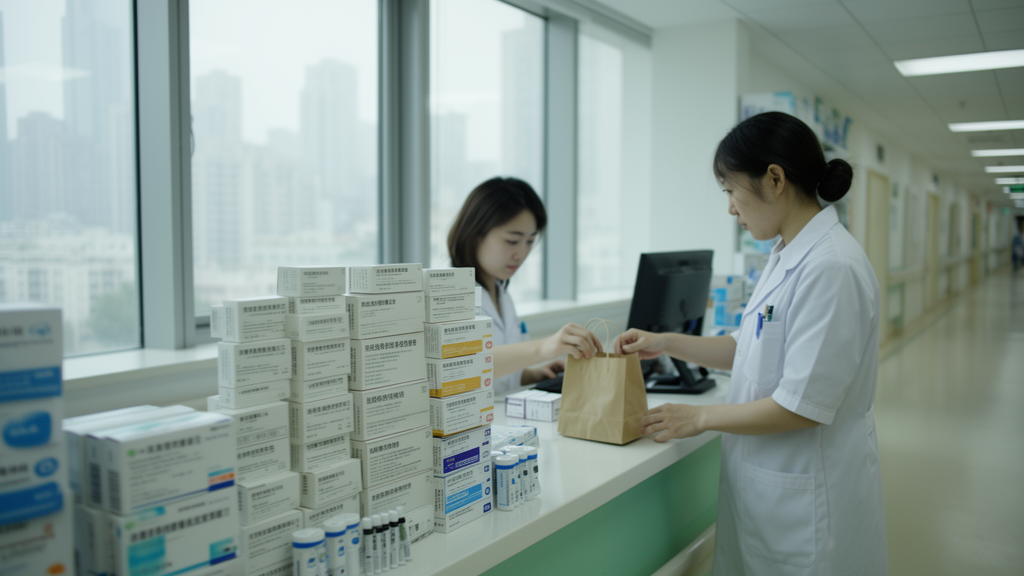
Antidiabetic medicine use in Shanghai rose substantially between 2016 and 2024, while the average cost of treatment fell and primary-level hospitals supplied an increasingly large share of medicines. A longitudinal observational analysis of monthly public-sector procurement records found that total supply increased from 427.8 million defined daily doses (DDDs) in 2016 to 614.2 million in 2024. Adjusted for Shanghai’s population, consumption rose from 48.44 to 67.84 DDDs per 1,000 inhabitants per day. At the same time, defined daily cost declined from 3.94 Chinese yuan per DDD to 3.21 yuan per DDD.
The distribution of supply broadly matched the separation of functions envisioned by China’s hierarchical diagnosis and treatment reform, which was introduced in 2015 to strengthen lower-level care and move routine chronic-disease management away from tertiary hospitals. Primary-level hospitals accounted for 60.7% of antidiabetic DDDs in 2016 and 64.4% in 2024. The secondary-hospital share fell from 24.5% to 19.0%, while the tertiary-hospital share increased from 14.8% to 16.6%. These findings describe how medicines were procured and supplied across hospital levels; because the study was observational, they do not establish that the reform itself caused the changes.
The analysis used Shanghai’s monthly public-sector procurement records from 2016 through 2024. The researchers standardised antidiabetic products with the World Health Organization’s Anatomical Therapeutic Chemical classification and Defined Daily Dose methodology, allowing comparisons of volume and expenditure across medicines and hospital levels. They examined DDDs, DDDs per 1,000 inhabitants per day, defined daily cost, the distribution of volume and spending, differences in therapeutic structures, the adoption of newer drug classes and the use of injectable formulations. Regression models evaluated product-month trends while controlling for hospital category and calendar month, as well as reimbursement status, essential-medicine status, newer-agent status and injectable formulation.
Despite the overall reduction in average treatment cost, medicines remained substantially more expensive at higher levels of care. In 2024, the defined daily cost was 2.36 yuan per DDD in primary hospitals, compared with 4.38 yuan in secondary hospitals and 5.17 yuan in tertiary hospitals. Differences in the mix of treatments also persisted: a measure of therapeutic dissimilarity between primary and tertiary hospitals increased from 0.226 in 2016 to 0.281 in 2024. The product-month models showed a stronger annual volume trend in tertiary hospitals than in the lower hospital levels, even as defined daily costs declined across all three tiers. The study therefore found both concentration of routine volume in primary care and persistent differentiation in the therapies supplied by different levels.
Newer antidiabetic medicines became more widely represented at every hospital level, but their penetration remained greatest in the most specialised institutions. These agents accounted for 28.5% of within-level DDDs in primary hospitals in 2024, compared with 37.0% in secondary hospitals and 44.1% in tertiary hospitals. The results portray a system in which the largest share of diabetes medicines was supplied through primary care, while newer therapies remained more intensively distributed in secondary and tertiary hospitals. The authors said the pattern was broadly compatible with functional division under hierarchical chronic-disease care, while also identifying the need to maintain reliable access to essential and commonly used medicines in primary settings and to define the intermediary role of secondary hospitals. They further advocated shared-care arrangements intended to support clinically appropriate access to newer therapies across levels, but the procurement data alone cannot show whether such arrangements improve clinical outcomes.
Subject of Research: Hospital-level supply of antidiabetic medicines in Shanghai during healthcare reform
Article Title: Patterns of antidiabetic medicine supply across hospital levels during China’s post-2015 hierarchical healthcare reform period: a longitudinal study in Shanghai, 2016–2024
Article References: Wang, B., Tang, Q., Huang, R., Jiang, X., Yu, Q., & Zhang, T. (2026). Patterns of antidiabetic medicine supply across hospital levels during China’s post-2015 hierarchical healthcare reform period: a longitudinal study in Shanghai, 2016–2024. BMC Health Services Research. https://doi.org/10.1186/s12913-026-15583-y
Image Credits: AI Generated
DOI: 10.1186/s12913-026-15583-y
Keywords: diabetes medicines, hierarchical healthcare, Shanghai, primary care, drug procurement, healthcare reform, medicine costs, hospital levels, newer therapies, chronic disease care, Patterns, antidiabetic
Cite Scienmag News
Ophelia Keating. (October 26, 2026). Shanghai’s primary hospitals supplied most diabetes medicines as costs fell. Scienmag. https://scienmag.com/shanghais-primary-hospitals-supplied-most-diabetes-medicines-as-costs-fell/
Ophelia Keating. "Shanghai’s primary hospitals supplied most diabetes medicines as costs fell." Scienmag, 26 October 2026, https://scienmag.com/shanghais-primary-hospitals-supplied-most-diabetes-medicines-as-costs-fell/. Accessed 26 October 2026.
Ophelia Keating. "Shanghai’s primary hospitals supplied most diabetes medicines as costs fell." Scienmag. October 26, 2026. https://scienmag.com/shanghais-primary-hospitals-supplied-most-diabetes-medicines-as-costs-fell/


