

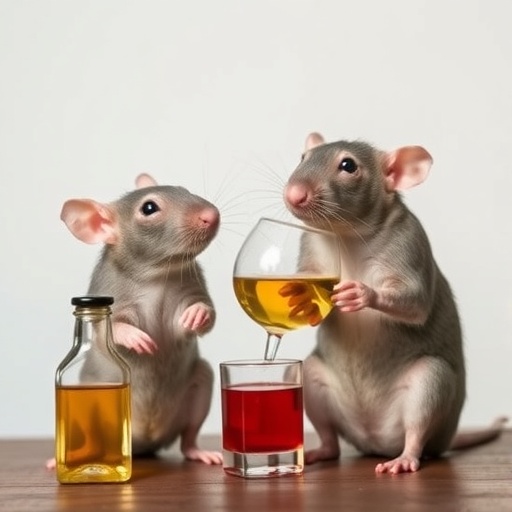
In a groundbreaking advance that reshapes our understanding of addiction biology, a recent study published in Translational Psychiatry unveils critical sex-specific vulnerabilities to alcohol addiction-like behaviors, utilizing rat models to decode the underlying neurobiological and behavioral nuances. This research not only deepens scientific comprehension of addiction pathways but may also herald a future where gender-tailored therapeutic strategies become the norm in combating alcohol use disorders.
Alcohol addiction, or alcohol use disorder (AUD), remains a formidable public health challenge worldwide, affecting millions and contributing substantially to morbidity and mortality rates. Historically, addiction research has often overlooked sex and gender differences, potentially obscuring key mechanisms that govern addiction susceptibility and resilience. The study conducted by Borruto, Coppola, Höglund, and colleagues addresses this gap with scientific rigor, examining how male and female rats differ in their propensity for addiction-like behaviors following alcohol exposure.
The investigators implemented a multifaceted experimental design, combining behavioral assays with advanced neurochemical analyses to elucidate the patterns of alcohol intake, seeking, and relapse between sexes. Their approach emphasizes the importance of modeling human-like addiction constructs in animals, focusing on compulsive drug use, motivation to consume alcohol, and resistance to negative consequences — hallmarks of human AUD. This meticulous methodology allows for higher translational relevance of their findings.
Initial observations reveal that female rats exhibit heightened vulnerability to several addiction-like behaviors. Notably, females demonstrated increased voluntary alcohol consumption compared to males during self-administration phases. Such escalated intake suggests intrinsic or hormonally mediated differences in reward sensitivity, possibly linked to estrogenic modulation of dopaminergic pathways in the mesolimbic circuitry—a neural substrate critically involved in reinforcing properties of addictive substances.
Further probing into motivation, the study utilized progressive ratio schedules to measure the effort animals would exert to obtain alcohol rewards. Female rats consistently outperformed males, indicating a stronger drive to attain alcohol. This metric underscores a sex-specific elevation in motivational processes that underpin the compulsive seeking of alcohol, which may translate into greater relapse rates observed clinically in women with AUD.
Stress and anxiety, often comorbid with addiction, were also scrutinized for their potential role in sex-based susceptibility differences. Behavioral tests assessing anxiety-related phenotypes revealed that females were more prone to exhibit stress-induced reinstatement of alcohol-seeking after periods of abstinence. This finding aligns with clinical observations that women with AUD frequently report stress and affective disturbances as critical relapse triggers, implicating the hypothalamic-pituitary-adrenal (HPA) axis and associated neuroendocrine mechanisms in mediating these effects.
At the neurochemical level, analyses focused on neurotransmitter systems implicated in addiction, including dopamine, GABA, and glutamate. The researchers observed sex-dependent alterations in receptor expression and neurotransmitter release within brain regions such as the nucleus accumbens and prefrontal cortex, areas integral to reward processing and executive control. These molecular discrepancies likely contribute to the divergent behavioral outcomes and may provide targets for sex-specific pharmacotherapies.
The study also examined tolerance and withdrawal phenomena, revealing that female rats developed physiological adaptations to chronic alcohol exposure more rapidly and exhibited more severe withdrawal symptoms upon cessation. Enhanced withdrawal severity may precipitate relapse, reinforcing the vicious cycle of addiction. These results are consistent with evidence suggesting women escalate from initial use to dependence more quickly than men, a phenomenon termed “telescoping.”
Importantly, the findings challenge the one-size-fits-all model of addiction treatment, advocating for a paradigm shift towards personalized interventions. By illuminating biological and behavioral sex differences, the research supports the development of gender-specific prevention and treatment protocols—including hormonal regulation strategies and neurobiological targets tailored to female-specific addiction circuits.
The implications of such research extend beyond the realm of addiction neuroscience. They call for integrating sex as a critical biological variable in preclinical studies and clinical trials to enhance therapeutic efficacy and reduce health disparities. Furthermore, these results may influence public policy and healthcare resource allocation by highlighting the need for sex-conscious approaches in addressing substance use disorders.
While this study marks a significant leap forward, the authors acknowledge the complexity of addiction etiology and the interplay of genetic, environmental, and psychosocial factors. Future research directions include exploring the influence of ovarian hormone fluctuations over different estrous cycle phases, epigenetic modifications, and the interaction between sex chromosomes and addiction vulnerability.
Moreover, investigating the intersectionality of sex with other demographic variables such as age, stress exposure history, and comorbid psychiatric conditions will enrich our understanding and inform comprehensive addiction models. Integrating multimodal imaging and transcriptomic profiling could further delineate the neural circuits and gene networks involved in sex-specific addiction pathways.
This research thus represents a pivotal contribution to addiction neuroscience, anchoring sex differences at the core of alcohol use disorder investigations. By leveraging rigorous animal models, the study offers a translational bridge to human clinical phenomena and casts light on mechanisms previously underappreciated or obscured. The prospect of developing precision medicine approaches that address the unique needs of women and men in addiction treatment stands as a promising horizon informed by this work.
Subsequent application of these findings may catalyze the advancement of novel pharmacological agents or behavioral interventions that more effectively mitigate addiction severity in a sex-specific manner. In particular, targeting neuroendocrine modulators or receptor subtypes implicated in the female-predominant vulnerability profiles may yield breakthroughs in treatment outcomes.
In conclusion, the study conducted by Borruto and colleagues illuminates the critical importance of sex as a biological determinant in alcohol addiction susceptibility and addiction-like behaviors. By dissecting the neurobiological and behavioral substrates that differentiate male and female addiction trajectories, this work paves the way for refined, more effective therapeutic strategies and enhances the scientific foundation necessary for reducing the global burden of alcohol use disorders.
Subject of Research: Sex-specific vulnerability patterns to alcohol addiction-like behaviors in rats.
Article Title: Sex-Specific patterns of vulnerability to alcohol addiction-like behaviors in rats.
Article References:
Borruto, A.M., Coppola, A., Höglund, L. et al. Sex-Specific patterns of vulnerability to alcohol addiction-like behaviors in rats. Transl Psychiatry (2026). https://doi.org/10.1038/s41398-026-03825-w
Image Credits: AI Generated


