

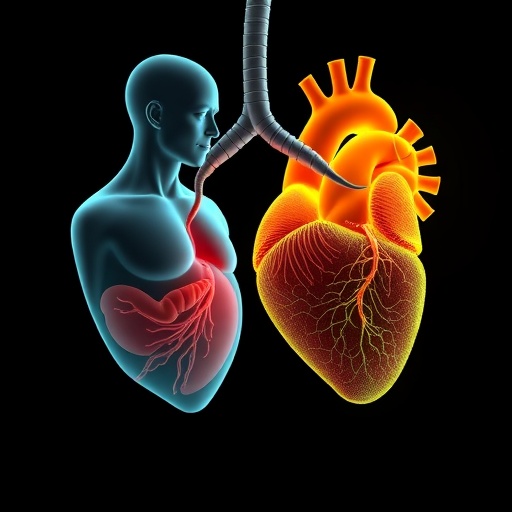
In an insightful exploration published in “Biology of Sex Differences,” researchers Chong-Nguyen, Artiles, and Pilgrim delve into a captivating frontier of cardiovascular health: the gut-heart axis and its critical influence on coronary artery disease (CAD). This review not only sheds light on the intricate interplay between the gastrointestinal microbiome and heart health but also underscores the often-overlooked aspect of sex-based disparities in microbial composition and metabolism. As the scientific community increasingly recognizes the gut microbiome’s role in systemic health, this work highlights the necessity of considering sexual dimorphism in medical research and treatment protocols.
The foundation of this review is built upon the burgeoning evidence that gut microbiota significantly impacts cardiovascular function. These trillions of microorganisms residing in our intestines are not merely passive inhabitants. Instead, they actively contribute to metabolic processes that influence everything from nutrient absorption to inflammatory responses. Importantly, there is a growing body of literature showing that the gut microbiome can modulate heart health through various mechanisms, including regulation of cholesterol homeostasis, modulation of inflammatory pathways, and production of bioactive compounds that impact cardiac function.
One of the most striking elements of this study is the focus on sex-based differences in microbial diversity and metabolic profiles. Research indicates that men and women exhibit distinct variations in their gut microbiota composition, influenced by hormonal fluctuations, dietary habits, and lifestyle factors. For instance, women often possess a higher abundance of certain beneficial bacteria which can enhance metabolic resilience and cardiovascular health. These differences have implications for the susceptibility to heart diseases, with evidence suggesting that males may be at a greater risk, particularly when considering factors such as lifestyle and dietary choices.
To address the pressing need for sex-specific research in cardiovascular health, the authors propose a comprehensive framework for future investigations that seeks to unravel these differences. They argue that understanding how the gut microbiome interacts with cardiovascular systems in males and females could lead to more personalized treatment approaches. By tailoring interventions based on sex-specific microbiome profiles, healthcare providers can optimize treatment protocols, potentially improving outcomes in individuals suffering from CAD.
The review also emphasizes the influence of diet on the gut-heart axis. Dietary patterns, rich in fiber and fermented foods, have been shown to positively influence gut microbiota composition, leading to improved cardiovascular outcomes. Conversely, diets high in saturated fats and sugars can adversely affect gut health, which may exacerbate cardiovascular risk. This connection underscores the importance of nutrition in managing heart health and highlights the need for public health strategies to promote dietary habits that support a healthy microbiome.
When discussing the pathophysiology of CAD, the authors outline how dysbiosis—an imbalance in gut microbiota—can lead to increased intestinal permeability or “leaky gut.” This condition allows for the translocation of bacterial products into systemic circulation, which can provoke chronic inflammation, a critical factor in the development of atherosclerosis. With atherosclerosis being the primary contributor to CAD, understanding the gut’s role in this process offers a significant avenue for therapeutic interventions.
The implications of this research extend beyond age and sex into the realm of precision medicine. By integrating microbiome analysis into cardiovascular risk assessment, clinicians may soon be able to create more effective preventive strategies. The potential for microbiome modulation through probiotic or prebiotic supplementation presents an exciting horizon for CAD treatment. This proactive approach could not only manage but potentially prevent heart disease in at-risk populations.
While the focus has been on the gut-heart connection, the study also highlights the importance of interdisciplinary collaboration in cardiovascular research. By bridging gaps between gastroenterology, cardiology, and nutritional science, researchers can create more holistic frameworks for understanding heart health. This collaborative spirit is essential for translating findings into clinical practice, ensuring that treatment strategies are both effective and grounded in the latest scientific evidence.
Furthermore, the examination of sex-based microbial differences has critical implications for clinical outcomes. Recent findings suggest that women may respond differently to treatments traditionally designed with a male-centric model, necessitating a reevaluation of clinical guidelines. By tailoring interventions based on biological sex, healthcare providers can optimize care pathways for both genders, ultimately leading to improved heart health outcomes.
As this research continues to evolve, it opens the door for numerous future studies focused on the therapeutic potential of gut microbiota modulation. Could tailored probiotic therapies enhance cardiovascular health in women? What role does the menstrual cycle play in influencing gut microbiome composition and cardiovascular risk? These questions are pivotal for the next wave of research aimed at deciphering the nuances of the gut-heart axis.
The findings of this comprehensive review advocate for a multipronged approach to coronary artery disease management—one that acknowledges the gut microbiome’s intricate and dynamic role. With the merging of microbiome science and cardiovascular health, the promise of novel preventive strategies and treatments beckons on the horizon. The need for further investigation into sex-based disparities in microbial populations and their implications for heart health is more crucial than ever.
In conclusion, the work of Chong-Nguyen, Artiles, and Pilgrim not only elucidates the interplay between the gut microbiome and heart health but also serves as a clarion call for a shift in how cardiovascular research is conducted. By incorporating a gendered lens into this research, the scientific community can better understand the complexities of coronary artery disease and pave the way for innovative, targeted therapeutic strategies that consider not just the heart but the intricate ecosystem that supports it.
Subject of Research: Gut-heart axis and sex-based disparities in coronary artery disease.
Article Title: The gut–heart axis in coronary artery disease: a scoping and narrative review of sex-based microbial and metabolic disparities.
Article References:
Chong-Nguyen, C., Artiles, R.F., Pilgrim, T. et al. The gut–heart axis in coronary artery disease: a scoping and narrative review of sex-based microbial and metabolic disparities. Biol Sex Differ (2026). https://doi.org/10.1186/s13293-026-00824-w
Image Credits: AI Generated
DOI: 10.1186/s13293-026-00824-w
Keywords: gut microbiome, coronary artery disease, sex differences, metabolic disparities, cardiovascular health, personalized medicine, dysbiosis, chronic inflammation, atherosclerosis, dietary influences, preventive strategies, precision medicine.


