

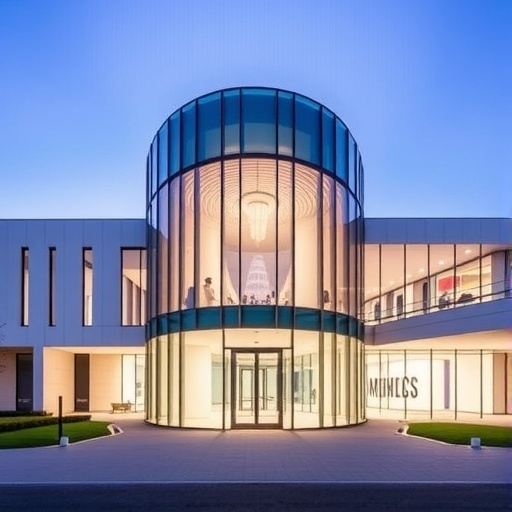
The Anatomy & Innovation Center for Education and Research (AICER) at Semmelweis University in Budapest, Hungary, stands as a landmark development in the landscape of medical education and research infrastructure, representing one of the most advanced facilities of its kind in Europe. This state-of-the-art center has been meticulously designed to address the evolving needs of medical students, residents, and researchers, integrating cutting-edge technology with practical, hands-on training in a secure and controlled environment. By fostering an ecosystem that bridges traditional anatomical education with future-forward innovations, AICER sets a new standard in comprehensive medical training and experimental research.
AICER’s infrastructure is unparalleled, equipped with over 20 ultra-modern operating tables where learners can acquire and refine surgical competencies using cadaveric specimens donated for educational purposes. This approach not only ensures that surgeons develop critical technical skills in a real anatomical context but also elevates patient safety by minimizing the risks associated with acquiring hands-on expertise in clinical settings. The availability of such an advanced operative environment is exceptionally rare, making AICER a premier hub for surgical education within the region and across Europe.
In keeping with the digital transformation of medical practice, the center incorporates high-resolution imaging modalities directly into its training and research frameworks. Facilities dedicated to post-mortem examinations, including advanced CT scanning and ultrasound capabilities, enable clinicians and researchers to utilize minimally invasive techniques such as robot-assisted autopsies. These innovative methodologies allow for forensic and pathological investigations that aim to match or exceed the diagnostic accuracy of conventional autopsies while reducing physical invasiveness and procedural duration.
AICER’s integration of artificial intelligence and robotic technologies within its educational programs aligns with the current trajectory of medicine, where digital proficiency is paramount. Medical undergraduates and graduates alike gain exposure to these transformative tools, ensuring their preparedness for future clinical environments where AI-driven diagnostics and robotic-assisted surgeries are becoming standard. This initiative underscores the commitment of Semmelweis University to embedding technology deeply into medical curricula and fostering adaptive expertise among its trainees.
Beyond education, the center is a thriving incubator for biomedical innovation. By providing a collaborative platform where academic researchers, clinicians, and industry partners converge, AICER catalyzes the development of novel medical devices, surgical techniques, and diagnostic tools. This environment not only nurtures creativity but accelerates the translation of cutting-edge research into practical medical applications, enhancing patient outcomes while bolstering the university’s stature in international scientific communities and rankings.
The synergy between AICER and Semmelweis University’s existing departments—such as Anatomy, Histology and Embryology, along with Pathology, Forensic and Insurance Medicine—creates an integrated ecosystem where cadaver-based education dovetails seamlessly with digital diagnostics and procedural innovation. This organizational coherence ensures that learners and researchers alike benefit from a multidisciplinary approach that reflects the interconnected nature of contemporary biomedical sciences.
Addressing the challenge of medical education in a high-technology era, AICER’s comprehensive facilities exemplify the deliberate fusion of classical anatomical teaching with emerging technological advancements. The center’s ultra-secure, controlled environment is engineered to simulate real-world surgical and diagnostic scenarios, facilitating the development of both manual dexterity and cognitive proficiency. This dual emphasis enhances clinical reasoning and technical performance, critical competencies for modern physicians who must operate in increasingly complex environments.
Of particular note is AICER’s contribution to improving autopsy methods through advanced imaging technologies that enable minimally invasive, robot-assisted procedures. This paradigm shift not only optimizes post-mortem diagnostics but also supports research into oncological diseases and rare pathologies by enhancing sampling precision and lesion characterization. Such developments promise to refine diagnostic accuracy and contribute substantially to medical knowledge, with implications for personalized medicine and epidemiology.
The strategic governmental investment, amounting to approximately HUF 22.5 billion, reflects Hungary’s commitment to advancing medical science and positioning Semmelweis University at the forefront of health technology innovation in Europe. This funding underpins the sophisticated infrastructure and ongoing research programs hosted by AICER, signaling a long-term vision for medical education that is as dynamic as it is comprehensive.
Semmelweis University’s proactive engagement with domestic and international health sector partners via AICER fosters a robust network of collaboration. This network facilitates knowledge exchange, resource sharing, and joint innovation projects that transcend geographical boundaries. As a result, the university not only enhances its global standing but also contributes to shaping the future of medical education and research on a worldwide scale.
In sum, the Anatomy & Innovation Center for Education and Research represents a transformative leap forward in the integration of anatomical science, advanced medical technologies, and hands-on clinical training. Its multidisciplinary and technology-driven approach equips the next generation of health care professionals with the skills and knowledge essential for delivering superior patient care in an era defined by rapid technological progress and complexity.
The creation of AICER underscores the critical importance of providing medical trainees with environments that mirror the realities of modern clinical practice, where technological adeptness and practical experience are inseparable. By fostering a culture of innovation and scientific rigor, the center lays the groundwork for sustained advancements in medical treatment, diagnostics, and education, ultimately contributing to improved health outcomes on both national and global levels.
As AICER continues to evolve, it promises to be a beacon of excellence and a model for similar institutions worldwide, demonstrating the profound impact of combining tradition with innovation in medical teaching and research. Its integrated facilities and pioneering ethos ensure that Semmelweis University remains a key driver in the transformation of health sciences well into the future.
Subject of Research: Medical education innovation, surgical training, digital diagnostics, biomedical technology development
Article Title: The Anatomy & Innovation Center for Education and Research: A New Era in Medical Training and Technology at Semmelweis University
News Publication Date: Information not provided
Web References: https://mediasvc.eurekalert.org/Api/v1/Multimedia/a3c7120b-3adc-4970-9812-66ab55e2ef19/Rendition/low-res/Content/Public
Image Credits: Photo by Bálint Barta – Semmelweis University
Keywords: medical education, surgical training, diagnostic imaging, artificial intelligence, robotics in medicine, biomedical engineering, medical innovation, cadaver training, CT scanning, ultrasonography, minimally invasive autopsy, medical technology


