

Friday, July 10, 2026
Science
No Result
View All Result
  • Login
  • HOME
  • SCIENCE NEWS
  • CONTACT US
  • HOME
  • SCIENCE NEWS
  • CONTACT US
No Result
View All Result
Scienmag
No Result
View All Result
Home Science News Cancer

Second PSMA PET Scan Alters Treatment in Almost Half of Prostate Cancer Cases

July 10, 2026
in Cancer
Reading Time: 2 mins read
0
Second PSMA PET Scan Alters Treatment in Almost Half of Prostate Cancer Cases

Second PSMA PET Scan Alters Treatment in Almost Half of Prostate Cancer Cases

65
SHARES
587
VIEWS
Share on FacebookShare on Twitter
ADVERTISEMENT

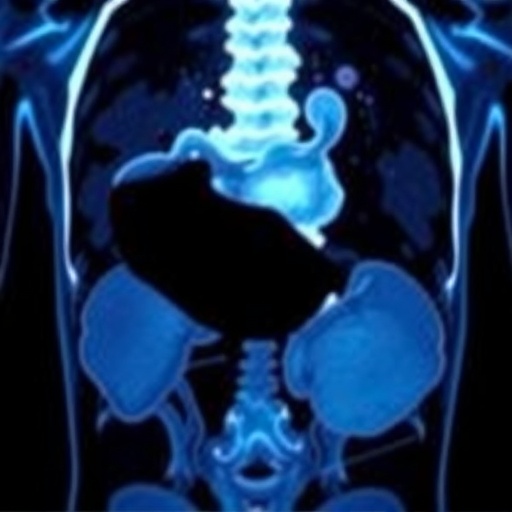
A recent study reveals that repeating Prostate-Specific Membrane Antigen Positron Emission Tomography (PSMA PET) scans after an initial negative result significantly alters treatment strategies for prostate cancer recurrence. Published in the Journal of Nuclear Medicine, the research shows that nearly half of the patients with a previously negative scan had their management plans changed following a second PSMA PET scan.

PSMA PET/CT imaging has emerged as a transformative diagnostic tool in detecting recurrent prostate cancer, especially after first-line treatments like prostatectomy or radiation. However, approximately 30% of patients with rising prostate-specific antigen (PSA) levels—a biochemical marker suggesting recurrence—still exhibit no detectable disease on initial PSMA PET scans. This diagnostic gap has been a challenge for clinicians, prompting investigation into the utility of repeating the imaging.

The study involved 210 patients from the Registry for Recurrent Prostate Cancer in Ontario, all of whom had an initial negative PSMA PET scan but rising PSA levels. The researchers evaluated the second PSMA PET scan results and analyzed PSA levels, doubling times, and clinical management changes. Disease manifestations detected during the second scan ranged from localized recurrence and locoregional involvement to oligometastatic and extensive metastatic disease.

Strikingly, subsequent PSMA PET imaging detected disease presence in 56% of these patients who initially showed no radiotracer uptake. The identification of disease sites—particularly oligometastatic lesions—prompted changes in therapeutic approaches in nearly 50% of cases. This shift highlights the critical role of repeat imaging in uncovering occult disease that may guide targeted interventions such as stereotactic radiotherapy.

Biochemically, patients with higher PSA values and faster PSA doubling times (less than 12 months) were more likely to have positive findings on their second PSMA PET scan. This relationship underlines the prognostic importance of PSA kinetics in informing the optimal timing for repeat imaging and subsequent management.

The implications of these findings are profound for clinical decision-making in recurrent prostate cancer. By capturing hidden disease foci undetectable in initial scans, repeat PSMA PET/CT facilitates a more precise mapping of cancer spread. This improved detection allows clinicians to tailor treatments more effectively, potentially improving patient outcomes and reducing overtreatment or unnecessary surveillance.

Ur Metser, the study’s lead author and a professor at the University of Toronto, notes that these results reinforce PSMA PET’s pivotal role in managing prostate cancer recurrence. They emphasize how repeated imaging can fill diagnostic voids, providing actionable insights that directly influence patient care strategies.

This research offers compelling evidence to integrate repeat PSMA PET/CT scans into routine clinical protocols for patients with biochemical failure post-first-line therapy. As precision imaging advances, incorporating dynamic assessments will enhance personalized treatment pathways and potentially improve long-term prognoses.

Subject of Research: Prostate cancer recurrence detection using repeat PSMA PET/CT scans
Article Title: Utility of PSMA PET/CT After an Initial Negative Scan: Results from a Prospective Multicenter PSMA PET Registry
News Publication Date: July 7, 2026
Web References: https://doi.org/10.2967/jnumed.126.272204
Image Credits: Ur Metser, BSc, MD, FRCPC; University of Toronto, Princess Margaret Cancer Centre
Keywords: PSMA PET/CT, Prostate cancer, Recurrence, Molecular imaging, PSA doubling time, Oligometastatic disease, Precision medicine

Tags: Advances in nuclear medicine for prostate cancerChanges in clinical management based on PSMA PET findingsDetection of localized and metastatic prostate cancerDiagnostic accuracy of PSMA PET/CT imagingEffectiveness ofImpact of second PSMA PET scans on treatment planningInfluence of PSA levels and doubling time on imaging outcomesOligometastatic versus extensive metastatic disease detectionprostate cancer recurrence detectionRepeating PSMA PET scans after initial negative resultsRole of PSMA PET in managing biochemical recurrence
Share26Tweet16
Previous Post

Rapid Screening Advances Discovery of Nanocrystals

Next Post

Curtin and Octave team up to train future digital innovators

Related Posts

Birth Method and Antibiotics Influence Newborns’ Gut Bacteria, Study Finds
Cancer

Birth Method and Antibiotics Influence Newborns’ Gut Bacteria, Study Finds

July 10, 2026
New Method Shows Promise Against Drug-Resistant Deadly Brain Cancer
Cancer

New Method Shows Promise Against Drug-Resistant Deadly Brain Cancer

July 10, 2026
New compounds permanently disable tumors’ natural defense system against treatment
Cancer

New compounds permanently disable tumors’ natural defense system against treatment

July 10, 2026
Studying Oral Inflammation Reveals Insights into Other Human Diseases
Cancer

Studying Oral Inflammation Reveals Insights into Other Human Diseases

July 10, 2026
Scientists Develop Novel Approach to Target Challenging Prostate Cancer Protein
Cancer

Scientists Develop Novel Approach to Target Challenging Prostate Cancer Protein

July 10, 2026
UK Family History Services Assessed in National Survey
Cancer

UK Family History Services Assessed in National Survey

July 9, 2026
Next Post
Curtin and Octave team up to train future digital innovators

Curtin and Octave team up to train future digital innovators

  • Mothers who receive childcare support from maternal grandparents show more

    Mothers who receive childcare support from maternal grandparents show more parental warmth, finds NTU Singapore study

    27656 shares
    Share 11059 Tweet 6912
  • University of Seville Breaks 120-Year-Old Mystery, Revises a Key Einstein Concept

    1061 shares
    Share 424 Tweet 265
  • Bee body mass, pathogens and local climate influence heat tolerance

    682 shares
    Share 273 Tweet 171
  • Researchers record first-ever images and data of a shark experiencing a boat strike

    546 shares
    Share 218 Tweet 137
  • Groundbreaking Clinical Trial Reveals Lubiprostone Enhances Kidney Function

    531 shares
    Share 212 Tweet 133
Science

Embark on a thrilling journey of discovery with Scienmag.com—your ultimate source for cutting-edge breakthroughs. Immerse yourself in a world where curiosity knows no limits and tomorrow’s possibilities become today’s reality!

RECENT NEWS

  • Artificial Intelligence Transforms Material Synthesis Methods
  • Dr. Tim Allerton Receives $3.6M NIH Grant for Heart Failure Research
  • Computer Chip Uses Vibrations for Memory Storage
  • UCSF Begins Patient Screening for New Alzheimer’s Treatment Trial

Categories

  • Agriculture
  • Anthropology
  • Archaeology
  • Athmospheric
  • Biology
  • Biotechnology
  • Blog
  • Bussines
  • Cancer
  • Chemistry
  • Climate
  • Earth Science
  • Editorial Policy
  • Marine
  • Mathematics
  • Medicine
  • Pediatry
  • Policy
  • Psychology & Psychiatry
  • Science Education
  • Social Science
  • Space
  • Technology and Engineering

Subscribe to Blog via Email

Enter your email address to subscribe to this blog and receive notifications of new posts by email.

Join 5,146 other subscribers

© 2025 Scienmag - Science Magazine

Welcome Back!

Login to your account below

Forgotten Password?

Retrieve your password

Please enter your username or email address to reset your password.

Log In
No Result
View All Result
  • HOME
  • SCIENCE NEWS
  • CONTACT US

© 2025 Scienmag - Science Magazine

Discover more from Science

Subscribe now to keep reading and get access to the full archive.

Continue reading
