


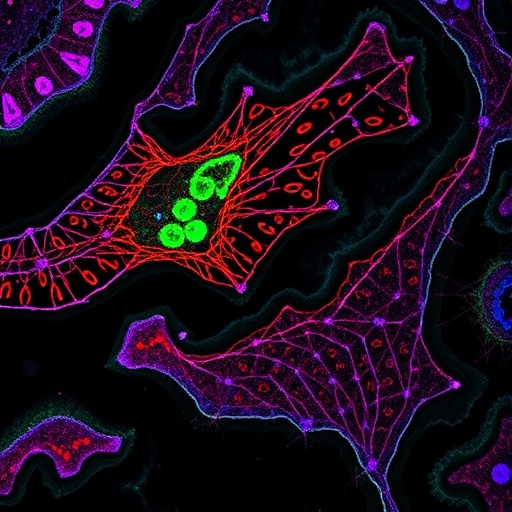
In a groundbreaking study published in Medical Oncology, researchers have unveiled how scutellarin, a natural flavonoid compound, induces ferroptosis in ovarian cancer cells by targeting critical signaling pathways AKT/mTOR and JAK2/STAT3. This discovery not only opens new avenues for cancer therapeutics but also provides crucial insights into the molecular mechanisms underlying ovarian cancer progression.
Ovarian cancer remains one of the deadliest gynecologic malignancies worldwide, primarily due to its asymptomatic nature in early stages and resistance to conventional therapies in advanced disease. Current treatment options including surgery and chemoradiotherapy offer limited efficacy, leading researchers to seek novel agents and mechanisms to overcome tumor resilience. Here, scutellarin emerges as a promising candidate, showing potent anti-cancer effects through a rarely exploited cell death pathway known as ferroptosis.
Ferroptosis is a distinct form of programmed cell death characterized by iron-dependent lipid peroxidation. Unlike apoptosis or necrosis, ferroptosis involves oxidative destruction of cellular membranes and is tightly regulated by metabolic and signaling networks. Its role in cancer therapy has been increasingly appreciated, as ferroptosis induction can circumvent traditional resistance mechanisms. However, the complexity of its regulation necessitates detailed exploration of upstream modulators.
The study employed advanced molecular biology techniques to demonstrate that scutellarin effectively inhibits both AKT/mTOR and JAK2/STAT3 pathways—two pivotal cascades that promote cancer cell survival, proliferation, and immune evasion. These pathways are often hyperactivated in ovarian tumors, contributing to malignancy aggressiveness and poor prognosis. By suppressing these survival signals, scutellarin sensitizes ovarian cancer cells to ferroptotic death.
The AKT/mTOR pathway regulates critical cellular functions including growth, metabolism, and autophagy. Dysregulation results in unchecked tumor growth and therapeutic resistance. The JAK2/STAT3 axis governs gene transcription related to inflammation, survival, and angiogenesis, further enhancing cancer progression. Targeting these pathways simultaneously represents a sophisticated strategy to disrupt cancer cell homeostasis.
Experimental data revealed that scutellarin treatment significantly increased intracellular iron accumulation and lipid reactive oxygen species (ROS) levels, hallmarks of ferroptosis. These biochemical changes coincided with reduced phosphorylation states of AKT and mTOR, as well as diminished STAT3 activation. This indicates a robust molecular link between pathway inhibition and ferroptotic induction.
Importantly, the researchers confirmed the specificity of this effect by employing ferroptosis inhibitors, which reversed scutellarin-induced cell death, underscoring ferroptosis as the dominant mechanism. Furthermore, comparative analyses with normal ovarian epithelial cells demonstrated a selective cytotoxic effect against malignant cells, highlighting scutellarin’s therapeutic potential with minimal toxicity.
The study also investigated downstream molecular alterations, noting disrupted expression of SLC7A11 and GPX4, key regulators that ordinarily protect cancer cells from oxidative damage. Downregulation of these molecules amplifies vulnerability to lipid peroxidation and ferroptosis. Scutellarin’s modulation of these targets underscores a multi-level attack on tumor survival strategies.
Another remarkable finding is the interplay between ferroptosis and immune signaling pathways modulated by JAK2/STAT3 suppression. By impeding this axis, scutellarin could potentially exert anti-inflammatory effects, diminishing tumor-promoting inflammation and enhancing immune surveillance against cancer cells, a valuable adjunct to immune-based therapies.
From a therapeutic development perspective, scutellarin offers advantages due to its natural origin and established safety profile in traditional medicine. Its capacity to synergize with existing chemotherapeutic agents paves the way for combinational treatment regimens aiming at overcoming drug resistance and reducing adverse effects.
Given the intricacies of tumor biology and heterogeneity, the dual targeting approach employing scutellarin to simultaneously disrupt multiple survival pathways while triggering ferroptosis may represent a paradigm shift in ovarian cancer management. This multi-targeted strategy addresses the multifactorial nature of tumor aggressiveness and therapeutic failure.
Future directions highlighted by the authors include in vivo validation of scutellarin’s efficacy in ovarian cancer models, determination of optimal dosing protocols, and exploration of its effects on tumor microenvironment components. Understanding these aspects is critical for translating laboratory findings into clinical applications.
Beyond ovarian cancer, this study’s insights have broader implications for other malignancies where AKT/mTOR and JAK2/STAT3 pathways are dysregulated. Scutellarin and related compounds might become valuable weapons against a spectrum of cancers resistant to conventional therapies by harnessing the ferroptosis mechanism.
The elucidation of scutellarin’s molecular targets and effects reinforces the importance of integrating natural compounds into cancer pharmacology research. Such studies bridge the gap between traditional medicine and modern oncology, offering novel therapeutic options grounded in molecular precision.
In conclusion, the research by Wang, Zhang, Tang, and colleagues provides compelling evidence that scutellarin acts as a ferroptosis inducer by inhibiting crucial oncogenic pathways in ovarian cancer cells. This could revolutionize therapeutic strategies and inspire further investigations into ferroptosis as a key vulnerability in cancer.
As ferroptosis continues to captivate the oncology community, the discovery of agents like scutellarin enhances the growing toolbox of anti-cancer interventions. Their potential to improve patient outcomes, overcome drug resistance, and minimize side effects signals a hopeful horizon in the fight against ovarian cancer.
With ovarian cancer projected to remain a significant clinical challenge, innovative approaches like this study’s findings are essential to shift treatment paradigms and ultimately reduce mortality. Scutellarin’s multi-faceted mechanism offers a beacon of advancement amid the complex landscape of cancer therapy development.
Cite Scienmag News
Nathaniel Bowman. (November 25, 2025). Scutellarin Induces Ferroptosis by Blocking AKT/mTOR, JAK2/STAT3. Scienmag. https://scienmag.com/scutellarin-induces-ferroptosis-by-blocking-akt-mtor-jak2-stat3/
Nathaniel Bowman. "Scutellarin Induces Ferroptosis by Blocking AKT/mTOR, JAK2/STAT3." Scienmag, 25 November 2025, https://scienmag.com/scutellarin-induces-ferroptosis-by-blocking-akt-mtor-jak2-stat3/. Accessed 4 September 2026.
Nathaniel Bowman. "Scutellarin Induces Ferroptosis by Blocking AKT/mTOR, JAK2/STAT3." Scienmag. November 25, 2025. https://scienmag.com/scutellarin-induces-ferroptosis-by-blocking-akt-mtor-jak2-stat3/


