


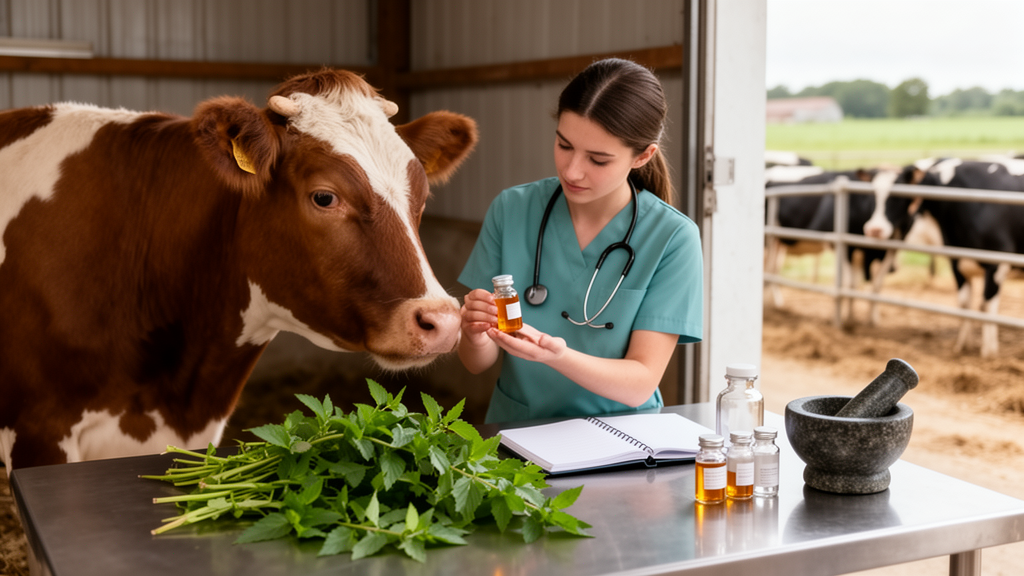
A 2026 review concludes that extracts from Scutellaria baicalensis Georgi, a traditional medicinal herb widely distributed in northern and southwestern China, show promise as plant-derived feed additives for livestock and poultry. The evidence assembled by the authors links the herb’s flavonoid-rich extracts with improved growth performance, altered gut microbial communities, reduced oxidative stress and inflammation, stronger immune indicators in some trials, and higher milk yield under selected feeding regimens. The review also draws a clear boundary around the findings: most experiments were short-term feeding studies, while much of the proposed antiviral and disease-control mechanism rests on cell cultures or laboratory animals rather than large, long-term trials in farm species.
The botanical extract is chemically complex. More than 100 bioactive constituents have been reported in the root of S. baicalensis, with flavonoids forming the principal group. The four most prominent compounds are baicalin, baicalein, wogonoside and wogonin, alongside smaller amounts of scutellarin, scutellarein and chrysin.
Glycosides such as baicalin and wogonoside are generally more water-soluble, whereas aglycones such as baicalein and wogonin are more lipophilic and may cross cellular membranes more readily. Intestinal microbiota can hydrolyze glycosides, removing glucuronic acid moieties and converting them into their corresponding aglycones. This combination of chemical forms is important because the two classes retain overlapping anti-inflammatory, antioxidant, antibacterial and immunomodulatory activities while differing in solubility and cellular membrane penetration.
Extraction technology strongly influences what an industrial product contains. The review describes water decoction, organic-solvent extraction, ultrasound- and microwave-assisted methods, supercritical carbon dioxide extraction, and deep eutectic solvents. Reflux extraction with 77% ethanol yielded 12.55%, while optimized ultrasound-assisted ethanol extraction produced yields ranging from 8.32% to 16.52%.
Microwave-assisted extraction reached 18.79% in the cited experiments, and supercritical carbon dioxide extraction with 1,2-propanediol as a modifier yielded 8.16% plus or minus 0.62%. These figures are not directly interchangeable because studies differed in raw material, pretreatment, operating parameters, analytical methods and yield calculations. Water decoction remains attractive for scale-up because it is inexpensive and simple, but it is slow and procedurally cumbersome.
Advanced methods can shorten processing or protect heat-sensitive compounds, yet cost, solvent recovery and specialized equipment constrain industrial adoption. Laboratory experiments indicate that the extract’s active constituents can act on bacterial membranes, virulence programs, biofilms and metabolic pathways. Staphylococcus aureus, Escherichia coli and Salmonella species are among the common pathogens examined.
Baicalin’s conjugated carboxyl group can interact with the positively charged phospholipid bilayer or membrane proteins, undermining membrane integrity. In vitro, baicalein inhibited motility and biofilm formation by Aeromonas hydrophila while increasing membrane permeability, with reported minimum inhibitory and bactericidal concentrations of 40 and 80 micrograms per milliliter, respectively. In infection models, baicalin suppressed quorum-sensing-related virulence in S. aureus, reduced invasion and pathological injury in Salmonella-infected mice, and improved some outcomes in piglets experimentally infected with Glaesserella parasuis.
These findings demonstrate biological activity in controlled systems, but the review stresses that direct evidence from production animals remains limited. Anti-inflammatory and antioxidant effects form another major strand of the evidence. Baicalin and baicalein can scavenge reactive oxygen species and influence inflammatory signaling, including the NF-kappaB pathway, NADPH oxidase, MAPK and Nrf2/ARE pathways.
Cell models showed lower cytokine production after oxidative or bacterial stimulation, while mouse and rat models of intestinal inflammation, gastric mucosal injury, mastitis and lung injury benefited in several ways. In a deoxynavalenol-challenged weaned-piglet trial, dietary baicalin at 0.1% restored part of the decline in production performance, reduced pro-inflammatory cytokine expression, improved antioxidant capacity and protected jejunal and ileal structure. The authors associated these observations with inhibition of NF-kappaB signaling and activation of mTOR.
A 60-day Hu sheep feeding study similarly found improved antioxidant capacity and higher IgG and IL-4. These observations connect molecular mechanisms with animal outcomes, although they do not establish that every purified compound or commercial extract will produce the same effects. Immune modulation and antiviral activity are promising areas, but the review emphasizes that target-animal evidence remains limited.
Baicalin and wogonin inhibited influenza virus, porcine epidemic diarrhea virus and avian infectious bronchitis virus in vitro. In an H9N2 mouse model, baicalin increased expression of antiviral proteins Mx1 and PKR, reduced lung injury and splenic atrophy, and improved balance between CD4-positive and CD8-positive T cells. The review warns, however, that effective concentrations in cell experiments are often much higher than plasma concentrations expected after oral dosing in livestock or poultry, raising questions about in-vivo conversion and efficacy.
Feeding studies offer some target-animal support: baicalein increased IgA, IgG and IgM in Xianghuang broilers while lowering IL-6, and another broiler trial found changes in T-cell subsets, IFN-gamma and antibodies against infectious bronchitis virus. These immune markers are not equivalent to demonstrating protection against naturally occurring disease. In poultry production, the reported effects involve growth, feed conversion and performance under stress.
Dietary S. baicalensis polysaccharides at 200 to 400 milligrams per kilogram improved starter-phase average daily gain and feed conversion in broilers over 42 days, with the 400-milligram group outperforming an antibiotic control for average daily gain across the rearing period. Baicalein at 100 to 200 milligrams per kilogram did not change feed intake but improved growth, with 200 milligrams per kilogram producing the strongest result. In heat-stressed laying hens, extracts at 15 to 60 milligrams per kilogram increased laying rate, and meat ducks required 250 milligrams per kilogram to significantly improve growth and slaughter performance.
Such variation illustrates why dose cannot be separated from species, basal diet, extract composition and preparation method. Pig studies point to a similar combination of growth, intestinal and immune effects. A 28-day trial in piglets found that 1% compound-strain fermented S. baicalensis stems and leaves increased average daily gain, reduced feed conversion and diarrhea, and improved fecal microbial diversity.
An extract dose of 120 milligrams per kilogram also improved growth, intestinal morphology and immune status. In finishing pigs, 200 milligrams per kilogram baicalin mainly improved growth and feed conversion, whereas 600 milligrams per kilogram shifted the observed effects toward antioxidant and immune measures; IL-6 was elevated at 400 and 600 milligrams per kilogram. In sows, compound extracts increased milk yield, lactose and protein secretion, improved piglet survival and weaning characteristics, but their multi-component formulation prevents direct generalization to purified baicalin.
Baicalin also reduced PEDV-associated diarrhea and viral load in a piglet model, representing a disease-control finding that still requires confirmation under field conditions. Ruminant studies provide production outcomes alongside evidence that duration and dose matter. In Hu sheep, baicalin and coated baicalin improved growth and antioxidant status, while the coated preparation produced stronger anti-inflammatory and immune effects.
Fermented stems and leaves at 6% to 9% improved rumen fermentation, growth and immune measures in Small-tailed Han sheep, while 0.6% polysaccharide optimized carbon and nitrogen metabolism in Du-Han crossbred sheep; higher doses offered no additional benefit. In calves, a baicalein solid dispersion improved growth, antioxidant enzyme activity and gut microbial structure more effectively than conventional baicalein. Baicalin at 10 milligrams per kilogram reduced diarrhea in pre-weaning calves, whereas 20 milligrams per kilogram provided no extra benefit.
Among postpartum Holstein cows, five days of supplementation did not change milk yield, but 60 days of feeding increased whole-lactation milk yield by 13%, or 1,419 kilograms. A separate trial of 404 cows found no effect from a short prepartum-to-21-day regimen, whereas supplementation from day 255 of gestation through day 90 of lactation increased daily milk yield by 1.5 kilograms across the lactation. Translation from feed additive to dependable farm product remains constrained by safety, standardization and residue questions.
Most toxicology studies cited by the review used mice, rats, purified baicalin or laboratory extracts, while systematic evaluations covering full production cycles in livestock and poultry are largely absent. Limited trials indicate no apparent impairment of liver or kidney function at conventional doses, but over-supplementation can increase metabolic strain. No data are yet available on depletion of active compounds in meat, milk or eggs, meaning appropriate withdrawal periods cannot be defined from the current evidence.
Bitter flavonoids may reduce palatability and high doses may suppress feed intake, while tannins and polyphenols in unprocessed material may have anti-nutritional effects that fermentation can mitigate. Pharmacokinetic and pharmacodynamic interactions are also possible with antibiotics including amoxicillin and cefquinome, potentially strengthening antibacterial effects while altering drug exposure. The review therefore supports further development of standardized extracts and longer target-animal trials, not immediate broad use as a proven antibiotic replacement.
Subject of Research: Biological functions and livestock-production applications of Scutellaria baicalensis extracts
Article Title: The biological functions of Scutellaria baicalensis Georgi extracts and their application prospects in livestock and poultry production
Article References: Zhang, G., Du, X., Li, Y., Ma, X., Leng, H., & Gao, Y. (2026). The biological functions of Scutellaria baicalensis Georgi extracts and their application prospects in livestock and poultry production. Frontiers in Veterinary Science, 13, Article 1966515. https://doi.org/10.3389/fvets.2026.1966515
Image Credits: AI Generated
DOI: 10.3389/fvets.2026.1966515
Keywords: Scutellaria baicalensis, plant extracts, livestock nutrition, poultry production, baicalin, baicalein, gut microbiota, antioxidant effects, feed additives, animal health, biological, functions
Cite Scienmag News
William Thompson. (October 24, 2026). Scutellaria extracts show livestock promise, but safety remains unclear. Scienmag. https://scienmag.com/scutellaria-extracts-show-livestock-promise-but-safety-remains-unclear/
William Thompson. "Scutellaria extracts show livestock promise, but safety remains unclear." Scienmag, 24 October 2026, https://scienmag.com/scutellaria-extracts-show-livestock-promise-but-safety-remains-unclear/. Accessed 24 October 2026.
William Thompson. "Scutellaria extracts show livestock promise, but safety remains unclear." Scienmag. October 24, 2026. https://scienmag.com/scutellaria-extracts-show-livestock-promise-but-safety-remains-unclear/


