


A broken finger sounds minor, but for the millions of people who sustain hand fractures every year, the consequences can be life-altering. Children and young athletes, manual labourers, and elderly patients all routinely suffer fractures of the phalanges, the small bones of the fingers, and when those breaks are significantly displaced, unstable, or cause the fingers to scissor over one another, surgery becomes the only path to restoring function. Now a team of Canadian surgeons and researchers has launched a rigorously designed pilot trial to answer one of hand surgery’s most quietly consequential questions: when a finger bone breaks, is it better to hold it together with a threaded metal screw buried inside the bone, or with the thin, time-tested Kirschner wire that has dominated the field for decades?
The study, described in a newly published protocol paper in BMC Plastic and Reconstructive Surgery, is a 1:1 parallel randomized controlled pilot trial led by investigators at McMaster University and St. Joseph’s Healthcare Hamilton, with additional Canadian sites at the University of Calgary, Western University, University Health Network, and the University of Ottawa awaiting ethical approval. Registered with ClinicalTrials.gov under the identifier NCT06372067, the trial will enroll adults aged eighteen and older who present within fourteen days of injury with closed, extraarticular fractures of the proximal or middle phalanx, the common fracture patterns that spare the joint surfaces but still demand operative fixation. Patients whose fractures cannot be managed with either technique, those with injuries to both hands, other significant upper extremity trauma, intraarticular fractures, or who cannot commit to six months of follow-up will be excluded, ensuring that the two treatment arms remain directly comparable.
The technical contrast between the two interventions is what makes the trial scientifically compelling. Kirschner wires, or K-wires, are smooth steel pins drilled across a fracture to hold the fragments in place. They can be inserted with minimal soft tissue injury and preserve the blood supply to the bone, which explains their enduring popularity. But they protrude through the skin, which exposes patients to pin tract infections, and they provide only relative stability, often requiring prolonged immobilization that can lead to stiffness, malunion, and extended time away from work. The wires are typically removed about four weeks after surgery, adding another clinic visit and another small procedural burden to the recovery.
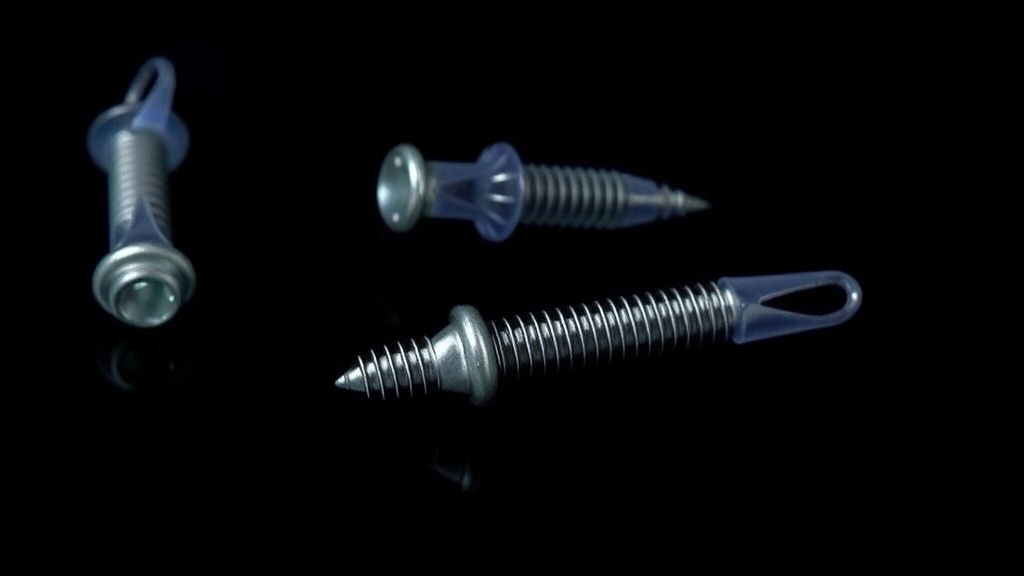
Intramedullary screws take an entirely different approach. Using the TriMed small threaded intramedullary nail system, surgeons reduce the fracture through a closed technique and then make a small incision at the head or base of the phalanx, retracting the skin and extensor mechanism to expose the entry point. One or two screws, sized to the patient’s bony morphology and fracture pattern, are threaded down the medullary canal under fluoroscopic guidance, acting as an internal splint that provides rigid fixation without opening the fracture site or stripping the periosteum. Because the hardware is fully buried, there is no pin tract to infect, and because the fixation is rigid, patients can begin protected early range-of-motion exercises with a hand therapist just one week after surgery. The technique borrows biomechanical principles long validated in lower extremity orthopedics, where intramedullary nailing is a mainstay of long bone fracture care.
The evidence base for intramedullary screws in the hand, however, remains thin, and this is precisely the gap the Canadian team intends to address. Small observational cohort studies have reported favourable outcomes in return to activity, range of motion, time to radiological healing, and grip strength, but most existing research has lumped metacarpals and phalanges together or examined metacarpals alone. A 2023 cost comparison of sixty-two metacarpal and phalangeal fractures found significantly lower healthcare costs for uncomplicated cases treated with intramedullary screws compared with K-wires. More striking still, a 2024 meta-analysis spanning twenty-six observational studies and 1,261 patients with metacarpal fractures found that intramedullary screws produced significantly improved DASH scores, better grip strength, and lower reoperation rates than both K-wires and plates and screws. Encouraging as those findings are, they do not automatically transfer to the phalanges, which are smaller, more anatomically constrained, and closer to the tendons and joints that make hand function so delicate.
Because this is a pilot trial, its primary objective is feasibility rather than superiority. The investigators have prespecified a set of quantitative benchmarks that will determine whether a full-scale national randomized controlled trial is viable. At least seventy percent of patients approached by research personnel must meet the eligibility criteria, at least seventy percent of eligible patients must agree to participate, the crossover rate between treatment arms must remain below five percent, compliance with the intervention and postoperative protocol must exceed eighty percent, and at least eighty percent of participants must complete the twelve-week patient-reported questionnaire that anchors the study’s primary clinical outcome. Depending on how these thresholds are met, the trial steering committee will recommend proceeding without modifications, proceeding with modifications, or abandoning the definitive trial altogether. A recruitment or eligibility rate below thirty-five percent, a wholesale change in the postoperative protocol, or a twelve-week DASH completion rate below forty percent would signal that the larger trial is not achievable in its current form.
The pilot will target thirty-four patients, seventeen per arm, a figure derived from the widely cited recommendation of twelve patients per group for pilot studies, adjusted for an anticipated ninety percent compliance rate and eighty percent outcome completion rate. With the participating surgeons performing roughly three proximal or middle phalanx fixations per week across the network of tertiary centres, the team expects to reach the recruitment target within a single year. Patients will be randomized in blocks of four using a sequence generated by a researcher uninvolved in clinical care and loaded into the REDCap electronic data platform. Because the hardware itself is visible on imaging and, in the case of K-wires, protrudes through the skin, blinding of surgeons, therapists, and patients is not possible, an honest limitation the protocol acknowledges outright. Analyses will follow an intention-to-treat approach, with descriptive statistics used to characterize feasibility and early clinical outcomes.
The clinical outcomes selected for the pilot are deliberately chosen to power the eventual definitive trial. The Disability of the Arm, Shoulder, and Hand questionnaire, or DASH, will serve as the primary clinical outcome measure. The DASH is a region-specific patient-reported instrument with excellent psychometric credentials: in trauma populations it has demonstrated internal consistency and test-retest reliability with intraclass correlation coefficients of 0.98, and its minimum detectable change is estimated at 9.04 points with a minimally important difference of twelve to fourteen points. Notably, a 2023 international Delphi consensus study established a core outcome set for adult hand fractures, encompassing fine hand use, pain during activity and at rest, return to work, personal care, range of motion, and patient satisfaction, domains that DASH items largely address. Participants will also complete the EQ-5D-5L generic health questionnaire, rate their pain on a visual analogue scale, and undergo standardized assessments of total active motion and grip strength performed by two dedicated hand therapists using goniometers and dynamometers, with every measurement benchmarked against the uninjured contralateral hand.
Radiographic rigor receives equal attention. X-rays obtained before surgery and at four and twelve weeks afterward will be reviewed by an adjudication committee consisting of the principal investigator and two additional hand fellowship-trained surgeons, who will grade the quality of fracture reduction by measuring angulation, displacement, and shortening in millimetres and degrees, with inter-rater reliability assessed. Complications, including complex regional pain syndrome diagnosed by the Budapest criteria, stiffness, delayed union, nonunion, malunion, infection, hardware removal, and reoperation, will be systematically tracked at two, four, eight, twelve weeks, and six months. Nonunion will be defined as radiographic and clinical nonhealing persisting at six months, distinguishing it from delayed union, which shows healing by that point. Time to return to work and time to discontinuation of splinting, outcomes with direct economic and personal significance for patients, round out the dataset.
For a field in which one of the most common skeletal injuries has lacked high-quality comparative evidence, the implications extend well beyond the operating room. The investigators anticipate that the eventual full-scale trial will require a minimum of eighty-four patients, forty-two per group, based on a five-point difference in DASH scores with a standard deviation of seven, an alpha of 0.05, and ninety percent power, calculations anchored to a moderate effect size derived from the metacarpal meta-analysis. If intramedullary screws confirm their promise in the fingers, patients could look forward to earlier mobilization, fewer infections, no second procedure to remove hardware, and potentially lower healthcare costs, while surgeons would gain an evidence-backed alternative to a century-old technique. The pilot trial, modest in size but methodical in design, represents the essential first step toward that transformation, and its feasibility verdict will determine whether one of hand surgery’s longest-standing habits finally faces a definitive reckoning.
Subject of Research: A pilot multicenter randomized controlled trial comparing intramedullary screw fixation with Kirschner wire fixation for extraarticular proximal and middle phalanx fractures.
Article Title: Intramedullary screw versus Kirschner wire fixation of extraarticular proximal and middle phalanx fractures: study protocol for a pilot multicenter randomized controlled trial
Article References: Kim, P., WECAN, Kadar, A., Chambers, S., Grewal, R., Mistry, M., Paul, R., Chen, A., White, N., Levis, C., D’Abbondanza, J., Hopkins, E., Thoma, A., Farrohkyar, F., & Retrouvey, H. (2026). Intramedullary screw versus Kirschner wire fixation of extraarticular proximal and middle phalanx fractures: study protocol for a pilot multicenter randomized controlled trial. BMC Plastic and Reconstructive Surgery, 2(1), Article 17. https://doi.org/10.1186/s44452-026-00030-y
Image Credits: AI Generated
DOI: 10.1186/s44452-026-00030-y
Keywords: hand fractures, phalanx fractures, intramedullary screw fixation, Kirschner wire, randomized controlled trial, pilot study, feasibility, hand surgery, DASH score, orthopedic surgery, minimally invasive fixation, patient-reported outcomes
Cite Scienmag News
Ophelia Keating. (September 20, 2026). Screws or Wires? Canadian Trial Aims to Settle a Breakthrough Debate in Broken Finger Surgery. Scienmag. https://scienmag.com/screws-or-wires-canadian-trial-aims-to-settle-a-breakthrough-debate-in-broken-finger-surgery/
Ophelia Keating. "Screws or Wires? Canadian Trial Aims to Settle a Breakthrough Debate in Broken Finger Surgery." Scienmag, 20 September 2026, https://scienmag.com/screws-or-wires-canadian-trial-aims-to-settle-a-breakthrough-debate-in-broken-finger-surgery/. Accessed 4 October 2026.
Ophelia Keating. "Screws or Wires? Canadian Trial Aims to Settle a Breakthrough Debate in Broken Finger Surgery." Scienmag. September 20, 2026. https://scienmag.com/screws-or-wires-canadian-trial-aims-to-settle-a-breakthrough-debate-in-broken-finger-surgery/


