

In the summer of 2021, the western regions of North America experienced an unprecedented heat wave, characterized by soaring land temperatures reaching upwards of 50 degrees Celsius in certain areas. This extreme meteorological event, which spanned from June 25 to July 2, left a marked impact on the biological and ecological fabric of British Columbia’s diverse ecosystems. Recent research published in the esteemed journal Nature Ecology and Evolution delves into the extensive and nuanced repercussions of this heat wave on both flora and fauna, revealing a complex tapestry of winners and losers shaped by physiological tolerance, habitat conditions, and behavioral adaptability.
The 2021 heat wave served as a stark illustration of climate change’s capacity to induce acute thermal stress, leading to catastrophic consequences for many species. Among the most severely affected were sessile marine invertebrates such as barnacles and bay mussels. Observations noted a mortality rate approaching 50% for the thatched barnacle population, while over 90% of the Bay mussels perished. These mortality rates underscore the inability of certain organisms to cope with sudden and extreme thermal fluctuations, especially those lacking mobility or refuge options.
Terrestrial ecosystems encountered equally drastic shifts. Insect herbivore dynamics, for instance, experienced significant perturbations. Aphid infestations on blueberry plants plummeted from over 50% prevalence before the heat event to less than 1% post-heat wave, suggesting heat sensitivity or disruption in population regeneration. Such disruptions exhibit cascading effects on plant health and associated food webs, emphasizing the intricate connectivity within terrestrial biotic communities.
Avian populations, particularly species with vulnerable life stages, suffered detrimental impacts. A notable decline in surf scoter populations, with a 56% reduction in counts following the heat wave, illustrates the susceptibility of native sea ducks. Moreover, juvenile birds that had not yet achieved flight capability found themselves trapped within thermally insulated nests, resulting in widespread mortality due to overheating. Camera trap data similarly revealed a 50% reduction in caribou presence post-heat wave, affirming the generalized vulnerability of mobile fauna unable to evade extreme environmental stressors.
Contrasting these declines, some species emerged as beneficiaries of the altered environmental conditions. Sea lettuce, a species of edible seaweed, capitalized on the decline of its competitors, expanding its territorial coverage along beaches by 65%. Its comparative thermal tolerance facilitated this proliferation, underscoring how climate-induced selective pressures can restructure community composition in coastal ecosystems.
Mammalian responses were equally varied. Moose populations, despite known sensitivities to elevated temperatures, demonstrated resilience through behavioral thermoregulation. Camera trap monitoring indicated a return to baseline sightings after initial declines, likely attributable to shifts in microhabitat use—including increased utilization of densely forested, cooler microclimates—allowing these large herbivores to mitigate heat exposure effectively.
The hydrological impacts of the 2021 heat wave were profound and intricately linked to ecosystem functioning. Warmer conditions accelerated snowpack melt, resulting in a transient 40% surge in streamflow, followed by an anomalous deficit later in the season. This premature abstraction of water resources produced a mismatch between ecosystem water demand and availability, particularly detrimental during alpine summer months when plant and animal water needs peak. Such phenomena not only stress biological communities but also challenge long-term watershed sustainability.
Carbon sequestration capabilities exhibited considerable spatial heterogeneity in response to the heat event. Cooler, wetter areas of the province demonstrated a 30% increase in carbon absorption, a finding that complicates the conventional narrative that heat waves uniformly impair vegetation functioning. In contrast, warmer and more arid regions experienced a 75% decrease in carbon uptake, highlighting that climate extremes can produce divergent biogeochemical feedbacks depending on local environmental context.
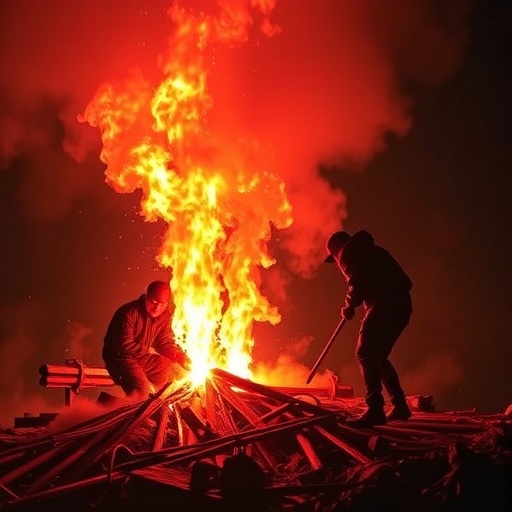
The cascading effects of rapid snowmelt and altered hydrology also exacerbated wildfire hazards. Wildfire activity rose dramatically, surging by almost 400% in the week following the heat wave. This escalation not only further disrupted ecological integrity but also reinforced a positive feedback loop wherein intense fires contribute to subsequent atmospheric heating and vegetation stress, compounding climate risk.
Given the multidimensional and pervasive impacts observed, researchers emphasize the critical need for coordinated ecological monitoring frameworks. Such networks would facilitate early detection of ecological disturbances, enabling responsive conservation interventions and informing adaptive management strategies. Presently, data accumulation remains fragmented, highlighting a striking gap in our capacity to understand and mitigate the full scope of climate-induced ecological disruptions.
This 2021 heat wave study thus constitutes a pivotal contribution to climate biology, revealing that thermal extremes induce complex, species-specific responses conditioned by physiology, behavior, and habitat characteristics. The differential survival and proliferation patterns underscore the importance of resilience and vulnerability assessments in predicting future ecological trajectories under accelerating climate change.
With successive heat waves predicted to become increasingly frequent and intense, understanding these dynamics is paramount. Researchers caution that repeated incidents not only stress individual species but also accelerate the depletion of critical cryospheric reservoirs such as glaciers, which traditionally buffer regional climates and hydrological regimes. This interplay portends profound shifts in ecosystem structure, function, and resilience well into the future.
The heat wave’s ecological toll also extends beyond immediate biological effects, influencing broader ecosystem services such as carbon cycling, water regulation, and habitat provision. As these services underpin human well-being and natural system sustainability, the imperative to bolster ecological monitoring and integrate climatic risk into environmental stewardship strategies grows ever more urgent.
In conclusion, the 2021 North American heat wave serves as a stark exemplar of how climate extremes can simultaneously devastate, reshape, and reconfigure ecosystems. The findings illuminate the critical importance of multi-disciplinary approaches that leverage remote sensing, field observations, and modeling to holistically apprehend and anticipate climate-ecosystem feedbacks. This knowledge is essential to crafting informed, proactive responses to emerging ecological challenges posed by a rapidly warming world.
Subject of Research: Ecological impacts of the 2021 North American heat wave on species and ecosystems in British Columbia
Article Title: Ecological consequences of the 2021 North American heat wave in British Columbia
News Publication Date: March 11, 2026
Web References: https://www.nature.com/articles/s41559-026-02987-6
References: DOI: 10.1038/s41559-026-02987-6
Keywords: Ecology, Coastal ecosystems, Aquatic ecosystems, Climate change


