


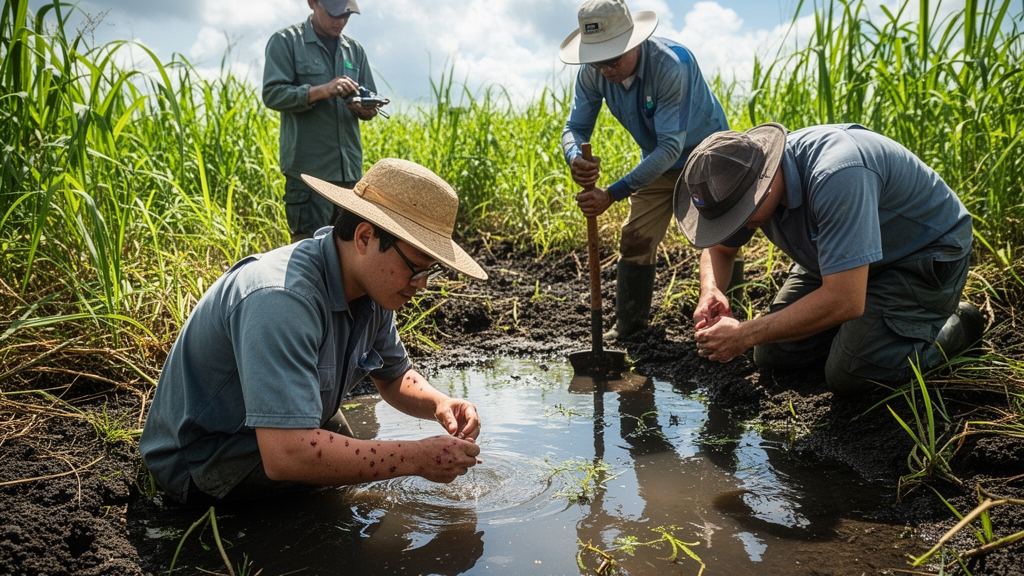
A scoping review of 10 peer-reviewed studies and formally structured sources found that climate-related stressors and infectious-disease conditions can converge in workplaces, increasing physical, environmental, and psychosocial pressures on workers. The synthesis covered healthcare, agriculture, construction, emergency response, and other high-exposure sectors, identifying shared exposure pathways and populations with limited access to healthcare, legal protections, or adaptive infrastructure. Rather than treating pandemics as isolated events, the review used pandemic-related workplace disruption as a lens for understanding recurring occupational risks under compound hazards. Its central conclusion was that worker protection requires climate adaptation, infection prevention, and psychosocial support to be planned together rather than through separate policy tracks.
The authors followed PRISMA-ScR reporting guidelines and searched PubMed, Scopus, Web of Science, and Google Scholar. They focused on English-language peer-reviewed studies and formally structured evidence published primarily from January 2020 through April 2025, while retaining one pre-2020 policy study for foundational context. Screening 612 initially identified records produced a final set of 10 studies or sources. Eligible evidence was charted and synthesized according to occupational sector, geographic region, exposure type, worker vulnerability, and methodological approach. The design was intended to map the range and distribution of available evidence rather than estimate a pooled effect or establish causality.
The small and methodologically heterogeneous evidence base is a central limitation. Most included studies used descriptive, qualitative, cross-sectional, conceptual, or review-based designs. Few applied predictive modeling, geospatial analysis, longitudinal methods, or integrated datasets that could directly connect environmental conditions, infectious-disease risks, and occupational outcomes. The review therefore presents a structured map of research and policy gaps, not a quantitative demonstration that particular combinations of hazards cause specified health effects. It also did not formally grade the strength of evidence, so it cannot establish comparative hazard magnitudes, a consistent dose-response relationship, or the effectiveness of individual interventions.
Despite those limits, the studies point to an important pattern: climate-related and infectious-disease stressors frequently overlap, and their combined effects may intensify the conditions under which people work. The analysis identified shared exposure pathways linking the two hazard categories. When workers encounter overlapping environmental, health, and social pressures, policies centered on only one threat may leave other relevant risks unaddressed. The review also identified workers who can be especially vulnerable when protective resources are limited. Disproportionate risks were reported among migrant workers, informal laborers, low-income populations, older adults, women, and seasonal or cross-border agricultural workers, with overlapping barriers involving healthcare access, legal protection, and adaptive workplace infrastructure.
Among the review’s recommendations were data-driven early-warning systems to strengthen occupational planning, stronger protections for vulnerable workers, coordination across occupational sectors, and closer alignment among climate adaptation, infection prevention, and psychosocial support. These are evidence-informed directions rather than interventions validated by the scoping review. The review did not test the performance of an early-warning platform, compare specific policy packages, or establish that integrated programs produce better health outcomes than separate approaches. Future work would need clearer measurement of overlapping exposures, consistent approaches for assessing vulnerability, and designs capable of evaluating integrated responses. The most defensible conclusion is that climate and infectious-disease hazards can reinforce occupational health inequities, making coordinated planning, equitable protection, and better data important priorities for future research and workplace policy.
Subject of Research: Scoping review of compound climate and infectious-disease occupational health risks and worker resilience
Article Title: Occupational health risks from climate-related and infectious-disease stressors: A scoping review of worker safety and resilience
Article References: Odud, M. A., & Abdul-Aziz, O. I. (2026). Occupational health risks from climate-related and infectious-disease stressors: A scoping review of worker safety and resilience. PLOS One, 21(10), e0361296. https://doi.org/10.1371/journal.pone.0361296
Image Credits: AI Generated
DOI: 10.1371/journal.pone.0361296
Keywords: occupational health, climate stressors, infectious diseases, worker safety, workforce resilience, health inequities, migrant workers, informal labor, pandemic disruption, scoping review, Occupational, health
Cite Scienmag News
Kristina Jarvis. (October 26, 2026). Scoping review maps compound climate and infection risks among workers. Scienmag. https://scienmag.com/scoping-review-maps-compound-climate-and-infection-risks-among-workers/
Kristina Jarvis. "Scoping review maps compound climate and infection risks among workers." Scienmag, 26 October 2026, https://scienmag.com/scoping-review-maps-compound-climate-and-infection-risks-among-workers/. Accessed 26 October 2026.
Kristina Jarvis. "Scoping review maps compound climate and infection risks among workers." Scienmag. October 26, 2026. https://scienmag.com/scoping-review-maps-compound-climate-and-infection-risks-among-workers/


