


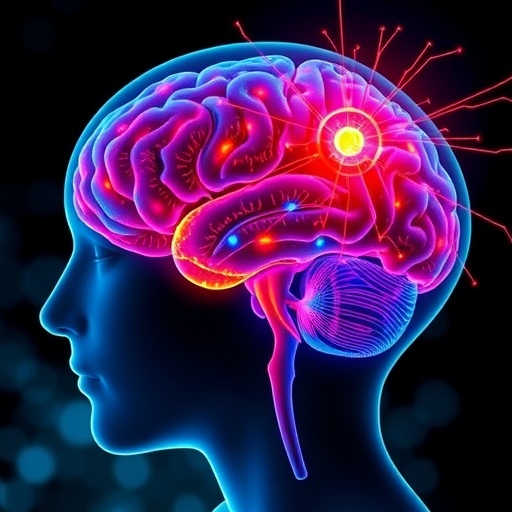
In a groundbreaking study poised to reshape the treatment landscape for schizophrenia, researchers at Case Western Reserve University’s Jack, Joseph and Morton Mandel School of Applied Social Sciences have identified a novel neural target that offers hope for earlier and more effective interventions. This discovery confronts the long-standing issue of schizophrenia being managed with a generalized treatment model, often inadequately addressing the nuanced needs of young patients during the illness’s critical developmental window.
Schizophrenia, a complex psychiatric disorder characterized by disruptions in thought processes, perceptions, emotional responsiveness, and social interactions, typically emerges during adolescence or early adulthood—a pivotal period marked by continued brain maturation. Traditional clinical approaches have predominantly emphasized cognitive domains such as memory and attention; however, these methods have produced limited functional recovery, leaving many patients grappling with impaired social functioning that severely diminishes quality of life.
Central to this new research is the concept of social inference, defined as the brain’s capacity to decode subtle social cues and infer others’ intentions or emotions—an ability often described metaphorically as the brain’s “social detective work.” According to lead researcher Anju Kotwani, a doctoral student spearheading the study, social inference encompasses the nuanced interpretation of language tone, sarcasm, and implicit meanings during interpersonal exchanges, which are critically impaired in individuals with schizophrenia.
The research team employed rigorous experimental methodologies involving a cohort of 102 early-stage schizophrenia patients to investigate the relationship between neurocognition, social cognition, and real-world functioning. Their findings underscore that social cognition acts as a pivotal intermediary between basic neurocognitive faculties and functional outcomes, essentially translating cognitive potential into effective social behavior. This mediator role accentuates the importance of targeted therapeutic strategies addressing social cognitive deficits directly, rather than relying solely on general cognitive remediation.
Importantly, this study illuminates that social inference skills, when cultivated through structured training programs utilizing computer-based exercises and worksheets, can substantially enhance patients’ abilities to navigate social complexities. Such interventions show promise not only in mitigating cognitive symptoms but also in restoring adaptive social function, which is critical for successful reintegration into community, educational, and occupational settings.
Jessica Wojtalik, assistant professor at the Mandel School, emphasizes the transformative potential of these findings: by tailoring interventions to promote social cognitive skill development early in the course of schizophrenia, clinicians could shorten the duration of untreated impairment and accelerate patients’ return to productive, fulfilling lives. The implication is a paradigm shift from symptom suppression towards skill acquisition aimed at sustainable functional recovery.
These insights also dovetail with contemporary neuroscientific understanding that the adolescent brain exhibits heightened plasticity, rendering it uniquely receptive to targeted cognitive and social training during this developmental phase. Capitalizing on this neuroplastic window could prevent the entrenched deficits that often crystallize into chronic disability if left unaddressed.
The study advocates for widespread dissemination and integration of social inference training programs into community mental health resources, aiming to make these evidence-based interventions accessible to young individuals diagnosed with schizophrenia across diverse socioeconomic backgrounds. Enhancing social cognition is posited not only as a clinical priority but also as a public health imperative to reduce long-term disability and societal costs associated with schizophrenia.
Moreover, the research contributes to an evolving theoretical framework situating social cognition at the nexus of neuropsychological function and psychosocial outcome, thereby providing a comprehensive model for future investigations and treatment designs. It encourages multidisciplinary collaboration among neuroscientists, clinical psychologists, social workers, and rehabilitation specialists to refine and personalize therapeutic approaches.
In summary, this pioneering research from Case Western Reserve University heralds a new frontier in schizophrenia care by pinpointing social inference as a critical and modifiable neural function. Targeted early intervention that enhances social cognitive abilities holds significant promise for redefining recovery trajectories, ultimately empowering young patients to reclaim agency over their social lives and futures.
Cite Scienmag News
Cassandra Pierce. (October 8, 2025). Scientists Reveal How Social Brain Function Influences Recovery in Early Schizophrenia. Scienmag. https://scienmag.com/scientists-reveal-how-social-brain-function-influences-recovery-in-early-schizophrenia/
Cassandra Pierce. "Scientists Reveal How Social Brain Function Influences Recovery in Early Schizophrenia." Scienmag, 8 October 2025, https://scienmag.com/scientists-reveal-how-social-brain-function-influences-recovery-in-early-schizophrenia/. Accessed 4 September 2026.
Cassandra Pierce. "Scientists Reveal How Social Brain Function Influences Recovery in Early Schizophrenia." Scienmag. October 8, 2025. https://scienmag.com/scientists-reveal-how-social-brain-function-influences-recovery-in-early-schizophrenia/


