


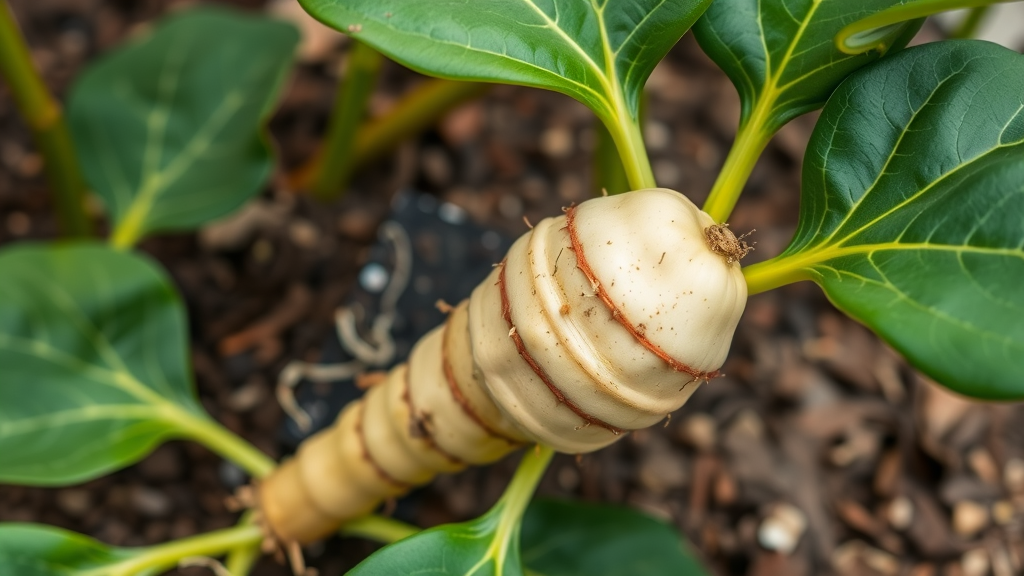
Cassava, the starchy tropical root that feeds hundreds of millions of people across Latin America, Africa and Asia, has long been celebrated for its toughness. It grows in poor soils, shrugs off drought, and keeps producing even when other crops fail. Yet one vulnerability has stubbornly persisted: the plant is often sensitive to the herbicides farmers increasingly rely on to control weeds. Now, a team of Brazilian researchers has taken the most detailed genetic look yet at why some cassava plants tolerate chemical weed killers while others wither, publishing the results in the journal Plant Molecular Biology.
The study, led by Reisane Teles Santiago of the Federal University of Recôncavo da Bahia and Embrapa Mandioca e Fruticultura, together with colleagues Massaine Bandeira e Souza, Diego Fernando Marmolejo Cortes and Eder Jorge de Oliveira, carried out one of the first genome-wide association studies (GWAS) of herbicide tolerance in cassava. The researchers evaluated 194 genotypes from the Embrapa Cassava and Fruits breeding program, exposing them to three post-emergence herbicides with very different modes of action: mesotrione, which blocks carotenoid biosynthesis; S-metolachlor, which inhibits very-long-chain fatty acid synthesis; and chloransulam-methyl, an inhibitor of acetolactate synthase.
Timing proved to be everything in the experiment. The team scored phytotoxicity symptoms—leaf burn, chlorosis and wilting—at 3, 6, 9, 15 and 30 days after application, on a five-point scale converted to percentage injury values. Segmented regression analyses showed that the window around 9 to 11 days after application captured both the maximum symptom expression and the greatest differentiation among genotypes. That time point, dubbed PhytoX9DAA, became the phenotype of choice for the genetic mapping. Visual scores were converted to percentage injury, then distilled into genotypic best linear unbiased predictors, or BLUPs, using linear mixed models. After deregression, these continuous genetic values served as the input for association testing.
Genotyping was performed at Cornell University using a genotyping-by-sequencing approach, in which DNA is digested with the ApeKI enzyme, barcoded and sequenced on an Illumina platform. After stringent quality control—removing markers with call rates below 80 percent and minor allele frequencies under 5 percent—and imputation with Beagle, the team retained 23,047 single-nucleotide polymorphisms spread across all 18 cassava chromosomes. The panel, dominated by Brazilian landraces, showed healthy diversity: expected and observed heterozygosity were nearly identical at around 0.24, and linkage disequilibrium decayed rapidly, reaching background levels at roughly 4 to 6 megabases.
Association analyses were run with three complementary statistical models—MLM, MLMM and BLINK—each incorporating both a kinship matrix and population structure covariates derived from principal component analysis to guard against spurious associations. The results were strikingly herbicide-specific. For S-metolachlor, a single SNP on chromosome 9, chr9:1858429, emerged consistently in the BLINK model across 2023, 2024 and the combined analysis. For mesotrione, the picture was far richer: 68 significant SNP associations were detected, distributed across chromosomes 1, 4, 5, 7, 11, 14, 15 and 18, with the strongest signals clustering on chromosome 5, where four adjacent markers hinted at a haplotype block tied to tolerance. Notably, no significant associations surfaced for chloransulam-methyl, a silence the authors attribute cautiously to a possibly highly polygenic architecture, limited statistical power, or the relatively modest marker density of the GBS platform.
Mining the genomic neighborhoods of the significant markers within a 240-kilobase window, the researchers cataloged 59 candidate genes whose annotations read like a molecular toolkit for surviving chemical stress. On chromosome 7, genes annotated with antiporter activity and xenobiotic transmembrane transporter activity evoke the ABC and MATE transporter families, well-known agents of herbicide sequestration and efflux in other plants. On chromosome 1, candidates linked to RNA binding and RNA methyltransferase activity suggest post-transcriptional regulation at play, while chromosome 15 genes carry annotations for transcription factors and transmembrane transport. Key standouts include Manes.02G151900 and Manes.02G152700 on chromosome 2, tied to channel activity and signal peptide processing; Manes.09G060900 on chromosome 9, annotated with protein kinase and ATP-binding functions; and Manes.15G083800 and Manes.15G084000 on chromosome 15, linked to S-adenosylmethionine-dependent methyltransferase activity and phosphorylation.
The authors are careful to stress that these functional interpretations rest on annotation and comparative evidence from other species rather than direct experimental validation in cassava. Still, the emerging picture fits neatly with established mechanisms of metabolic herbicide resistance documented in crops and weeds alike: cytochrome P450-mediated oxidation, glutathione S-transferase conjugation, and vacuolar sequestration via ABC transporters. Comparable GWAS findings in rice, soybean, faba bean and wheat have similarly implicated transporters, protein kinases and detoxification enzymes in herbicide responses, suggesting that cassava may share evolutionarily conserved pathways for coping with xenobiotic stress.
The study also confirmed that substantial heritable variation for herbicide tolerance exists within the cassava gene pool. Variance component analysis showed a highly significant genotypic effect for phytotoxicity at 9 days after application for all three herbicides, meaning breeders have real material to select from. A significant genotype-by-year interaction was also detected across compounds, a reminder that temperature, humidity and growing conditions shape how herbicide injury unfolds in the field. Genomic inflation factors close to 1.0 for the BLINK and MLMM models, together with well-behaved quantile-quantile plots, indicate the association results are statistically sound.
For a crop whose expansion is increasingly squeezed by the rising cost of hand weeding, the practical implications are considerable. The chromosome 9 locus for S-metolachlor tolerance and the robust mesotrione signals on chromosomes 4 and 5 could, after independent validation and functional characterization, feed directly into marker-assisted selection and haplotype-based breeding. Given the polygenic nature of the trait, the authors also point to genomic selection as a complementary route, with GWAS-derived markers potentially boosting prediction accuracy when integrated into training populations. For smallholder farmers in Brazil, Nigeria and beyond, tolerant varieties could translate into cheaper, more reliable weed control and more stable yields.
Scientifically, the message is equally clear: herbicide tolerance in cassava is a quantitative, polygenic trait governed by many small-effect loci rather than a single master switch. The integration of membrane transport, cellular signaling and metabolic regulation highlighted by the candidate genes underscores the physiological resilience that has made cassava such a successful tropical staple. What this study delivers is a genomic map—a first, detailed chart of where that resilience resides in the cassava genome. Fine mapping, gene editing and validation experiments will now be needed to convert candidate loci into tools, but the first genomic dissection of herbicide tolerance in this vital crop has firmly been delivered, opening a path toward cassava varieties bred as much for chemical resilience as for the drought tolerance and low-input hardiness for which the species is already famous.
Subject of Research: Genome-wide association mapping of herbicide tolerance loci in cassava (Manihot esculenta)
Article Title: Pinpointing genomic regions conferring herbicide tolerance in cassava via genome-wide association mapping
Article References: Santiago, R. T., Souza, M. B. E., Cortes, D. F. M., & de Oliveira, E. J. (2026). Pinpointing genomic regions conferring herbicide tolerance in cassava via genome-wide association mapping. Plant Molecular Biology, 116(5), Article 95. https://doi.org/10.1007/s11103-026-01761-3
Image Credits: AI Generated
DOI: 10.1007/s11103-026-01761-3
Keywords: cassava, GWAS, herbicide tolerance, Manihot esculenta, SNP markers, mesotrione, S-metolachlor, candidate genes, marker-assisted selection, plant breeding, genomic selection, detoxification pathways
Cite Scienmag News
Juliet Wilcox. (September 12, 2026). Scientists Map the Hidden Genes That Let Cassava Survive Herbicide Attack. Scienmag. https://scienmag.com/scientists-map-the-hidden-genes-that-let-cassava-survive-herbicide-attack/
Juliet Wilcox. "Scientists Map the Hidden Genes That Let Cassava Survive Herbicide Attack." Scienmag, 12 September 2026, https://scienmag.com/scientists-map-the-hidden-genes-that-let-cassava-survive-herbicide-attack/. Accessed 4 October 2026.
Juliet Wilcox. "Scientists Map the Hidden Genes That Let Cassava Survive Herbicide Attack." Scienmag. September 12, 2026. https://scienmag.com/scientists-map-the-hidden-genes-that-let-cassava-survive-herbicide-attack/


