


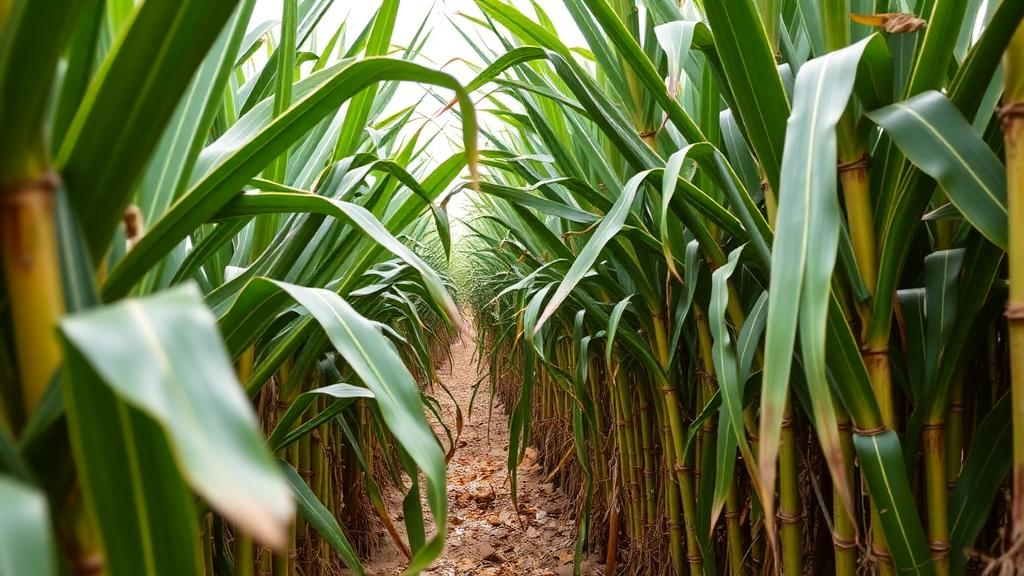
Sugarcane is the backbone of the global sugar industry and an increasingly important feedstock for bioethanol, yet its breeding has long been hampered by a stubborn problem: breeders have had very few robust molecular markers to guide the selection of plants with higher sugar content and better yields. A new genome-wide association study, published in the journal 3 Biotech, takes a major step toward closing that gap. An international team led by Md Sariful Islam of the USDA Agricultural Research Service, working with colleagues at CENGICAÑA in Guatemala and Louisiana State University, screened 397 sugarcane accessions drawn from a globally diverse germplasm collection and pinpointed dozens of DNA variants tied to the traits that matter most in the field.
The scale and design of the study are what set it apart. Rather than relying on a narrow breeding population, the researchers assembled a broad diversity panel representing the genetic breadth of Saccharum hybrids worldwide. They measured six yield- and sugar-related traits—stalk diameter, stalk height, stalk population, stalk weight, tons of cane per hectare, and Brix, a refractometer-based estimate of soluble sugar content—in replicated field trials at two distinct locations in Guatemala, Playa Grande and San Vicente. Testing across environments is critical in sugarcane, because yield traits are notoriously sensitive to soil, climate, and management, and a marker that works in one field may fail in another.
Genotyping such a panel is no trivial feat, because sugarcane possesses one of the most complicated genomes in the plant kingdom. Modern cultivars are highly polyploid, carrying multiple copies of each chromosome derived from different ancestral species, which means each genetic variant can exist in several dosage states within a single plant. The team used genotyping-by-sequencing, or GBS, a reduced-representation sequencing method that samples thousands of genome positions cheaply enough to apply to hundreds of individuals. They then aligned the resulting sequence reads to the R570 polyploid sugarcane reference genome, allowing variants to be placed on the actual chromosomes of the crop rather than on a distantly related surrogate.
For the association analysis itself, the researchers turned to GWASpoly, software specifically built for polyploid organisms. Standard human-genetics tools assume diploidy and would misinterpret sugarcane data, so polyploid-aware models that account for allele dosage are essential. The team also controlled for population structure—the tendency of related accessions to share ancestry and therefore confound trait associations—using statistical mixed-model approaches that separate true marker-trait links from background relatedness. This combination of a diverse panel, replicated multi-location phenotyping, and polyploid-appropriate modeling gives the results unusually strong footing for a crop of this genomic complexity.
The findings are substantial. In the Playa Grande dataset, the analysis identified 17 unique single-nucleotide polymorphisms significantly associated with four traits, including stalk diameter, stalk height, stalk population, and stalk weight. At San Vicente, 44 unique SNPs were linked to five traits. When the two locations were combined into a single dataset, the number of significant associations rose to 93 unique SNPs across five traits. The pattern suggests that pooling environments captures both location-stable and environment-specific genetic effects, enlarging the overall catalog of usable markers.
Perhaps the most valuable discovery for breeders is the set of variants that held up across both trial sites. Eleven SNPs showed consistent associations with stalk diameter, stalk population, and tons of cane per hectare regardless of location. Markers that replicate across environments are the gold standard in association genetics, because they are far more likely to reflect genuine causal variation rather than statistical noise or a site-specific interaction. These eleven loci represent ready-made candidates for conversion into diagnostic molecular markers that breeding programs could deploy to screen seedlings long before the plants reach maturity.
Digging deeper, the team examined which genes sit near the significant SNPs. Fourteen of the associated markers colocalized with twelve putative genes implicated in Brix, stalk diameter, stalk population, and tons of cane per hectare. Among the functional categories represented are genes encoding F-box proteins, which regulate hormone signaling and protein degradation and have documented roles in plant development; leucine-rich repeat proteins, involved in cell growth and stress responses; and ARF-family G proteins, which govern membrane traffic and developmental signaling. Cell-wall-related genes such as leucine-rich repeat extensins also appeared, a plausible connection given that stalk diameter depends directly on how stem tissues expand and thicken.
The candidate gene list underscores how yield in sugarcane is assembled from many interacting processes. Sugar accumulation depends on transporters that move sucrose between tissues and into storage vacuoles, while cane tonnage reflects stalk number, stalk height, stalk girth, and the plant’s overall architecture. By tying specific genomic regions to these individual components, the study provides a parts list that breeders and genomicists can begin to assemble. The genotype data themselves have been deposited in the USDA Ag Data Commons repository, making the resource openly available for other groups to validate, extend, or fold into genomic prediction models.
The practical implications extend beyond marker discovery. Sugarcane breeding cycles are famously long—new cultivars typically take a decade or more to develop—and each generation of seedlings must be grown to full size before yield and sugar content can be measured. DNA-based markers allow early selection on seedlings, collapsing the time and acreage needed per cycle. The high-confidence loci and candidate genes identified here can feed directly into marker-assisted selection and, increasingly, into genomic selection frameworks that estimate the breeding value of young clones from genome-wide marker profiles. Prior work by some of the same authors has shown that genomic prediction of yield and sugar traits in sugarcane hybrids is feasible, and a denser set of validated trait-associated markers should sharpen those models further.
There are caveats, of course. Association signals in a polyploid genome point to genomic neighborhoods rather than proven causal mutations, and the twelve candidate genes will need functional validation before their roles are settled. Marker effectiveness can also vary across genetic backgrounds and production systems beyond the Guatemalan trial sites. Still, the study delivers what sugarcane genetics has lacked: a large, multi-environment, polyploid-aware association analysis on a genuinely global germplasm panel, with replicated evidence and a shortlist of genes to interrogate. For an industry that supplies roughly three-quarters of the world’s sugar and a growing share of renewable ethanol, the ability to read a sugarcane seedling’s genome and predict its future performance is a quiet revolution—one SNP at a time.
Subject of Research: Genome-wide association mapping of sucrose content and cane yield-related traits in polyploid sugarcane
Article Title: Genome-wide association study for sucrose content and cane yield-related traits in sugarcane (Saccharum spp.) using globally diverse germplasm
Article References: Islam, M. S., Orozco, H., Quemé, J., Molina, L., Shahi, D., Gandham, P., Duque, E., Comstock, J., & Baisakh, N. (2026). Genome-wide association study for sucrose content and cane yield-related traits in sugarcane (Saccharum spp.) using globally diverse germplasm. 3 Biotech, 16(10), Article 430. https://doi.org/10.1007/s13205-026-05062-w
Image Credits: AI Generated
DOI: 10.1007/s13205-026-05062-w
Keywords: sugarcane, GWAS, genotyping-by-sequencing, molecular markers, polyploid genome, sucrose content, cane yield, plant breeding, SNP, candidate genes, germplasm, genomic selection
Cite Scienmag News
Juliet Wilcox. (October 2, 2026). Scientists Map the Genes Behind Sugar and Yield in Global Sugarcane Hunt. Scienmag. https://scienmag.com/scientists-map-the-genes-behind-sugar-and-yield-in-global-sugarcane-hunt/
Juliet Wilcox. "Scientists Map the Genes Behind Sugar and Yield in Global Sugarcane Hunt." Scienmag, 2 October 2026, https://scienmag.com/scientists-map-the-genes-behind-sugar-and-yield-in-global-sugarcane-hunt/. Accessed 5 October 2026.
Juliet Wilcox. "Scientists Map the Genes Behind Sugar and Yield in Global Sugarcane Hunt." Scienmag. October 2, 2026. https://scienmag.com/scientists-map-the-genes-behind-sugar-and-yield-in-global-sugarcane-hunt/


