

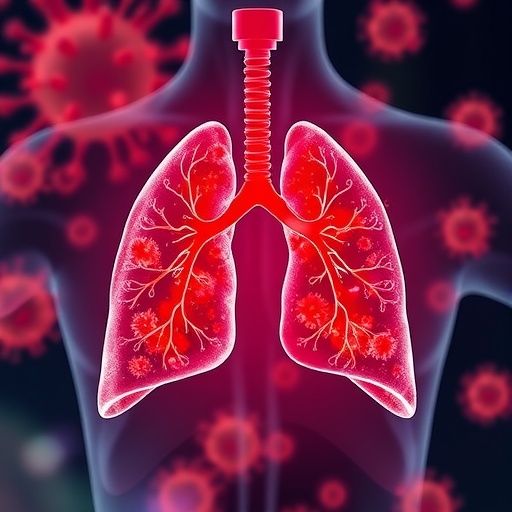
Emerging research from the collaborative efforts of scientists at Marshall University Joan C. Edwards School of Medicine and The Hebrew University of Jerusalem has unveiled a striking potential link between SARS-CoV-2 infection and the heightened risk of lung cancer development. This groundbreaking study delves into the intricate biological pathways activated within the lung following COVID-19 infection, shedding new light on the long-term pulmonary consequences of the virus beyond acute respiratory illness.
Published in the reputed journal Frontiers in Immunology, the investigation marries clinical data derived from large patient cohorts with rigorous mechanistic studies in animal models and cellular systems. This integrated approach has allowed researchers to uncover molecular interactions that may underpin an increased vulnerability to tumorigenic processes in the lung, invoking a paradigm shift in understanding the extended impact of COVID-19.
Central to the study is the identification of thymidine phosphorylase (TYMP), a pivotal enzyme that appears to play an instrumental role in modulating the lung’s biological response to SARS-CoV-2. TYMP’s interaction with the viral spike protein is postulated to orchestrate a cascade of inflammatory and fibrotic events. These pathological mechanisms contribute not only to tissue damage but also to the activation of oncogenic signaling pathways that could foster tumor initiation and progression.
The authors elucidate that TYMP-driven molecular pathways might alter the lung microenvironment, promoting immunological dysregulation conducive to tumorigenesis. By skewing immune surveillance and fostering a pro-inflammatory milieu, the sustained presence of such alterations may set the stage for neoplastic transformation in respiratory tissues long after viral clearance.
Underscoring these mechanistic insights, the research team analyzed extensive clinical data sourced from the TriNetX Research Network. Their epidemiological assessment revealed a statistically significant increase in lung cancer incidence among individuals with a documented history of COVID-19 infection. This risk elevation was particularly pronounced among current and former smokers, suggesting a synergy between viral pathobiology and smoking-related lung injury.
This finding raises critical questions regarding the interplay between viral infection and pre-existing pulmonary insults in accelerating carcinogenic processes. It invites a re-examination of post-COVID surveillance strategies, especially in populations with known risk factors for lung malignancies, to facilitate early detection and intervention.
Wei Li, Ph.D., a professor of biomedical sciences at Marshall University and co-corresponding author of the study, emphasizes that COVID-19’s legacy might extend far beyond the acute phase of illness. The biological repercussions of the virus in the lung environment could predispose patients to oncogenic insults, a hypothesis that warrants meticulous longitudinal investigation.
The translational science-driven collaboration bridging basic research and clinical epidemiology epitomizes the future trajectory of medical discovery. Expert contributions from co-first authors Cayleigh Wallace and Alex Gileles-Hillel, M.D., alongside the leadership of Hong Yue, Ph.D., framed the investigative efforts that integrated molecular biology with patient outcome data.
This rigorous inquiry was further supported by pivotal funding from NIH grants and institutional support, highlighting the necessity of sustained investment in COVID-19-related research that transcends virology to encompass chronic disease sequelae such as cancer.
Clinicians and researchers alike are encouraged to consider TYMP as a potential biomarker and therapeutic target in the context of post-COVID lung pathology. Its central role in mediating inflammatory, fibrotic, and tumorigenic processes positions it as a focal point for the development of novel interventions aimed at mitigating long-term morbidity.
David Gozal, M.D., M.B.A., Ph.D. (Hon), vice president for health affairs and dean at the Joan C. Edwards School of Medicine, underscores that this multidimensional research serves as a cornerstone for further studies delineating molecular mechanisms that tie viral infection to carcinogenesis.
The findings chart a path forward for translational and clinical research agendas aimed at identifying vulnerable patient populations, elucidating molecular targets, and ultimately developing preventative or therapeutic modalities that curtail post-infectious cancer risks.
As the global medical community addresses the enduring health challenges posed by COVID-19, this study importantly signals that vigilance is required to comprehend and counteract the virus’s hidden legacy on lung health, thus fostering improved long-term outcomes and survivorship.
For researchers and healthcare practitioners, the insights derived underscore the entangled nature of infection, immunity, and oncogenesis, advocating for integrated research frameworks that bridge molecular biology, epidemiology, and clinical care in anticipation of converging health threats.
The collaborative work marks a seminal advance in our understanding of SARS-CoV-2’s potential to influence pulmonary carcinogenesis, amplifying the urgency of ongoing research investments that dissect viral-host interactions and their implications for chronic disease prevention.
Subject of Research: Animals
Article Title: Thymidine phosphorylase promotes SARS-CoV-2 spike protein-driven lung tumor development
News Publication Date: 30-Mar-2026
Web References: https://doi.org/10.3389/fimmu.2026.1798566
Keywords: COVID-19, lung cancer, thymidine phosphorylase, SARS-CoV-2, lung tumor development, inflammation, fibrosis, oncology, pulmonary disease, viral infection, immunology, cancer risk


