

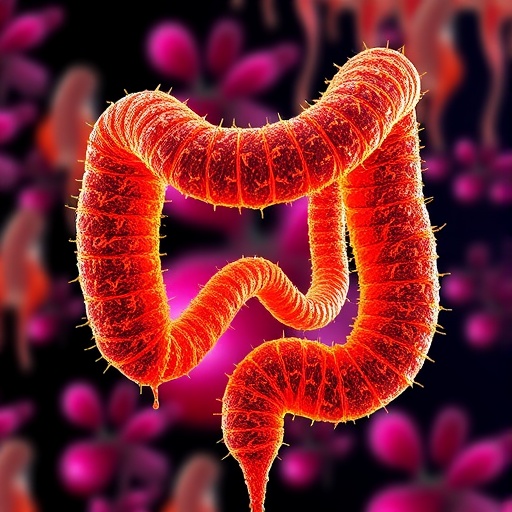
In an extraordinary breakthrough that could redefine the future of colorectal cancer treatment, researchers at Baylor University have pioneered a novel method using genetically engineered bacteria as microscopic couriers to deliver potent cancer-killing proteins directly into tumor cells. This innovative strategy leverages the invasive capabilities of Listeria monocytogenes, a bacterium typically known as a foodborne pathogen, transforming it into an effective therapeutic vehicle capable of bypassing cellular defenses and releasing cytotoxic agents precisely where they can wreak havoc in cancerous tissues.
Colorectal cancer currently stands as the second leading cause of cancer-related deaths worldwide, with its aggressive nature and treatment resistance posing formidable challenges to oncologists and researchers alike. The urgency to discover new, more targeted cancer therapies has propelled scientists to explore unconventional methods, and this work represents a remarkable fusion of microbiology, chemistry, and oncology leading to promising new therapeutic avenues.
At the forefront of this innovation is Michael S. VanNieuwenhze, Ph.D., FRSC, a distinguished professor and chair of the Department of Biology at Baylor University. Alongside his team, including doctoral students Wyatt Paulishak and Jianan Lyu, and a collaborator from Texas Tech University Health Sciences Center, VanNieuwenhze has harnessed Listeria monocytogenes’ innate ability to invade human cells and engineered it to carry saporin, a robust ribosome-inactivating protein known for its cancer cell–killing properties.
The fundamental concept employed involves chemically attaching saporin molecules to the surface of Listeria bacteria. This bio-conjugation ensures that once Listeria invades the tumor cells—a process it naturally undertakes during infection—it delivers saporin directly into the cytosolic space. Saporin is only cytotoxic once internalized, and this method cleverly exploits Listeria’s intracellular trafficking pathways, overcoming the notorious challenge of delivering therapeutic payloads across cellular membranes and into the cytoplasm, thereby enhancing the efficacy of the delivered toxin.
Extensive in vitro and in vivo experiments have substantiated the superiority of this approach. Fluorescent imaging confirmed saporin’s successful attachment to Listeria and its subsequent delivery into target cancer cells. In preclinical mouse models representing sarcoma and microsatellite stable (MSS) colorectal cancer, the saporin-enhanced Listeria demonstrated significantly heightened cytotoxicity against tumor cells, translating to reduced tumor burden and promising therapeutic potential.
Beyond mere delivery, the modifications rendered to Listeria enhance safety and therapeutic effectiveness. Genetic attenuation has rendered the bacteria less virulent, ensuring that while they retain their cell-penetrating prowess, their pathogenic risks are minimized. This balance of safety and potency represents a crucial milestone in bacterial therapy development, navigating the complex regulatory and ethical challenges historically associated with using live microorganisms as drug carriers.
The versatility of this therapeutic vehicle lies in its ability to be fine-tuned for both endolysosomal targeting and direct cytoplasmic release of cytotoxic compounds, addressing multiple intracellular delivery challenges. Previous methodologies faced roadblocks due to lysosomal degradation or insufficient payload release. The dual-strategy approach employing antibody-drug conjugates (ADCs) and saporin-coupled bacteria elevates the potential for customizable and potent anti-cancer interventions adaptable to diverse tumor microenvironments.
Researchers also emphasize the immunological component inherent to Listeria monocytogenes. The bacteria’s presence stimulates innate and adaptive immune responses, which may synergize with the cytotoxic toxin delivery to enhance anti-tumor immunity. This dual functionality—as both a direct therapeutic delivery system and an immunostimulant—positions this bacterial platform as an especially attractive candidate for combinational therapies integrating immunotherapy and targeted cytotoxics.
Looking ahead, the Baylor team is focused on refining this technology to enable safer, scalable production and explore oral delivery modalities, which could revolutionize patient compliance and accessibility. Their vision encompasses genetically encoding Listeria to autonomously produce and release saporin within the tumor microenvironment, reducing the need for complex chemical conjugation and streamlining therapeutic protocols.
The interdisciplinary collaboration epitomized by this research signals a broader trend in precision oncology, where synthetic biology, chemistry, and molecular biology converge to engineer living therapeutics. Such innovations not only redefine conventional drug delivery paradigms but also expand the horizon for eradicating cancers once deemed refractory to standard treatments.
This pioneering work, published in Cell Chemical Biology on December 11, 2025, entitled “Bugs delivering drugs: Listeria monocytogenes-mediated cytotoxin delivery enhances anti-tumor activity in colorectal cancer,” underscores the transformative potential of leveraging microbial mechanisms for advanced cancer therapy. Importantly, all authors are listed as inventors on patent WO 2024/054673, which protects the intellectual property arising from this study.
Ultimately, this approach heralds a new class of living drug carriers, where the boundaries between biology and medicine seamlessly integrate, offering hope to millions battling colorectal and potentially other forms of cancer worldwide. The research community and patients alike will keenly watch the progression of this technology from experimental stages to clinical application, where its true impact on cancer survival and quality of life may be realized.
Subject of Research: Not applicable
Article Title: Bugs delivering drugs: Listeria monocytogenes-mediated cytotoxin delivery enhances anti-tumor activity in colorectal cancer
News Publication Date: 11-Dec-2025
Web References:
- Cell Chemical Biology Article
- National Cancer Institute Colorectal Cancer Statistics
- DOI: 10.1016/j.chembiol.2025.11.008
Image Credits: TTHSC/Baylor
Keywords: Listeria monocytogenes, colorectal cancer, drug delivery, saporin, bacterial therapy, cytotoxin, intracellular drug delivery, cancer immunotherapy, synthetic biology, oncology innovation, targeted therapy, bacterial vectors


