


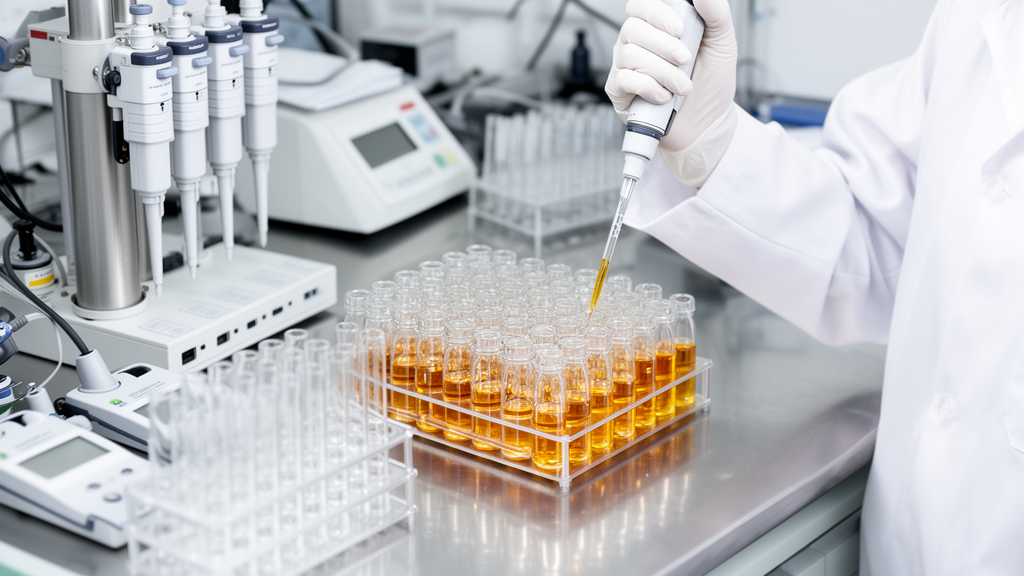
A newly published review in the Future Journal of Pharmaceutical Sciences outlines a comprehensive, mechanism-guided strategy for selecting chromatographic methods to analyze first-line antituberculosis fixed-dose combinations. Authored by Imad Osman Abu Reid, the work addresses the persistent analytical obstacles that arise when simultaneously evaluating four distinct active pharmaceutical ingredients—rifampicin, isoniazid, pyrazinamide, and ethambutol—co-formulated within a single solid dosage form. In global public health, these four-drug formulations serve as the therapeutic cornerstone for drug-susceptible tuberculosis, an infection caused by Mycobacterium tuberculosis that remains among the leading infectious causes of mortality worldwide, especially across low- and middle-income countries. Combining these medications into fixed-dose tablets streamlines directly observed therapy protocols, enhances patient adherence, and mitigates the dangerous emergence of multidrug-resistant tuberculosis strains. Nevertheless, their joint pharmaceutical quality control has historically suffered from substantial empirical trial-and-error due to stark differences in the molecular behaviors of the four co-formulated compounds.
The foundational difficulty in developing robust liquid chromatography assays for these combinations stems directly from severe disparities across their core physicochemical parameters, including lipophilicity, ionization constants, chromophoric properties, and formulation dose ratios. Lipophilicity, quantified via the octanol-water partition coefficient log P, spans a massive dynamic spectrum across the four medications. Rifampicin is an exceptionally lipophilic compound with a log P of 2.95, characterized structurally by a bulky ansamycin core and an extended conjugated system. In sharp contrast, the remaining three molecules are highly hydrophilic, exhibiting negative log P values of negative 0.69 for isoniazid, negative 1.2 for pyrazinamide, and negative 0.059 for ethambutol. When subjected to standard reversed-phase liquid chromatography on traditional octadecylsilyl stationary phases, this polarity mismatch produces an unwieldy retention window where the hydrophilic drugs elute almost immediately near the void volume, while the strongly retained rifampicin yields broad, asymmetric peaks and excessively prolonged analysis runtimes under isocratic conditions.
To overcome this polarity mismatch, the systematic review establishes that reversed-phase liquid chromatography operated under buffered gradient elution is the only fundamentally viable separation mode for multi-analyte fixed-dose analysis. While alternative chromatographic modes like hydrophilic interaction chromatography can successfully enhance the retention of polar basic molecules, they consistently compromise the retention of lipophilic rifampicin and fail to preserve holistic selectivity across all analytes. In reversed-phase gradient systems, initiating mobile phase delivery at very low organic modifier concentrations ensures adequate retention and baseline resolution of isoniazid, pyrazinamide, and ethambutol. Subsequently ramping the organic solvent fraction accelerates the elution of rifampicin, compressing the overall retention window, maintaining acceptable peak symmetry, and drastically shortening analytical cycle times. Additionally, the paper evaluates stationary phase modifications, demonstrating that polar-embedded or aqueous-compatible C18 phases improve the retention of polar species under highly aqueous starting conditions, while octylsilyl C8 phases can be strategically deployed to moderate excessive hydrophobic retention of rifampicin without sacrificing polar separation.
Beyond polarity differences, the review details how distinct ionization characteristics govern chromatographic selectivity and peak integrity across varying mobile phase environments. The four active pharmaceutical ingredients possess vastly different acid dissociation constants: isoniazid and pyrazinamide function as weakly basic heterocyclic amides with pKa values around 1.8 to 3.5 and 2.9 respectively; ethambutol is a polybasic aliphatic diamine exhibiting pKa values between 6 and 9; and rifampicin contains multiple ionizable phenolic and amine functional groups with pKa values of 6.8 and 7.3. Because ionized species experience reduced hydrophobic retention in reversed-phase systems, minute shifts in mobile phase pH produce disproportionate changes in selectivity and chromatographic reproducibility. Furthermore, basic analytes such as ethambutol interact electrostatically with ionized residual silanol groups on silica-based solid supports, triggering severe peak tailing, substantial plate loss, and degraded quantitative precision.
The author emphasizes that operating under controlled acidic conditions—specifically within a pH range of 2.5 to 3.5, or a compromised mildly acidic window of pH 3 to 4—suppresses residual silanol ionization while stabilizing the retention of protonated basic analytes. To maintain chromatographic stability across gradient transitions, mobile phases must incorporate robust buffering capacity, typically utilizing 10 to 50 millimolar phosphate buffers, or volatile alternatives such as formate and acetate when interfacing with mass spectrometry. Incorporating amine modifiers, such as triethylamine or trimethylamine, provides an effective chemical barrier that deactivates residual silanols, sharpens peak symmetry, and eliminates peak tailing. Base-deactivated or extensively end-capped stationary phase chemistries further reinforce this silanol suppression, providing a simpler and more transferable solution than complex ion-pairing strategies that rely on additives like sodium hexanesulfonate and copper sulfate, which frequently cause system fouling and preclude downstream mass spectrometric compatibility.
Detection optimization represents another pivotal component of the mechanism-guided framework, driven by acute imbalances in formulation doses and chromophoric absorption properties. In standard adult fixed-dose combinations, individual tablets typically contain 150 milligrams of rifampicin, 75 milligrams of isoniazid, 400 milligrams of pyrazinamide, and 275 milligrams of ethambutol. This uneven mass distribution coincides with dramatic disparities in optical absorbance. Rifampicin features a conjugated chromophore with high molar absorptivity, whereas ethambutol completely lacks a conjugated chromophore, exhibiting negligible ultraviolet absorption. When relying on conventional single-wavelength ultraviolet detectors, this imbalance frequently induces detector saturation for rifampicin at concentrations necessary to detect ethambutol, or generates unacceptable baseline noise and insufficient sensitivity for ethambutol. The review demonstrates that multi-wavelength monitoring via diode array detection overcomes these constraints by quantifying each drug at its specific absorption maximum, such as 210 nanometers for ethambutol alongside higher wavelengths for the remaining constituents, while liquid chromatography coupled with tandem mass spectrometry provides universal, chromophore-independent quantification.
Chemical instability and mutual drug reactivity under analytical conditions impose strict constraints on method design, particularly regarding stability-indicating capabilities mandated by international regulatory guidelines like ICH Q1A(R2) and ICH Q2(R1). Rifampicin is inherently susceptible to hydrolytic cleavage and oxidative degradation. Moreover, in acidic aqueous environments, rifampicin undergoes a well-documented chemical interaction with isoniazid, reacting to form isonicotinyl hydrazone derivatives. This reaction diminishes free rifampicin concentrations, compromises assay accuracy during dissolution testing and sample preparation, and generates extraneous chromatographic peaks. Consequently, stability-indicating method protocols require rapid sample processing, precise temperature regulation, neutral to slightly acidic preparation media, and systematic forced degradation testing. Analysts must demonstrate peak purity through diode array spectral analysis or mass spectrometry, ensuring baseline resolution with a separation factor Rs of at least 2 between active pharmaceutical ingredients and degradation byproducts.
A comparative evaluation of six documented reversed-phase methods highlights how different analytical approaches navigate these physicochemical hurdles. Conventional high-performance liquid chromatography using a 250-millimeter C18 column achieves robust chromatographic resolution over a 12-minute runtime, representing an established choice for standard quality control facilities. In contrast, transitioning to ultra-performance liquid chromatography with sub-2-micrometer particles on a 50-millimeter column compresses the entire runtime down to 2.8 minutes while fully preserving resolution, establishing the most technically refined and efficiency-driven solution. Other approaches explored stationary phase modulation, such as utilizing a C8 column to curtail rifampicin retention, or adding ion-pair reagents at pH 4.5. However, methods lacking multi-wavelength detection or gradient flexibility were found to be restricted to routine assay testing, whereas gradient methods incorporating diode array detection or mass spectrometry consistently delivered validated stability-indicating performance.
The review proposes a structured decision framework that links fundamental molecular interactions to method design, arguing that retention should be conceptualized as an in situ biophysical interaction process governed by hydrophobic partitioning, hydrogen bonding, dipole forces, and electrostatic interactions. Modern pharmaceutical quality paradigms, such as Analytical Quality-by-Design and lifecycle management, demand that chromatographic workflows move beyond simple drug quantification to serve as molecular profiling platforms. Incorporating systematic risk assessments, design of experiments, and defined Method Operable Design Regions ensures methods can evaluate degradation pathways, predict stability under tropical storage conditions (Zone IV), and ensure post-marketing drug quality. Looking forward, the adoption of core-shell particles, mixed-mode stationary phases, automated peak purity evaluation, and green analytical chemistry practices promises to yield faster, environmentally sustainable, and highly transferable analytical standards capable of safeguarding global tuberculosis treatments.
Subject of Research: Systematic chromatographic method selection strategy for first-line antituberculosis fixed-dose combinations
Article Title: Chromatographic method selection strategy for first-line antituberculosis fixed-dose combinations
Article References: Reid, I. O. A. (2026). Chromatographic method selection strategy for first-line antituberculosis fixed-dose combinations. Future Journal of Pharmaceutical Sciences, 12(1), Article 65. https://doi.org/10.1186/s43094-026-00990-z
Image Credits: AI Generated
DOI: 10.1186/s43094-026-00990-z
Keywords: tuberculosis, fixed-dose combinations, reversed-phase chromatography, rifampicin, ethambutol, method development, stability-indicating, quality control, Chromatographic, method, selection, strategy
Cite Scienmag News
Ophelia Keating. (November 12, 2026). Scientists Establish Systematic Strategy to Optimize Antituberculosis Drug Quality Testing. Scienmag. https://scienmag.com/scientists-establish-systematic-strategy-to-optimize-antituberculosis-drug-quality-testing/
Ophelia Keating. "Scientists Establish Systematic Strategy to Optimize Antituberculosis Drug Quality Testing." Scienmag, 12 November 2026, https://scienmag.com/scientists-establish-systematic-strategy-to-optimize-antituberculosis-drug-quality-testing/. Accessed 15 November 2026.
Ophelia Keating. "Scientists Establish Systematic Strategy to Optimize Antituberculosis Drug Quality Testing." Scienmag. November 12, 2026. https://scienmag.com/scientists-establish-systematic-strategy-to-optimize-antituberculosis-drug-quality-testing/




